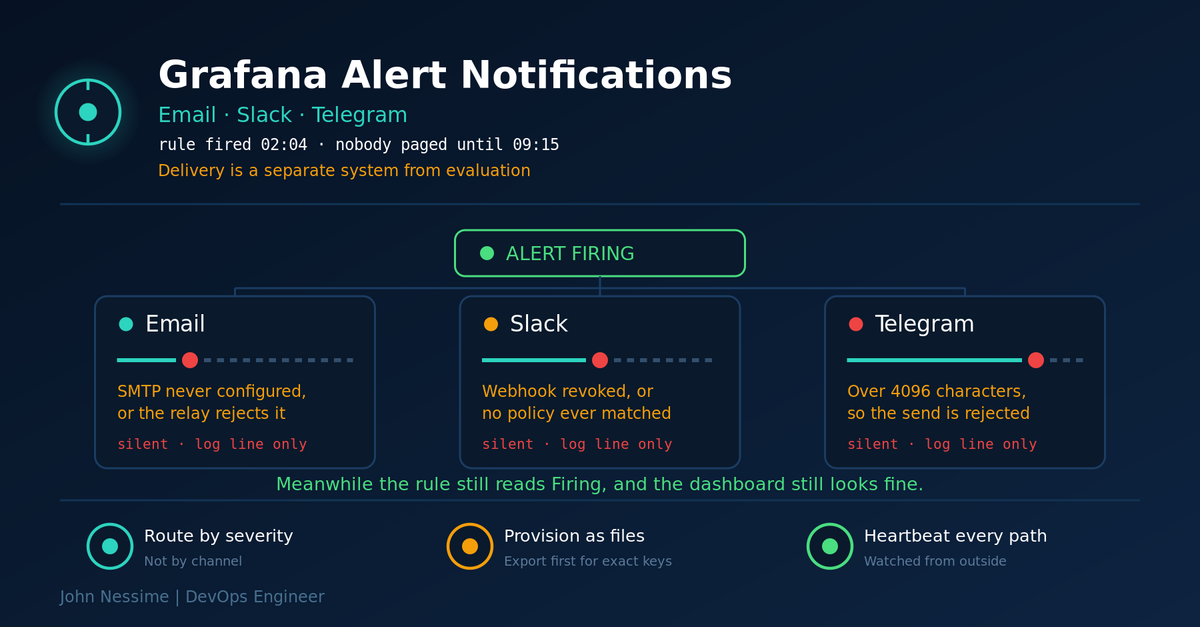
Grafana Alert Notifications That Actually Arrive: Email, Slack and Telegram

The rule went red at 02:04 and nobody found out until 09:15. Rule evaluation and notification delivery are two different systems, and only one of them is visible in the UI. A practical setup for Grafana alert notifications to email, Slack and Telegram, plus how to detect the day delivery quietly stops.
Continue ReadingGrafana Alert Notifications That Actually Arrive: Email, Slack and Telegram

GitLab CI vs GitHub Actions vs Jenkins: Choosing Without Regretting It Later

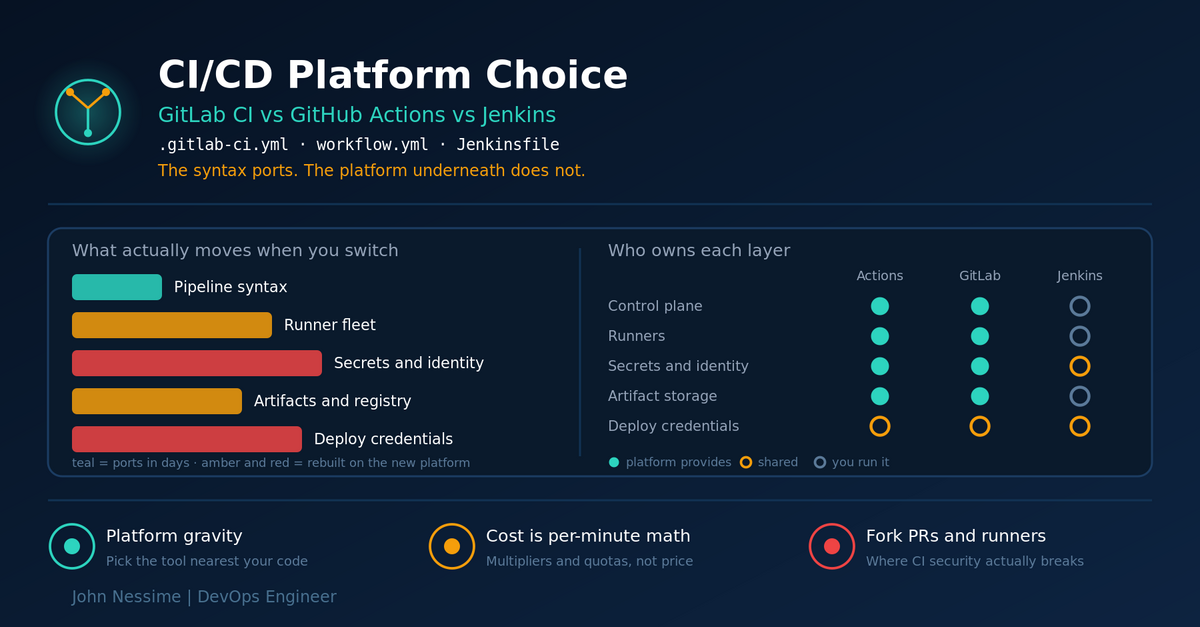
A practical comparison of GitLab CI, GitHub Actions and Jenkins that skips the feature table. What actually decides the choice is where your code lives, whether the runner can reach the deploy target, and who owns the control plane at 2am. Includes the cost mechanics, the security failure modes, and a decision procedure you can run in an afternoon.

Continue ReadingGitLab CI vs GitHub Actions vs Jenkins: Choosing Without Regretting It Later

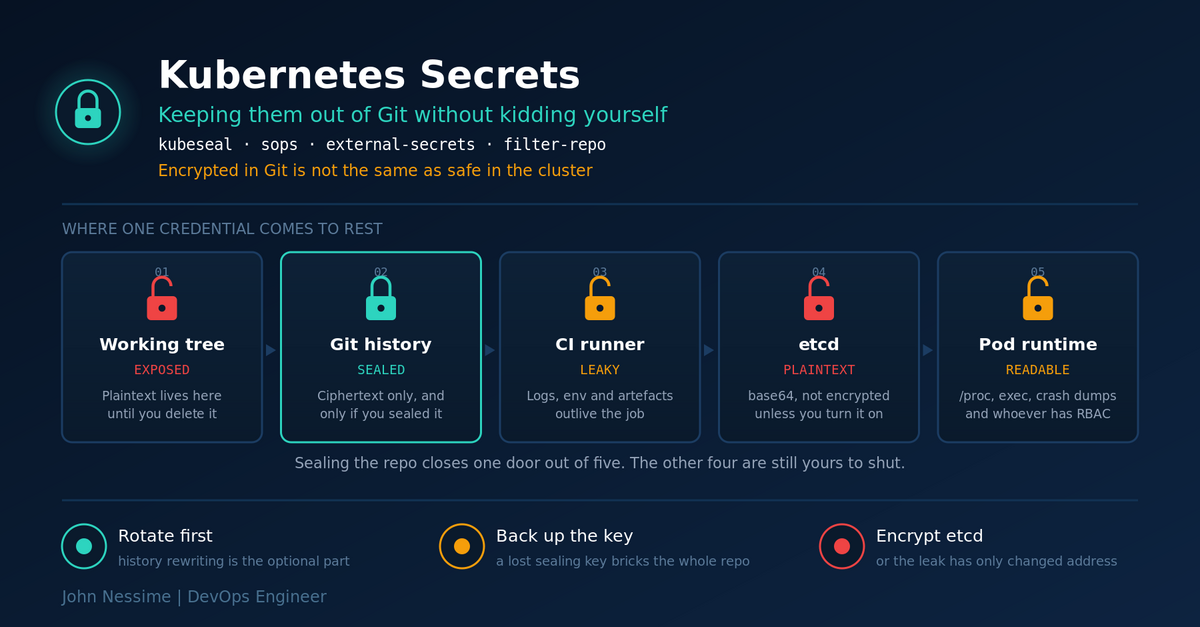
Keep Kubernetes Secrets Out of Git Without Kidding Yourself

Encrypting a Secret before you commit it only closes one of the five places that value comes to rest. Here is how to keep Kubernetes secrets out of Git properly: Sealed Secrets, SOPS and External Secrets compared honestly, the key-backup problem nobody plans for, and what to actually do when a credential is already in your history.

Continue ReadingKeep Kubernetes Secrets Out of Git Without Kidding Yourself

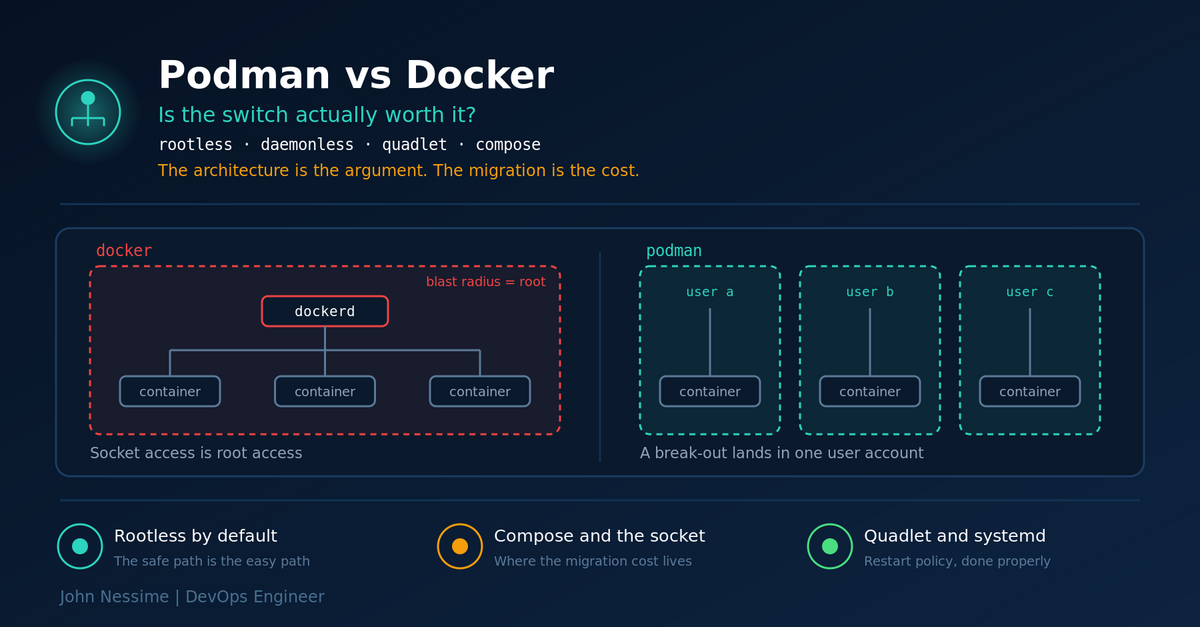
Podman vs Docker: Is the Switch Actually Worth It?

Podman is the better-designed container engine and Docker is the better-supported one. A working engineer's comparison: the architectural difference that drives everything, where each one wins and loses, the four things that genuinely break in a migration (compose, the Docker socket, privileged ports, restart on boot), and a decision procedure to run against your own setup.

Continue ReadingPodman vs Docker: Is the Switch Actually Worth It?

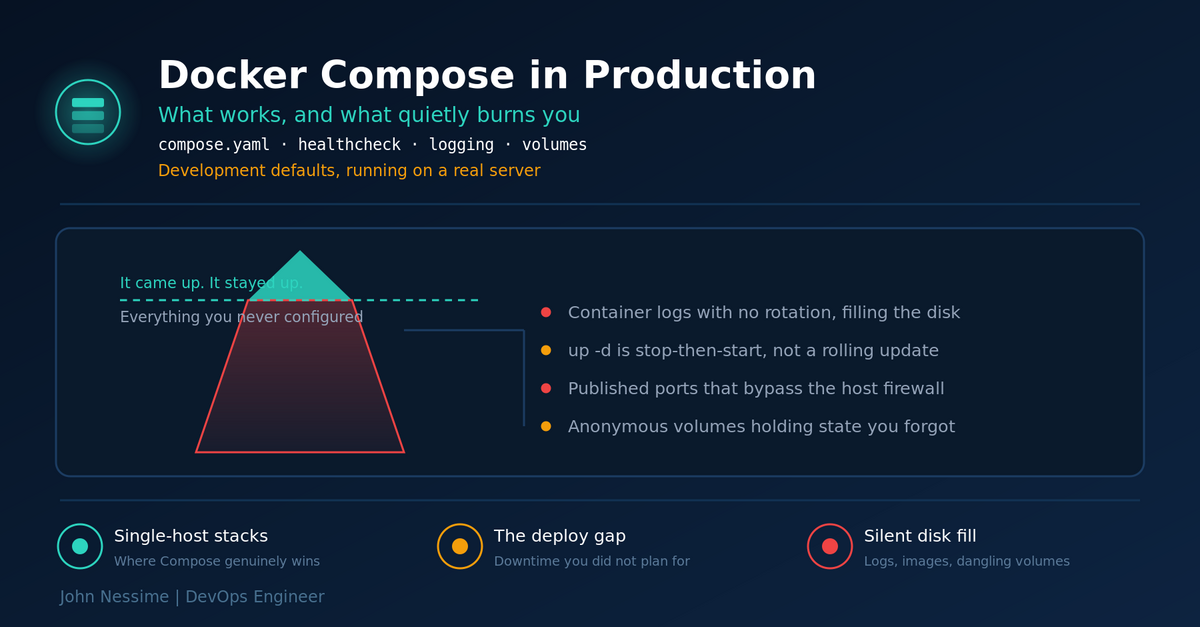
Docker Compose in Production: What Works and What Quietly Burns You

Running Docker Compose in production is a reasonable choice for a single host, but the defaults were chosen for a laptop. A walk through the failure families that actually bite: the deploy gap, unrotated logs filling the disk, anonymous volumes, published ports that bypass your firewall, secrets in environment variables, and health checks that report without acting.

Continue ReadingDocker Compose in Production: What Works and What Quietly Burns You