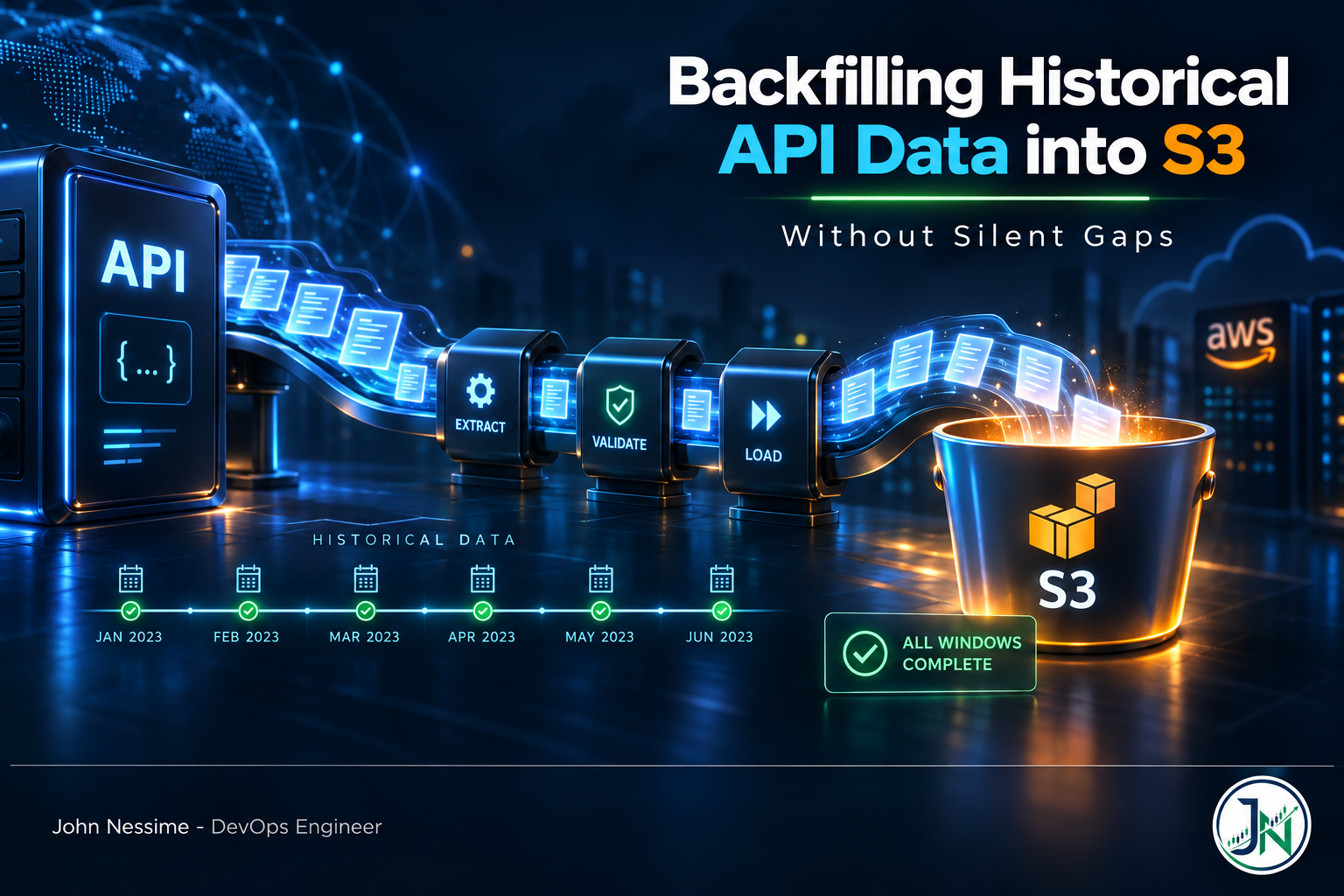
Backfilling Historical API Data into S3 Without Silent Gaps

A backfill that exits zero can still be missing a week of data, and nothing will tell you. This is a practical guide to the failure families behind silent gaps: pagination drift under a mutating source, retries that duplicate pages, prefix layouts designed for writes instead of reads, the seam where backfill meets live ingest, and the storage class rules that make mistakes expensive. Includes deterministic key derivation, S3 conditional writes, Athena partition projection, and a per-window manifest pattern that turns completeness into something you can query.
Continue ReadingBackfilling Historical API Data into S3 Without Silent Gaps

As-Planned vs As-Built Analysis: Building a Platform That Survives Cross-Examination

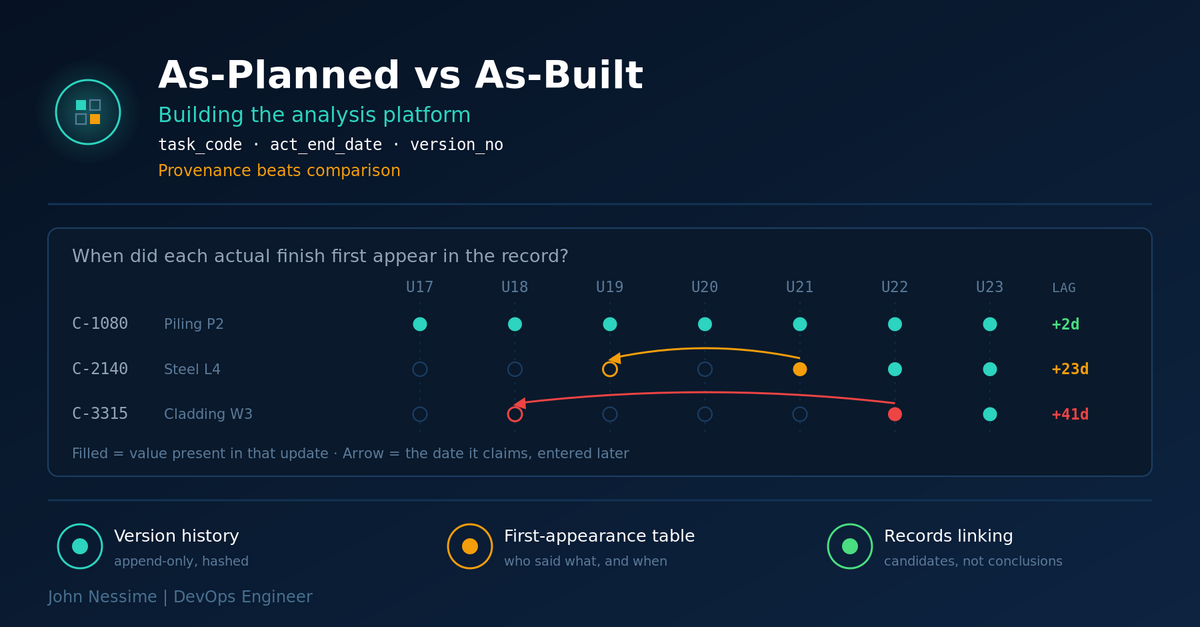
Most as-planned vs as-built analysis compares the baseline to the last P6 update and calls the result an as-built. It isn't one. This is how to build the data layer underneath a delay analysis: versioned XER ingestion, activity identity across renumbering, a first-appearance table that proves when every actual date entered the record, calendar-safe float, and record linking that proposes candidates instead of asserting cause.

Continue ReadingAs-Planned vs As-Built Analysis: Building a Platform That Survives Cross-Examination

Customer Sentiment Analysis From CRM and Support Data: Building a Score You Can Actually Trust

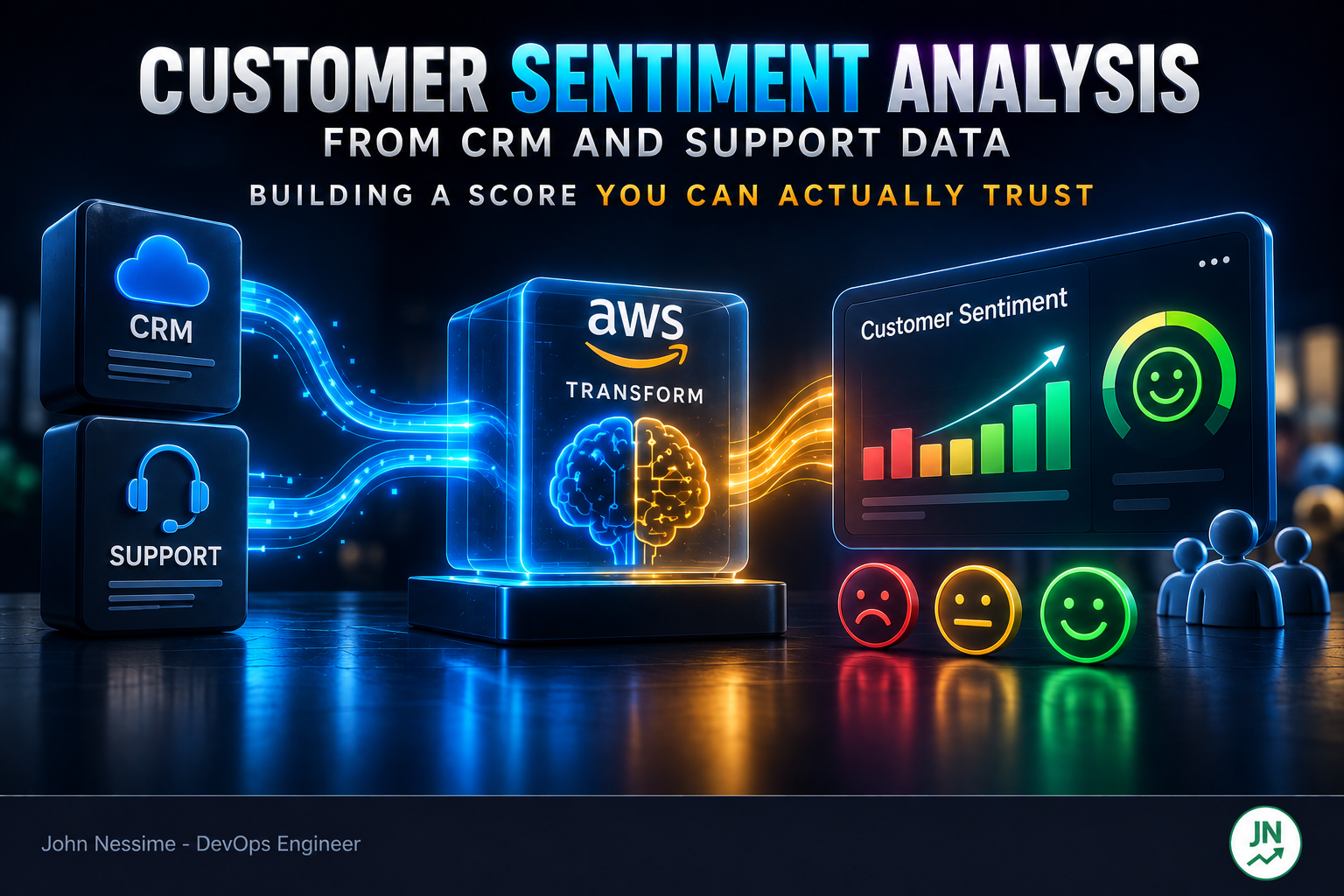
Most customer sentiment analysis pipelines run perfectly and still produce a number nobody should act on. Here are the failure families that cause it, from labels stamped on the wrong message to averages taken over a scale that was never numeric, plus a pipeline shape and a legal boundary worth knowing before you ship.

Continue ReadingCustomer Sentiment Analysis From CRM and Support Data: Building a Score You Can Actually Trust

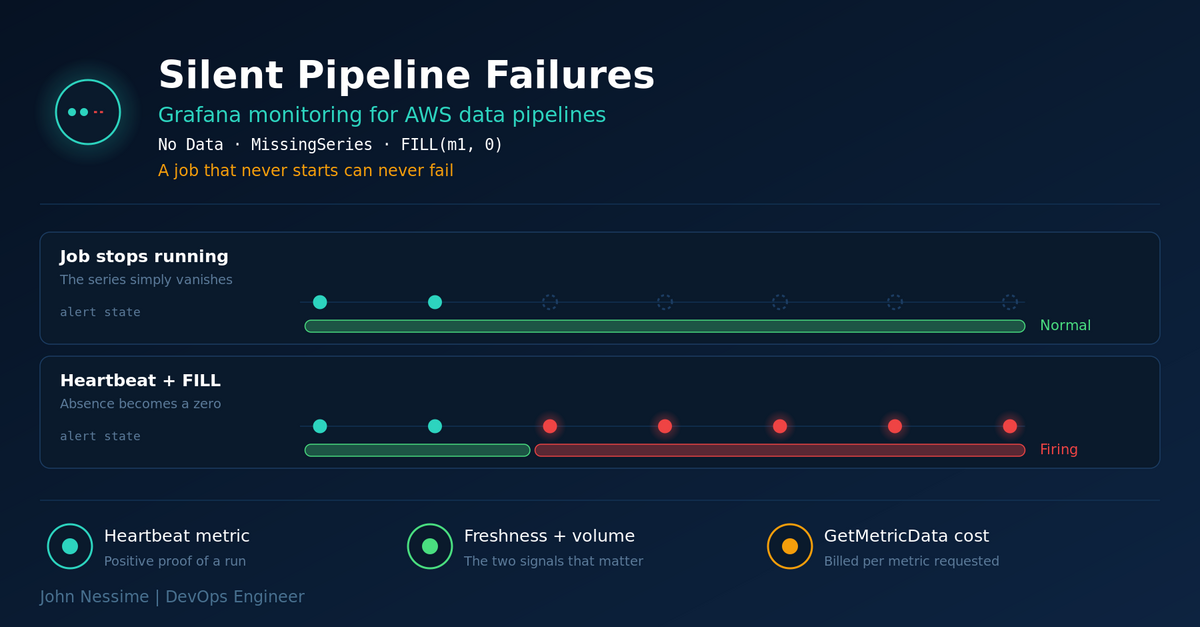
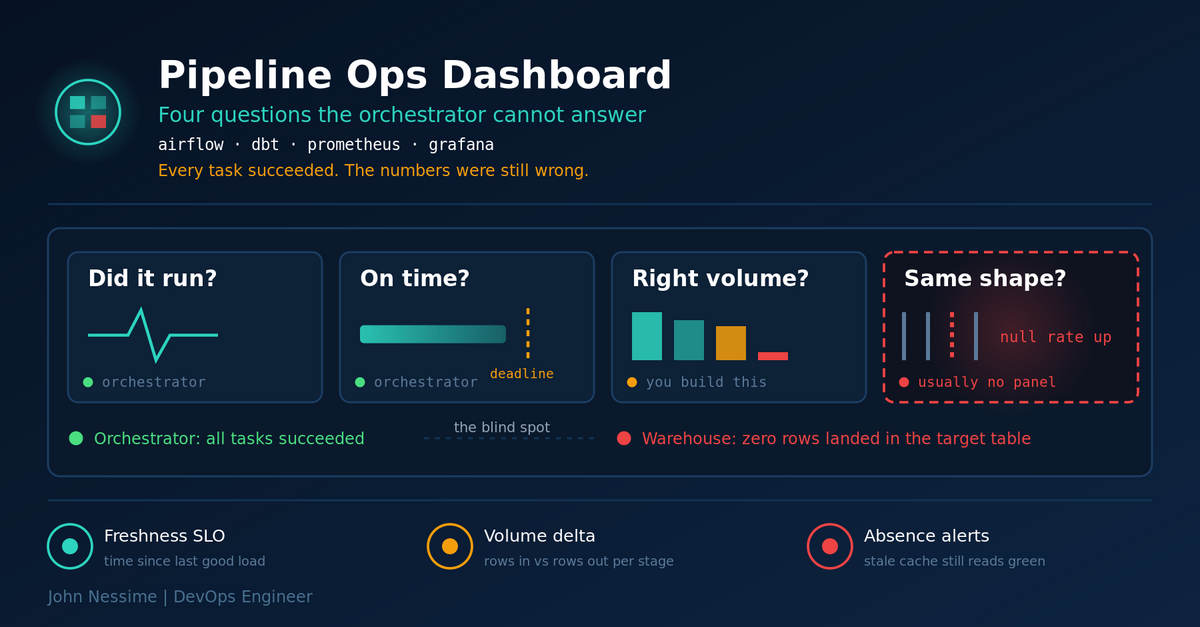
Grafana Monitoring for AWS Data Pipelines: The Green Dashboard Problem

A Glue job that stops running emits no metrics, so the dashboard stays green and the alert quietly resolves itself. Here is why Grafana monitoring for AWS data pipelines misses that failure, and the heartbeat, metric math and no-data configuration that closes the gap, along with the CloudWatch query costs and IAM boundaries nobody warns you about.

Continue ReadingGrafana Monitoring for AWS Data Pipelines: The Green Dashboard Problem

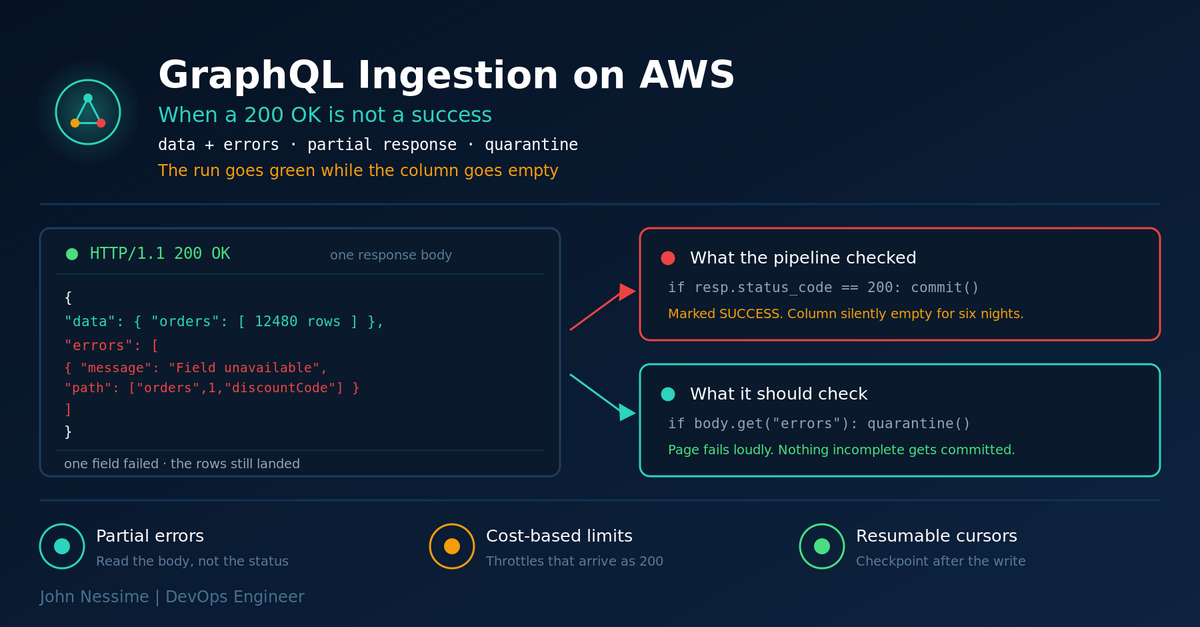
Building a GraphQL Data Ingestion Pipeline on AWS That Doesn’t Lie to You

A GraphQL source can hand you a 200 OK, a populated data block, and a quietly broken column in the same response. Here is how to build a GraphQL data ingestion pipeline on AWS that catches partial errors, respects cost-based rate limits, resumes cleanly from a cursor, and notices when the schema moves under you.

Continue ReadingBuilding a GraphQL Data Ingestion Pipeline on AWS That Doesn’t Lie to You

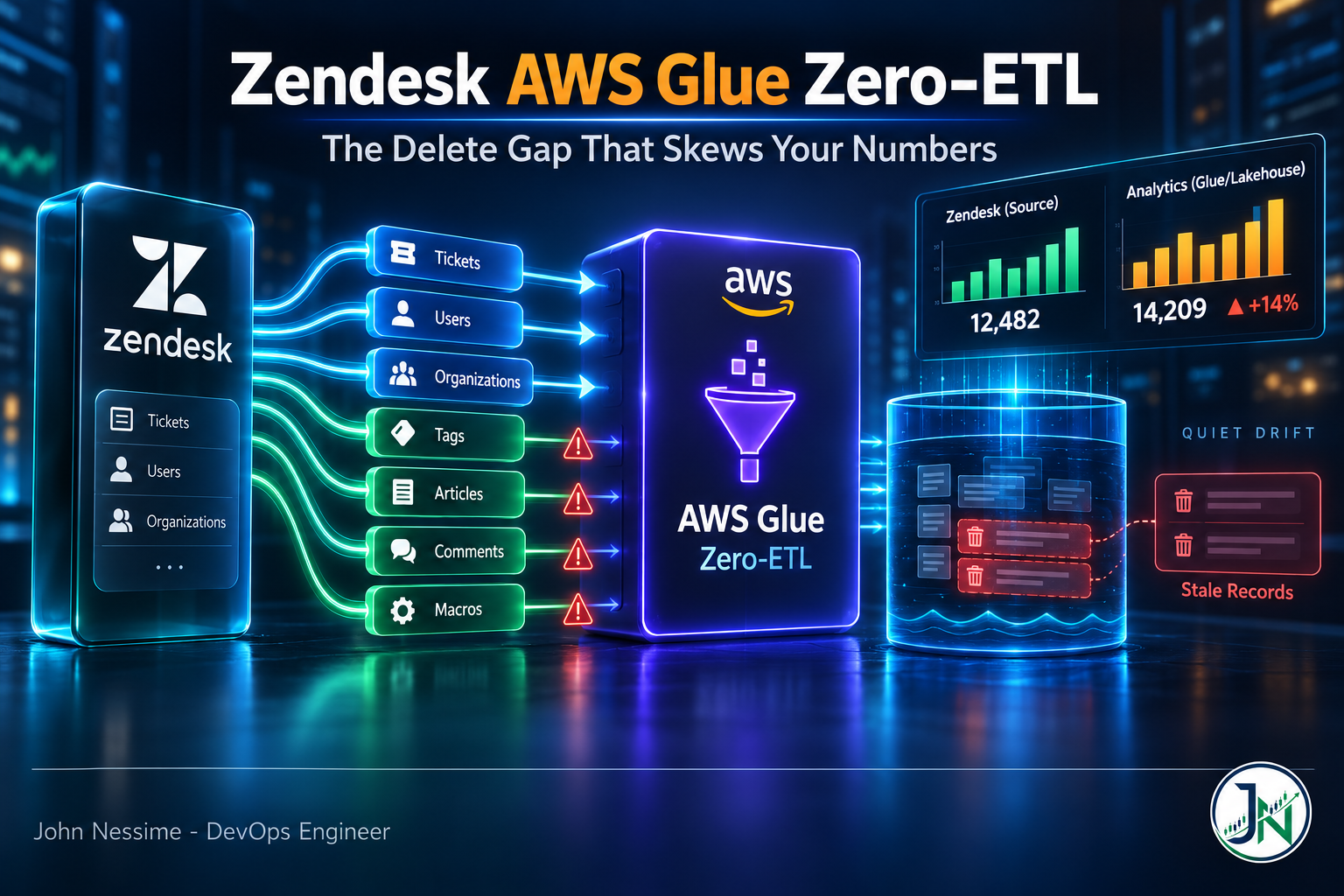
Zendesk Data Integration with AWS Glue Zero-ETL: The Delete Gap That Skews Your Numbers

AWS Glue zero-ETL replicates seven Zendesk entities, but only three of them ever remove a row. Here is how that gap quietly skews CSAT and knowledge base counts, plus the three IAM layers to wire, the two settings you cannot change after creation, and the CloudWatch metrics that make drift visible before someone spots it in a meeting.

Continue ReadingZendesk Data Integration with AWS Glue Zero-ETL: The Delete Gap That Skews Your Numbers

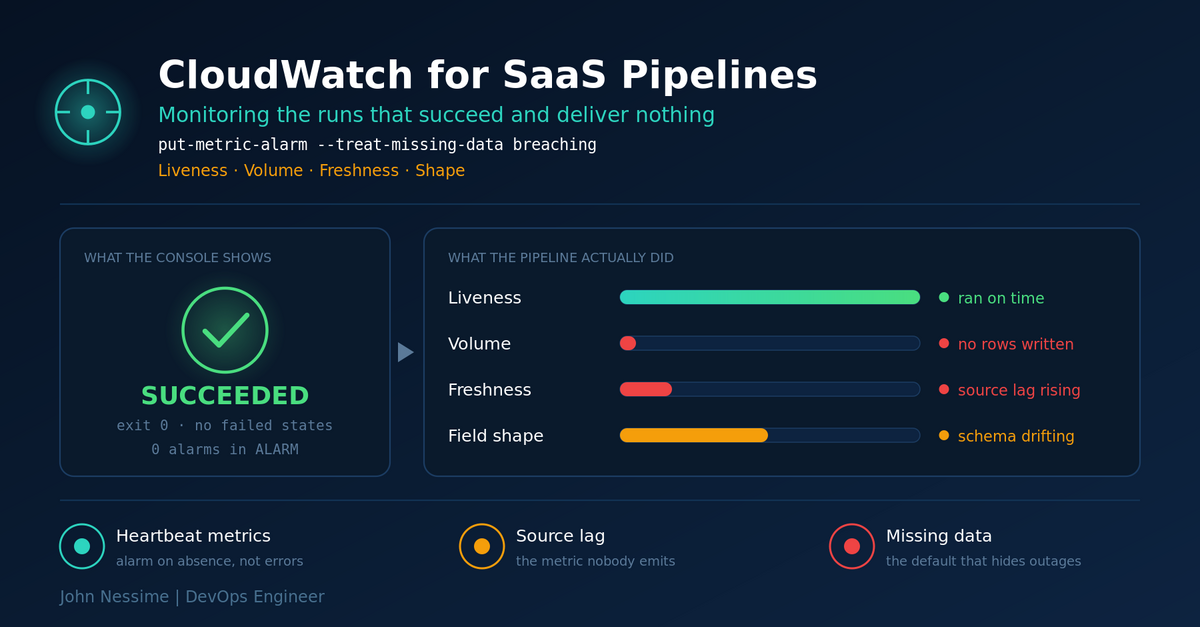
CloudWatch Data Pipeline Monitoring: Catching the Runs That Succeed and Deliver Nothing

Your SaaS pipeline will fail far more often by succeeding at nothing than by throwing an exception, and every CloudWatch default treats an absent metric as a non-event. Here are the four signals worth alarming on: liveness, volume, freshness and shape, plus the missing-data traps that leave alarms permanently green.

Continue ReadingCloudWatch Data Pipeline Monitoring: Catching the Runs That Succeed and Deliver Nothing

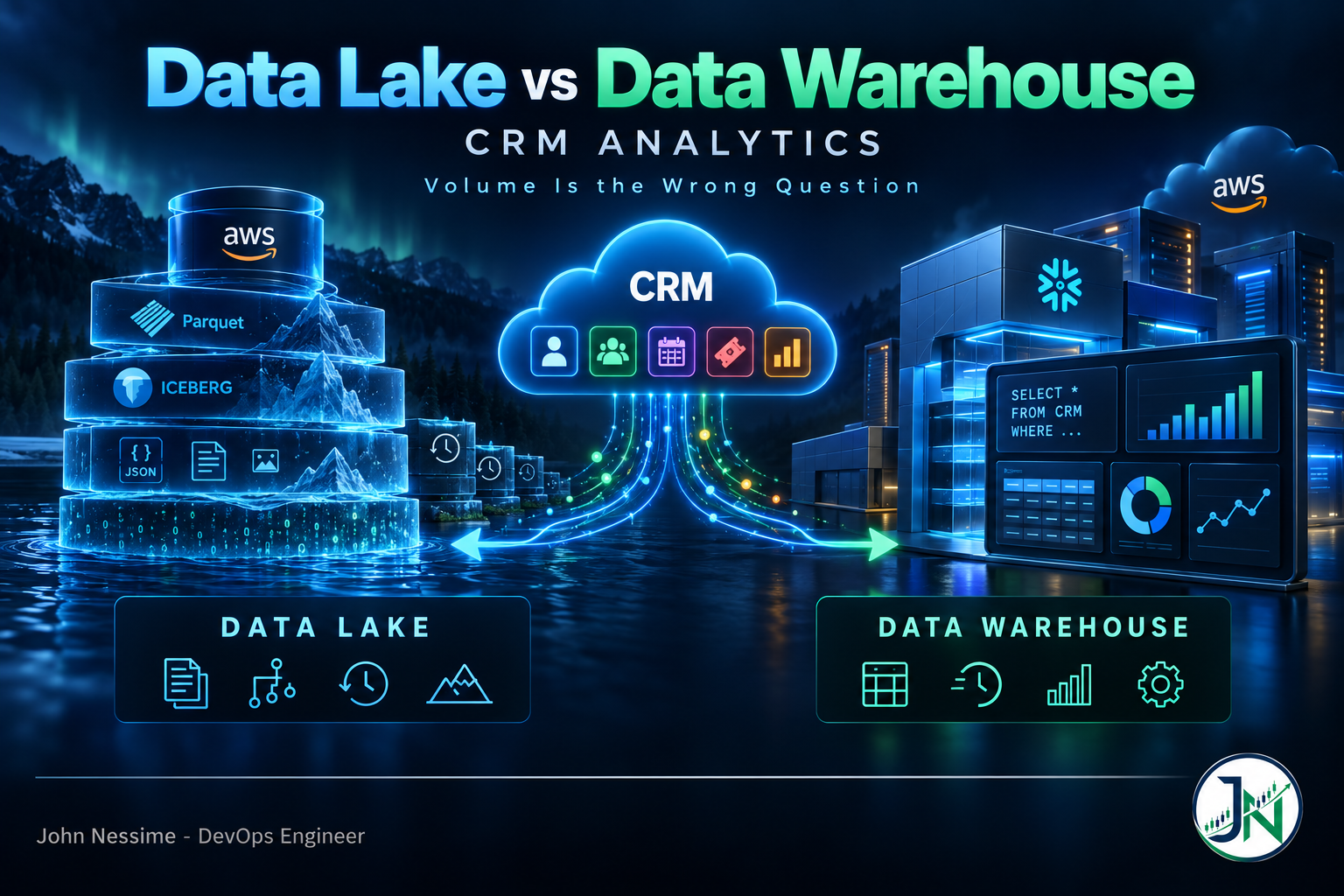
Data Lake vs Data Warehouse for CRM Analytics: Volume Is the Wrong Question

Everyone argues this one on data volume, and volume is the argument that matters least: CRM data is small enough that both architectures handle it comfortably. What actually decides data lake vs data warehouse for CRM analytics is how much point-in-time history you need, how fast the schema churns, what shape your queries are, and who is going to maintain the thing. Includes a decision procedure you can run in an afternoon.

Continue ReadingData Lake vs Data Warehouse for CRM Analytics: Volume Is the Wrong Question