Troubleshooting High I/O Wait Without Blaming the Disk

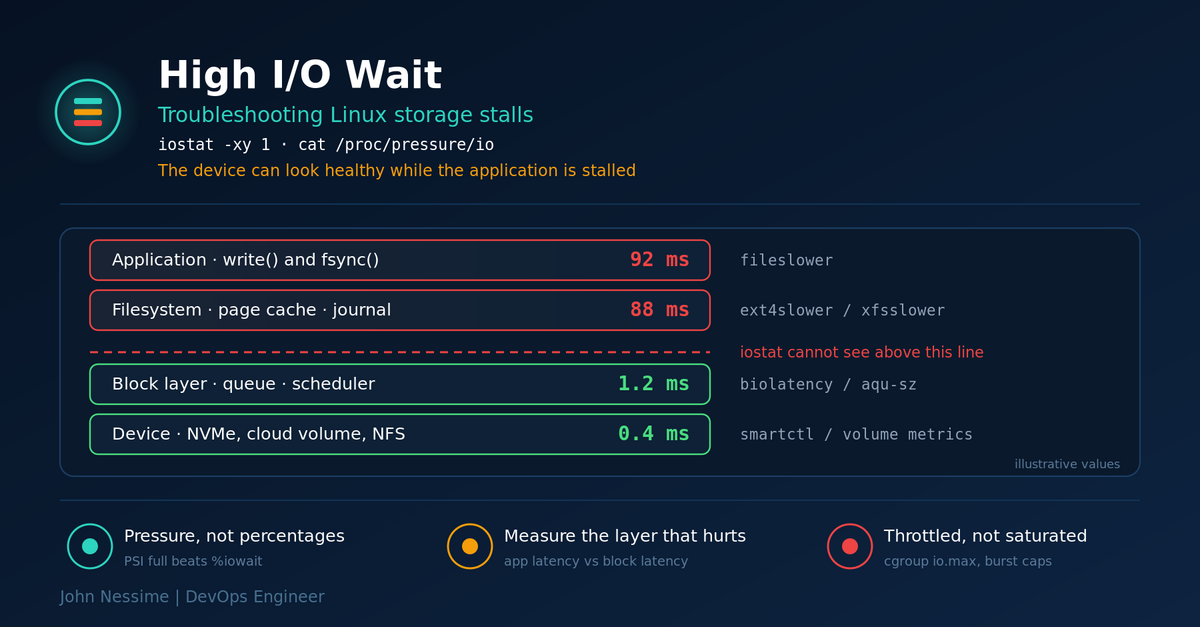
High I/O wait is a symptom, not a diagnosis. It rises when nothing is wrong and stays flat when something is badly wrong, and it only sees one layer of the storage stack. This is how to read iowait and PSI correctly, then work through the five failure families that actually produce storage stalls: device saturation, memory pressure, synchronous writes, throttling, and latency that lives above the block layer entirely.
Continue ReadingTroubleshooting High I/O Wait Without Blaming the Disk

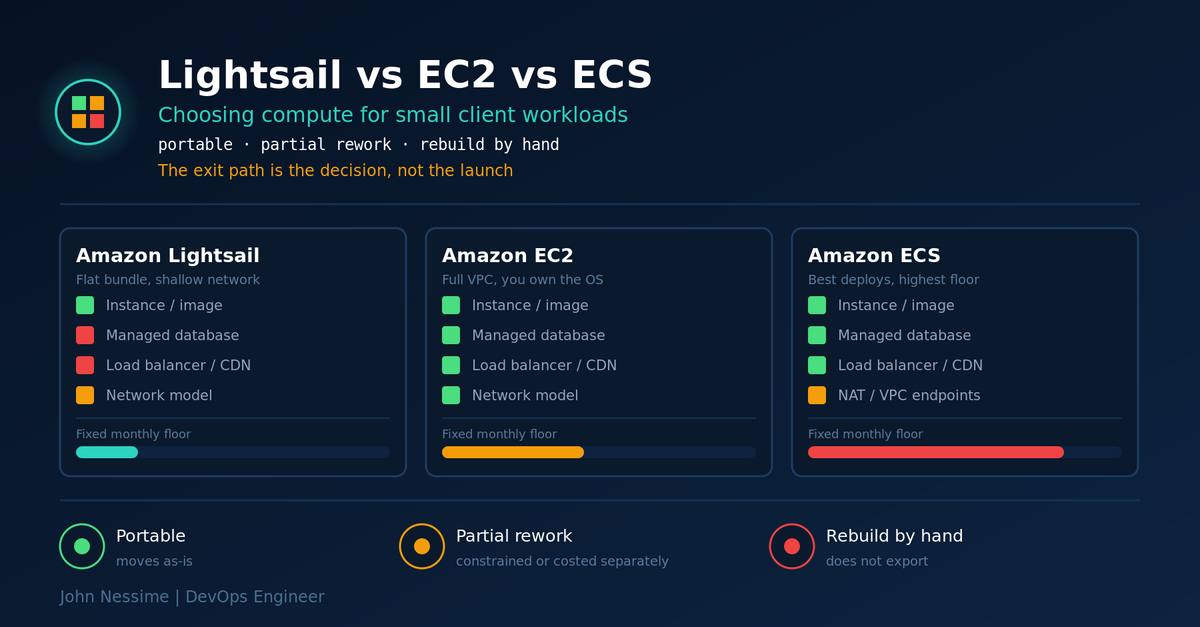
Lightsail vs EC2 vs ECS: What I Actually Pick for Small Client Workloads

Choosing between Lightsail, EC2 and ECS for a small client workload is not a performance question. It is a question about which constraints you are accepting and how expensive they are to reverse. Profiles of all three with where each wins and loses, the cost levers that actually move the bill, a six-step decision procedure, and the arguments that fall apart on contact with a real project.

Continue ReadingLightsail vs EC2 vs ECS: What I Actually Pick for Small Client Workloads

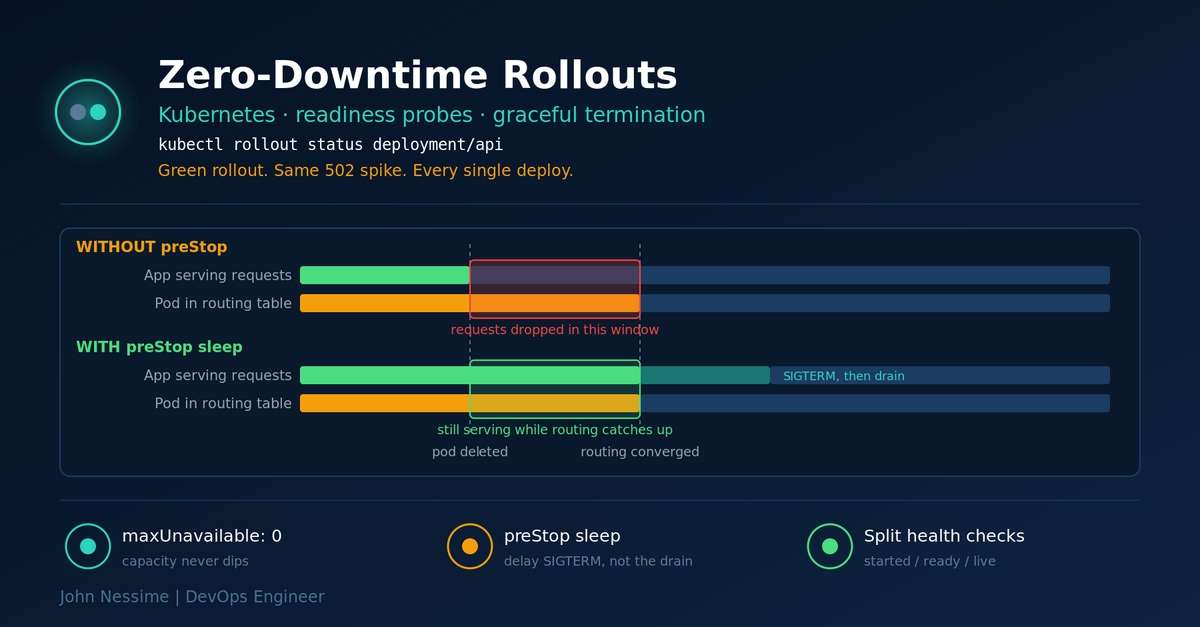
Kubernetes Zero-Downtime Rollouts: Why Your Readiness Probe Isn’t Saving You

Readiness probes are necessary for Kubernetes zero-downtime rollouts, but they only close one of four gaps. Here is what actually drops requests during a deploy: the race between SIGTERM and endpoint propagation, probes that lie, surge settings that quietly delete capacity, and load balancers that never watched EndpointSlices in the first place.

Continue ReadingKubernetes Zero-Downtime Rollouts: Why Your Readiness Probe Isn’t Saving You

Docker Logs Ate My Disk: A Working Guide to Log Drivers and Rotation

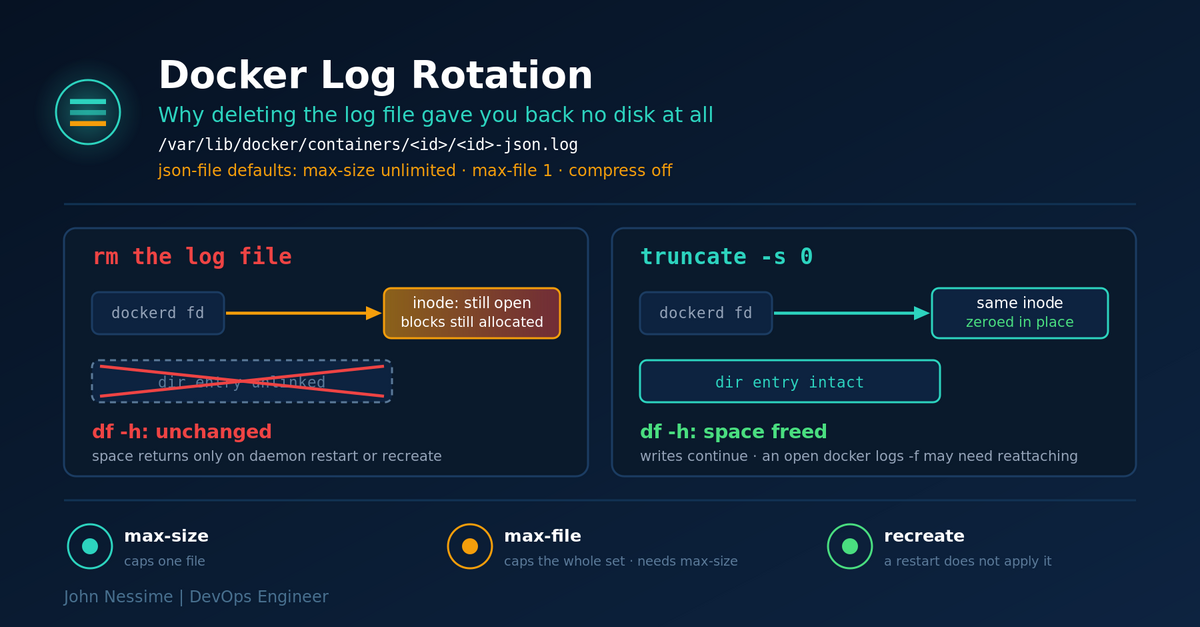
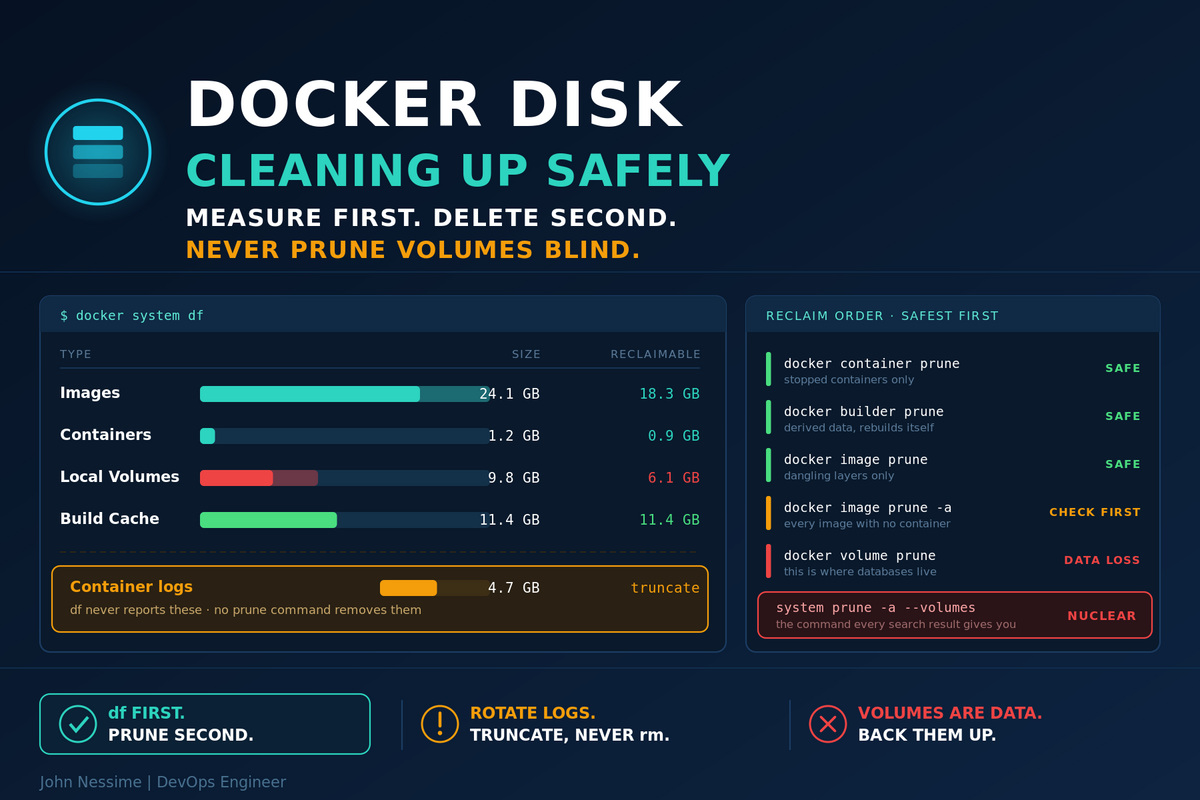
Docker's default logging driver writes container output to a JSON file with no size limit and no rotation. This is a practical guide to Docker log rotation: what the defaults actually do, why your daemon.json change did nothing, why deleting the log file did not free any disk, and how to choose between json-file, local, journald and shipping logs off the box.

Continue ReadingDocker Logs Ate My Disk: A Working Guide to Log Drivers and Rotation

Podman vs Docker: Is the Switch Actually Worth It?

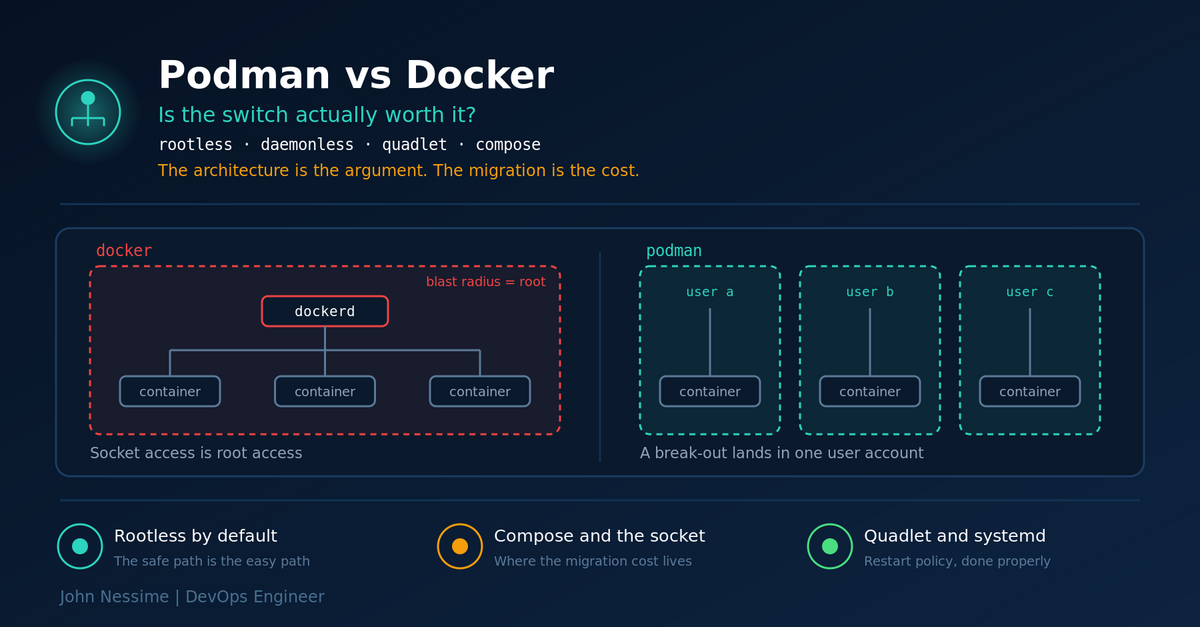
Podman is the better-designed container engine and Docker is the better-supported one. A working engineer's comparison: the architectural difference that drives everything, where each one wins and loses, the four things that genuinely break in a migration (compose, the Docker socket, privileged ports, restart on boot), and a decision procedure to run against your own setup.

Continue ReadingPodman vs Docker: Is the Switch Actually Worth It?

Docker Compose in Production: What Works and What Quietly Burns You

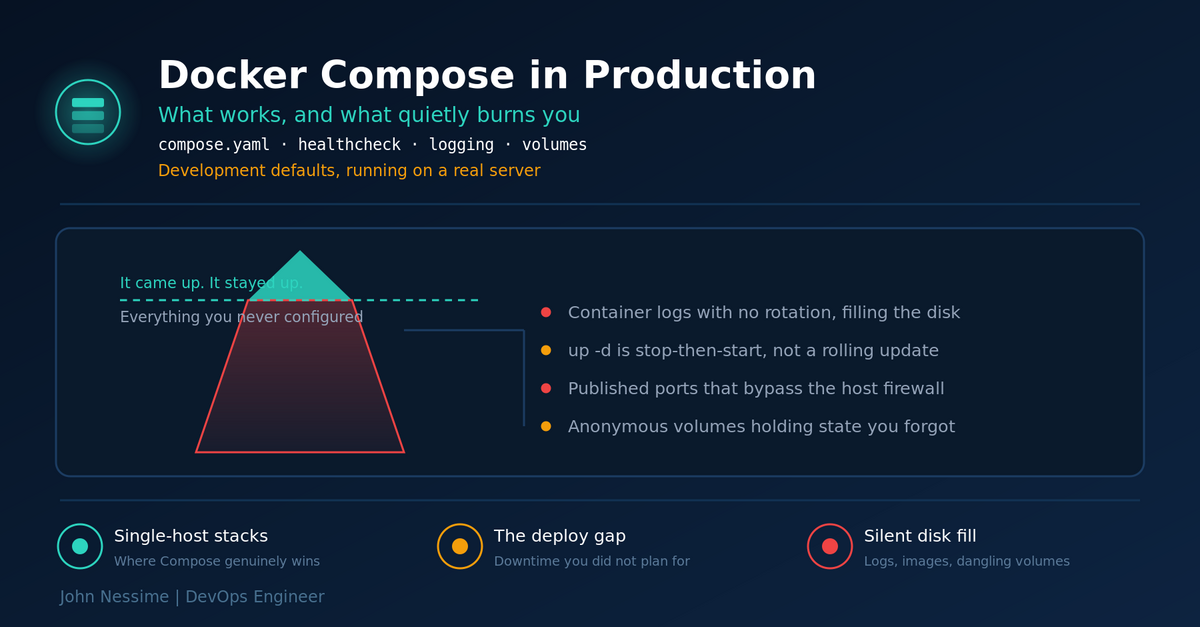
Running Docker Compose in production is a reasonable choice for a single host, but the defaults were chosen for a laptop. A walk through the failure families that actually bite: the deploy gap, unrotated logs filling the disk, anonymous volumes, published ports that bypass your firewall, secrets in environment variables, and health checks that report without acting.

Continue ReadingDocker Compose in Production: What Works and What Quietly Burns You