Grafana Alert Notifications That Actually Arrive: Email, Slack and Telegram

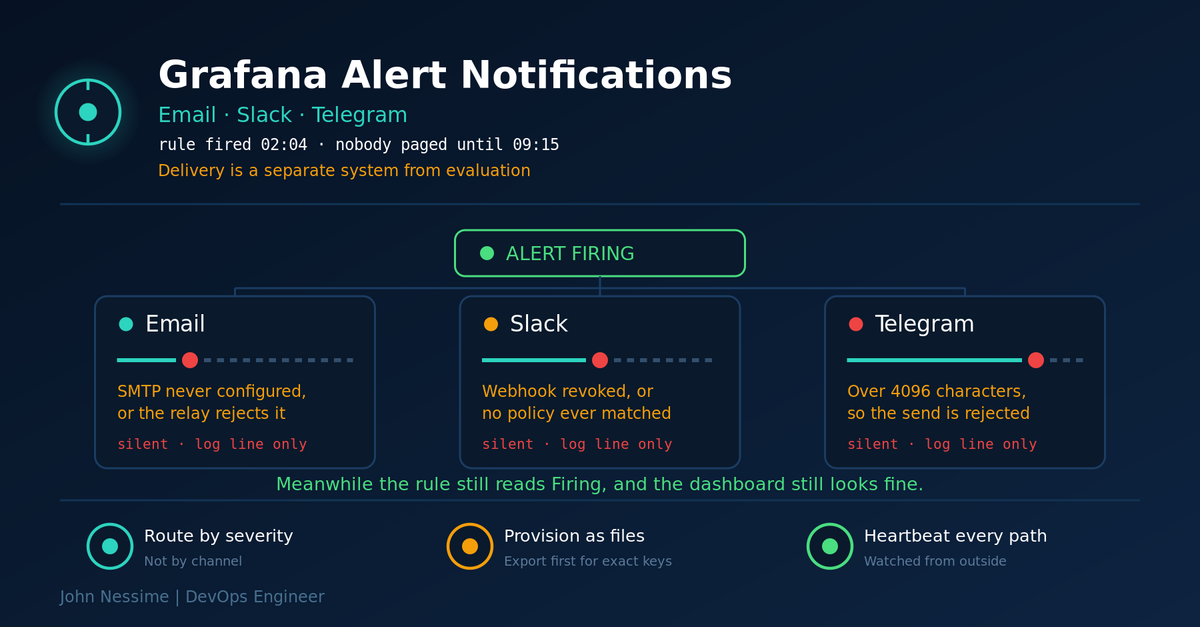
The rule went red at 02:04 and nobody found out until 09:15. Rule evaluation and notification delivery are two different systems, and only one of them is visible in the UI. A practical setup for Grafana alert notifications to email, Slack and Telegram, plus how to detect the day delivery quietly stops.

Continue ReadingGrafana Alert Notifications That Actually Arrive: Email, Slack and Telegram

DirectAdmin PHP-FPM Pools: Why One WordPress Site Takes Down the Others

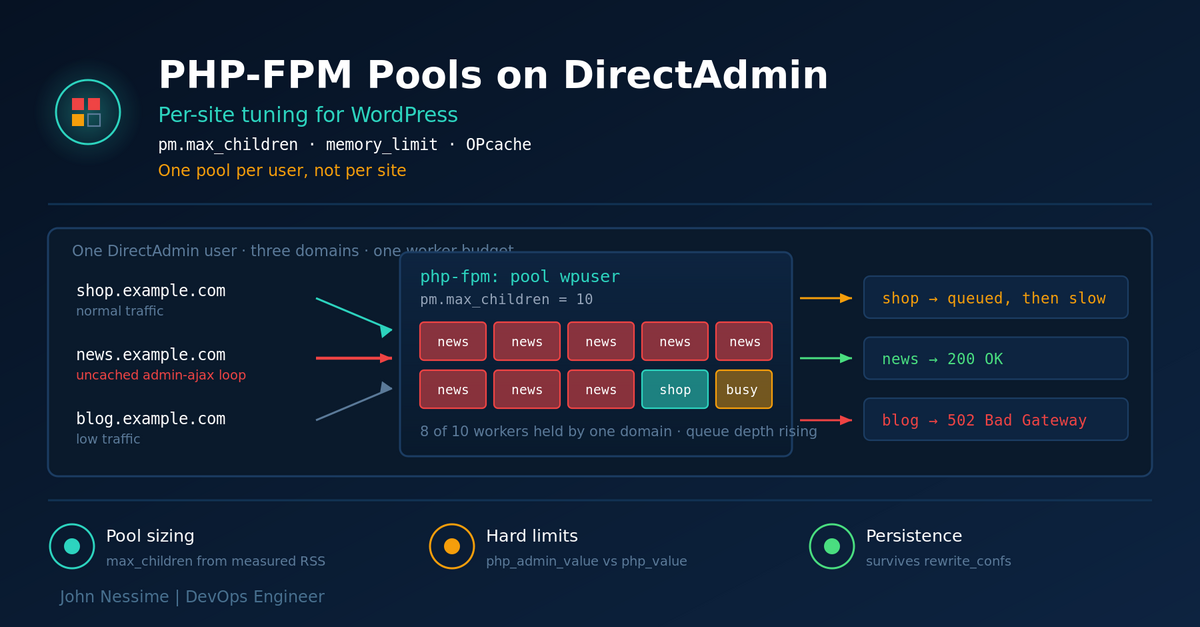
DirectAdmin gives each user one PHP-FPM pool, not each site. That single design fact explains most of the 502s on a busy shared box. Here is how to find the pool files, size pm.max_children from real memory numbers, set per-site limits that WordPress cannot override, and make the changes survive the next rewrite_confs.

Continue ReadingDirectAdmin PHP-FPM Pools: Why One WordPress Site Takes Down the Others

Troubleshooting High I/O Wait Without Blaming the Disk

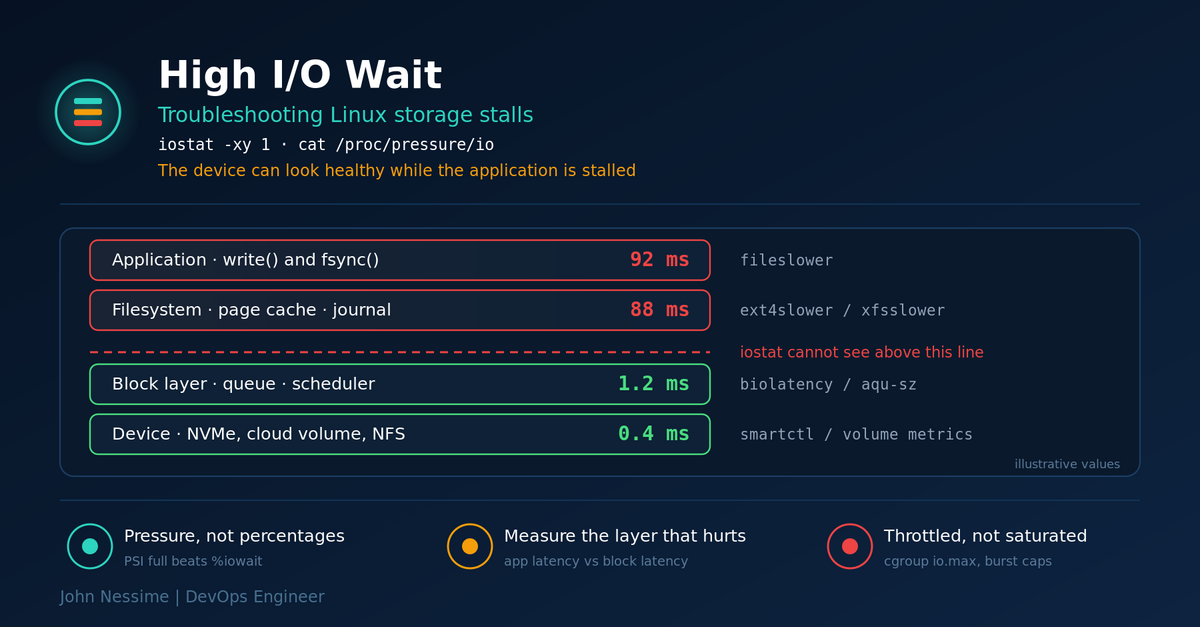
High I/O wait is a symptom, not a diagnosis. It rises when nothing is wrong and stays flat when something is badly wrong, and it only sees one layer of the storage stack. This is how to read iowait and PSI correctly, then work through the five failure families that actually produce storage stalls: device saturation, memory pressure, synchronous writes, throttling, and latency that lives above the block layer entirely.

Continue ReadingTroubleshooting High I/O Wait Without Blaming the Disk

Kubernetes Zero-Downtime Rollouts: Why Your Readiness Probe Isn’t Saving You

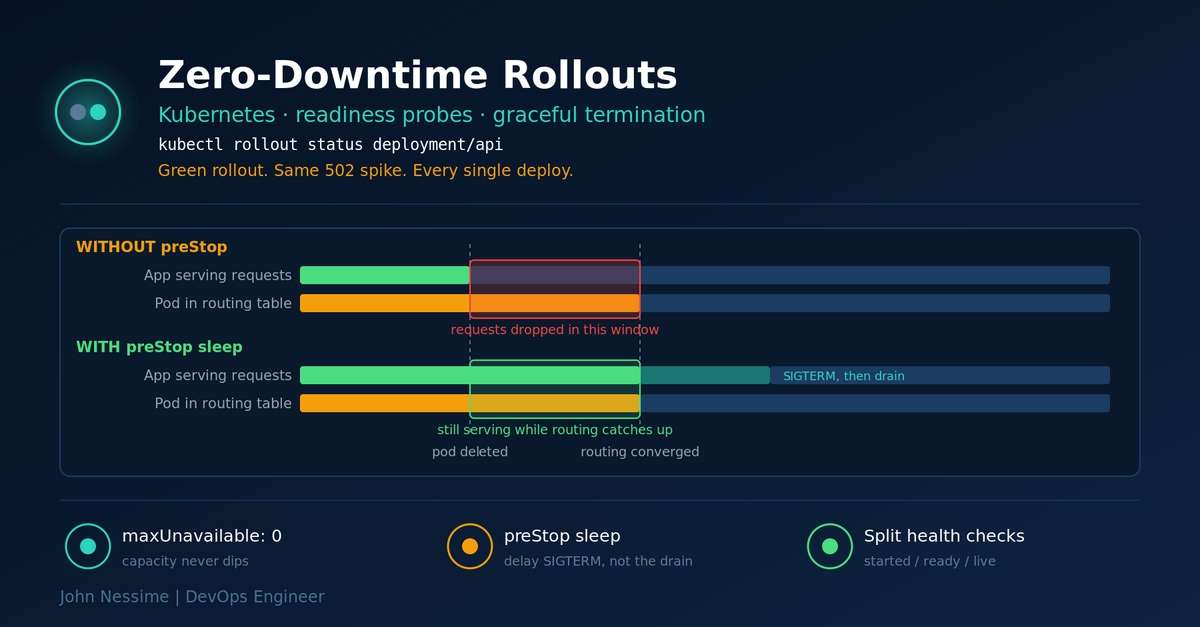
Readiness probes are necessary for Kubernetes zero-downtime rollouts, but they only close one of four gaps. Here is what actually drops requests during a deploy: the race between SIGTERM and endpoint propagation, probes that lie, surge settings that quietly delete capacity, and load balancers that never watched EndpointSlices in the first place.

Continue ReadingKubernetes Zero-Downtime Rollouts: Why Your Readiness Probe Isn’t Saving You

Docker Logs Ate My Disk: A Working Guide to Log Drivers and Rotation

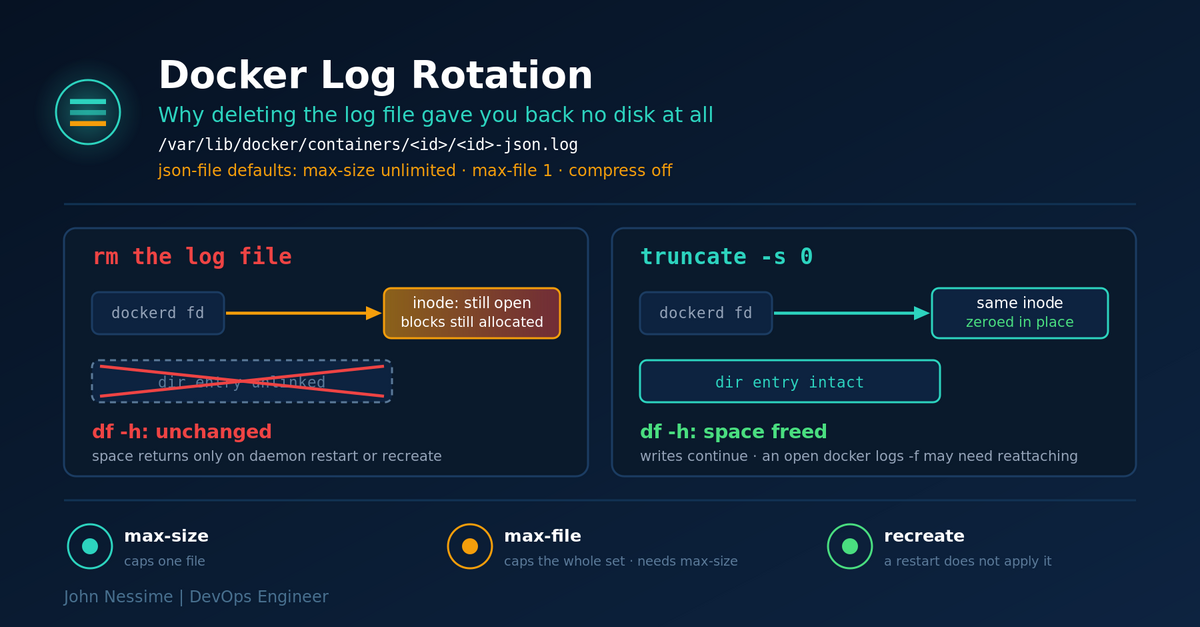
Docker's default logging driver writes container output to a JSON file with no size limit and no rotation. This is a practical guide to Docker log rotation: what the defaults actually do, why your daemon.json change did nothing, why deleting the log file did not free any disk, and how to choose between json-file, local, journald and shipping logs off the box.

Continue ReadingDocker Logs Ate My Disk: A Working Guide to Log Drivers and Rotation

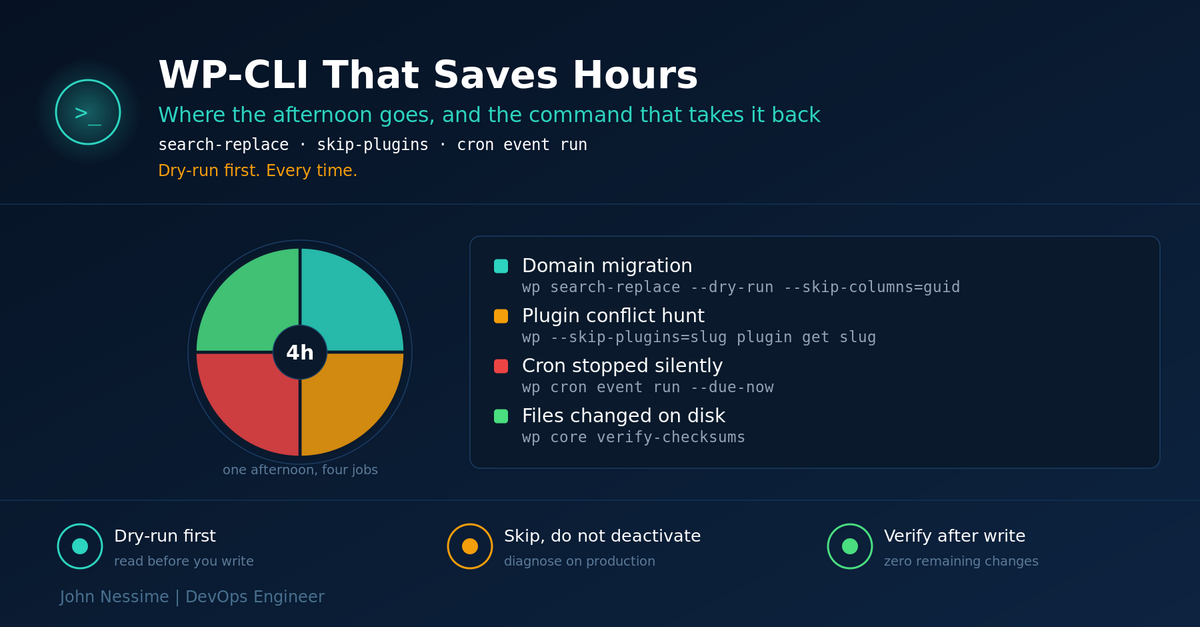
WP-CLI Commands That Save Hours (And the One That Bites Back)

The dashboard is fine for editing a post. It is a terrible tool for anything touching a thousand rows, twelve plugins or two servers. Here are the WP-CLI commands that save hours on migrations, plugin conflicts, stalled cron and integrity checks, grouped by the job that eats the time, with the failure modes each one hides.

Continue ReadingWP-CLI Commands That Save Hours (And the One That Bites Back)