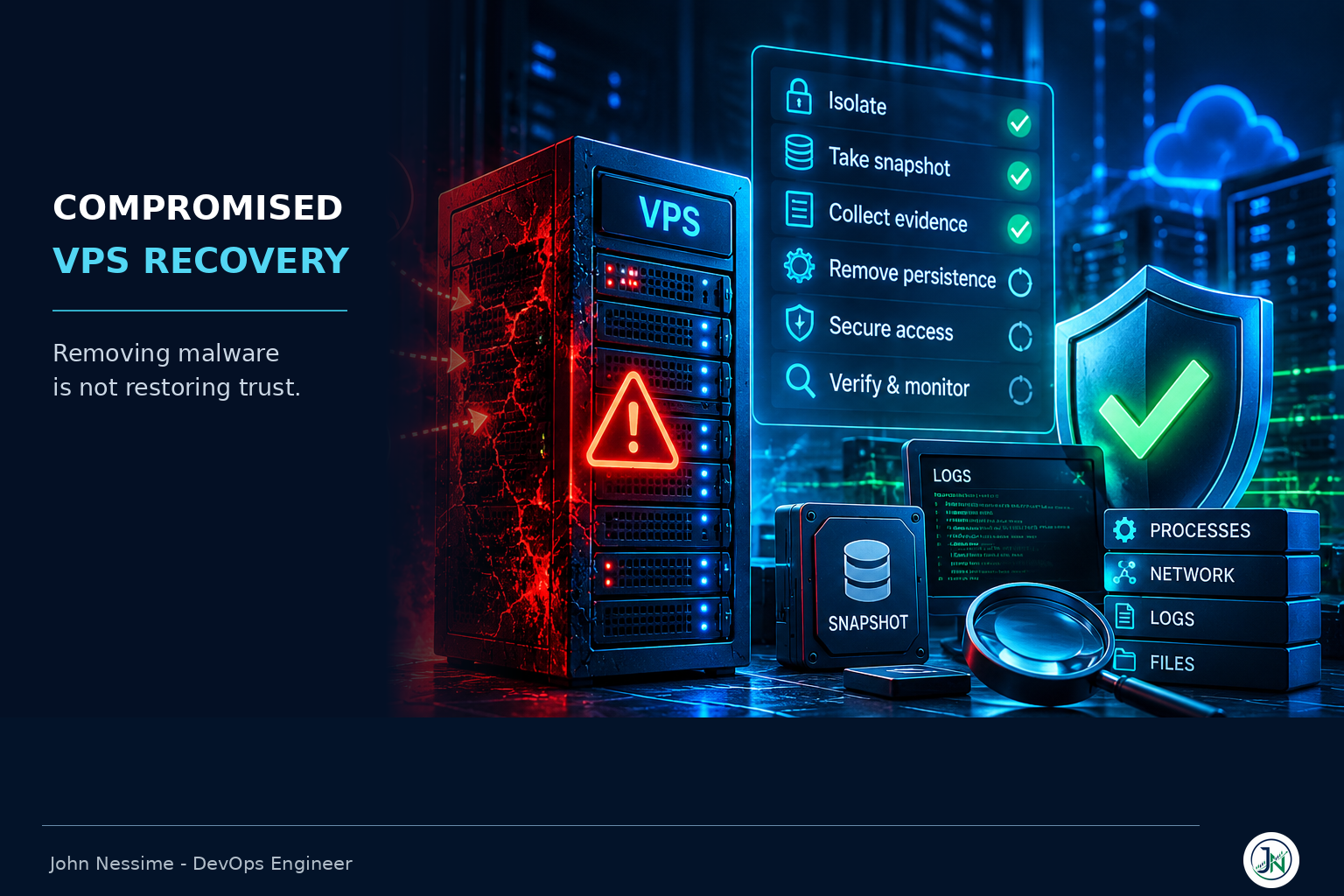
Compromised VPS Recovery: What You Can Actually Fix Without Reinstalling

Killing the process removes the symptom. It does nothing about the SSH key on a service account or the timer pulling a fresh payload every twenty minutes. A working guide to compromised VPS recovery: how to judge the depth of an intrusion, keep the evidence, enumerate the access paths and persistence people miss, and decide honestly whether you can clean in place or need to rebuild.
Continue ReadingCompromised VPS Recovery: What You Can Actually Fix Without Reinstalling
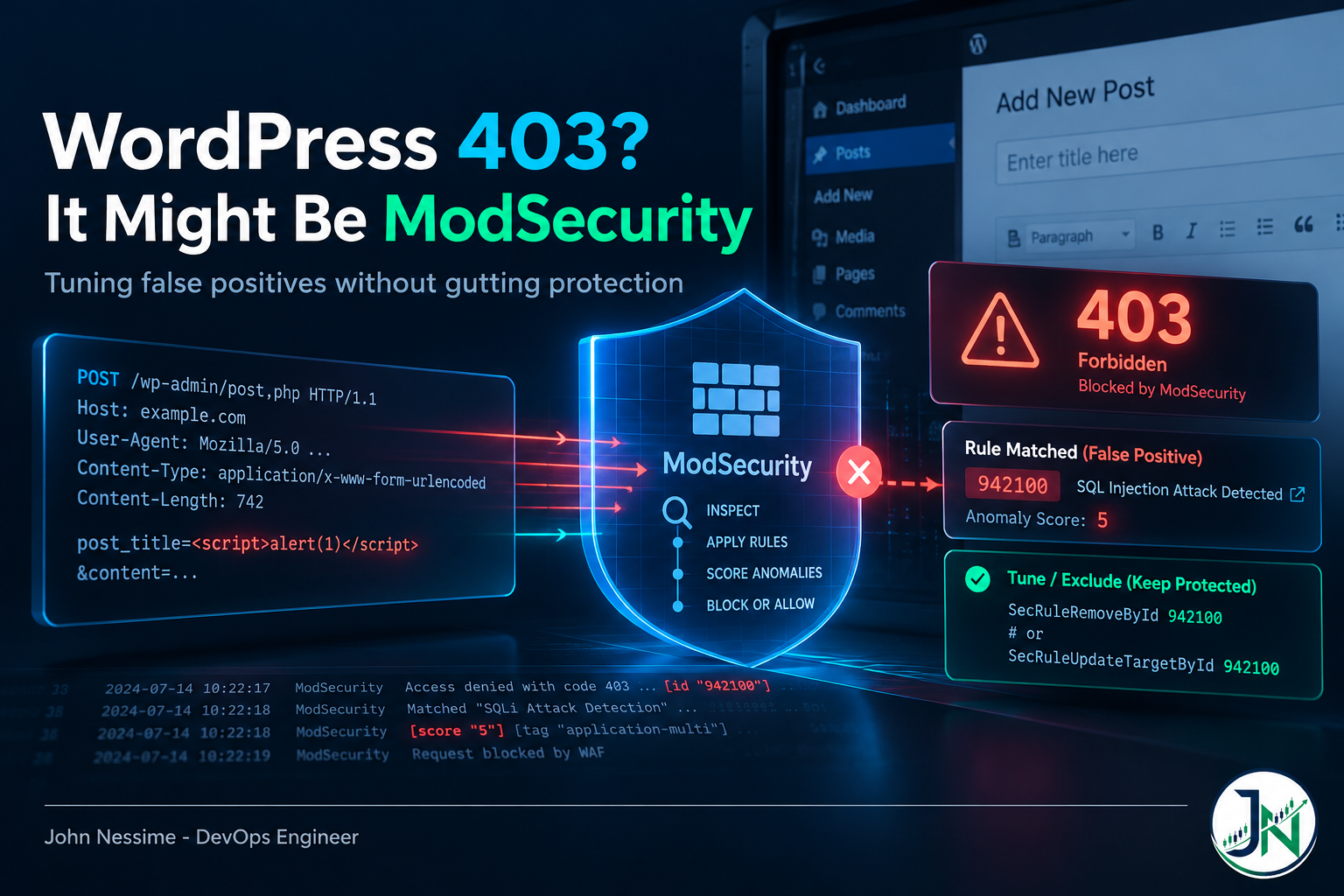
Read more about the article Your WordPress 403 Isn’t the Rule You Think: Tuning ModSecurity False Positives
A WordPress 403 error isn't always caused by a malicious request. ModSecurity false positives can block legitimate updates. Inspect anomaly scores and tune specific WAF rules without weakening site security.

Your WordPress 403 Isn’t the Rule You Think: Tuning ModSecurity False Positives

A 403 from ModSecurity almost never names the rule you need to change. Under anomaly scoring, detection rules only add to a score and a separate blocking rule returns the error. This guide covers reading the audit log backwards, choosing between the four exclusion mechanisms, the WordPress failure families that cause most false positives, and why raising the anomaly threshold quietly destroys your coverage.

Continue ReadingYour WordPress 403 Isn’t the Rule You Think: Tuning ModSecurity False Positives

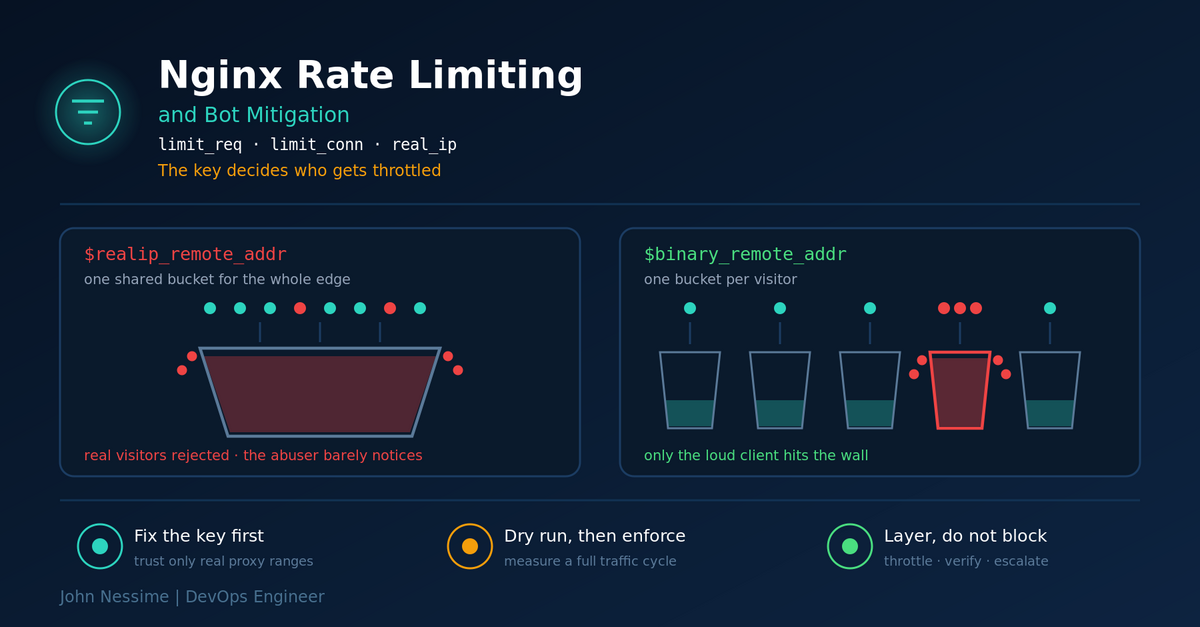
Nginx Rate Limiting and Bot Mitigation Without Blocking Real Users

A limit_req block that parses cleanly can still be doing absolutely nothing, or throttling every visitor behind one CDN edge. This guide covers Nginx rate limiting and bot mitigation as they actually behave in production: getting the key right behind a proxy, what burst and nodelay do to your traffic shape, sizing zones correctly, rolling out in dry run mode, and layering bot handling from robots.txt through user agent maps to firewall escalation.

Continue ReadingNginx Rate Limiting and Bot Mitigation Without Blocking Real Users

Bootstrap a VPS With Ansible in One Run Without Locking Yourself Out

A single Ansible run can take a blank VPS to a hardened, reproducible server. The hard part is not the tasks, it is the order. Here is the ordering that keeps you logged in, the failures that pass green and bite two weeks later, and how to make the second run as safe as the first.

Continue ReadingBootstrap a VPS With Ansible in One Run Without Locking Yourself Out

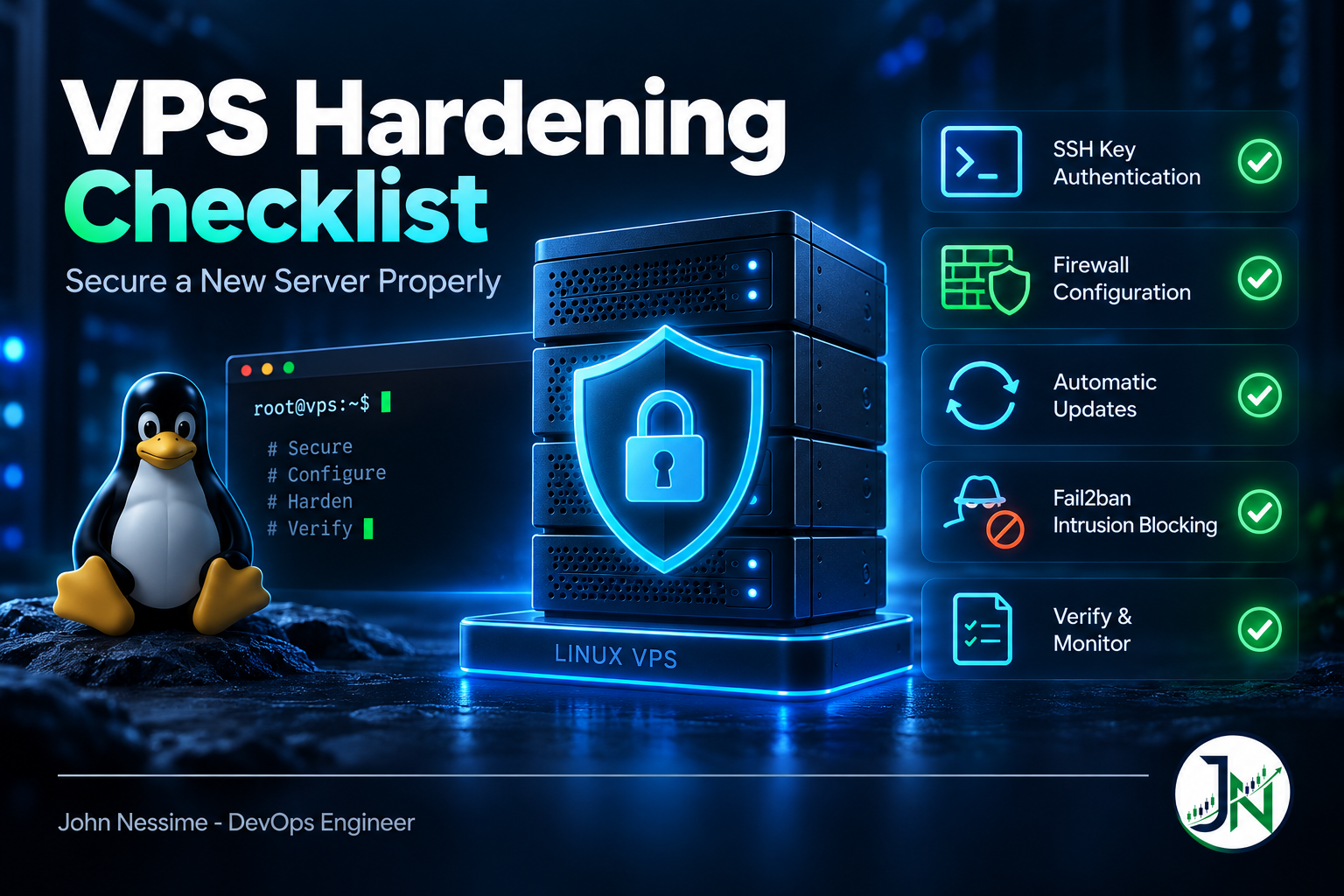
You Probably Didn’t Harden That Server: A VPS Setup and Hardening Checklist That Verifies Itself

You set PasswordAuthentication no, restarted SSH, and moved on. Months later the logs show successful password logins, because a vendor drop-in file sorted earlier and won. A VPS setup and hardening checklist where every step comes with the command that proves it worked.

Continue ReadingYou Probably Didn’t Harden That Server: A VPS Setup and Hardening Checklist That Verifies Itself