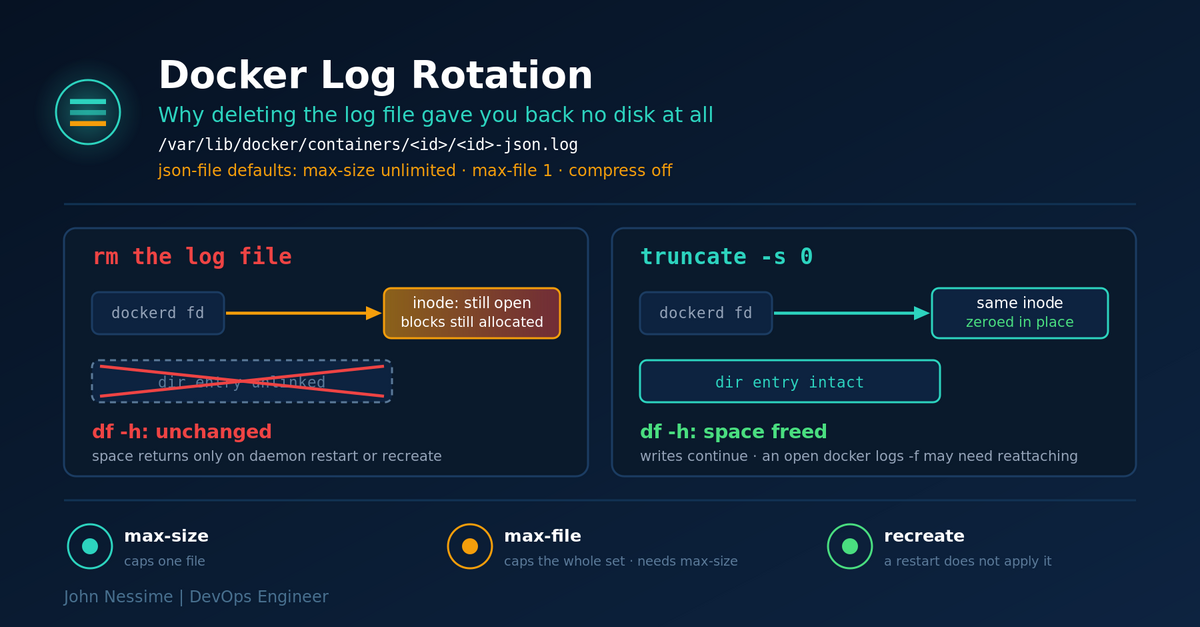
Docker Logs Ate My Disk: A Working Guide to Log Drivers and Rotation

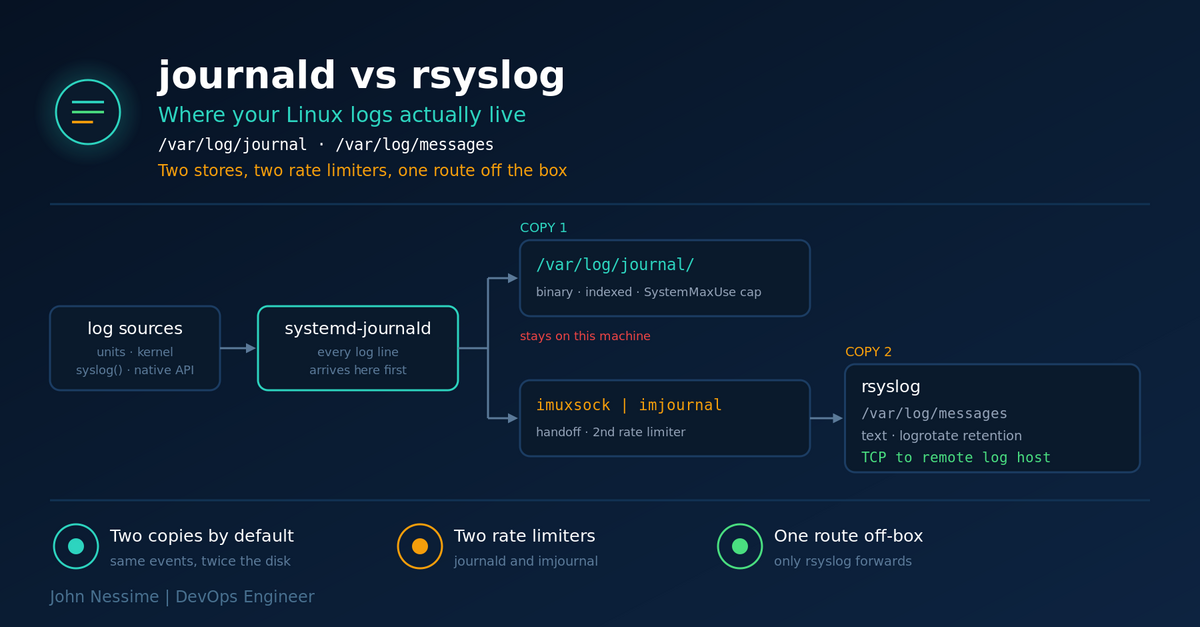
Docker's default logging driver writes container output to a JSON file with no size limit and no rotation. This is a practical guide to Docker log rotation: what the defaults actually do, why your daemon.json change did nothing, why deleting the log file did not free any disk, and how to choose between json-file, local, journald and shipping logs off the box.
Continue ReadingDocker Logs Ate My Disk: A Working Guide to Log Drivers and Rotation

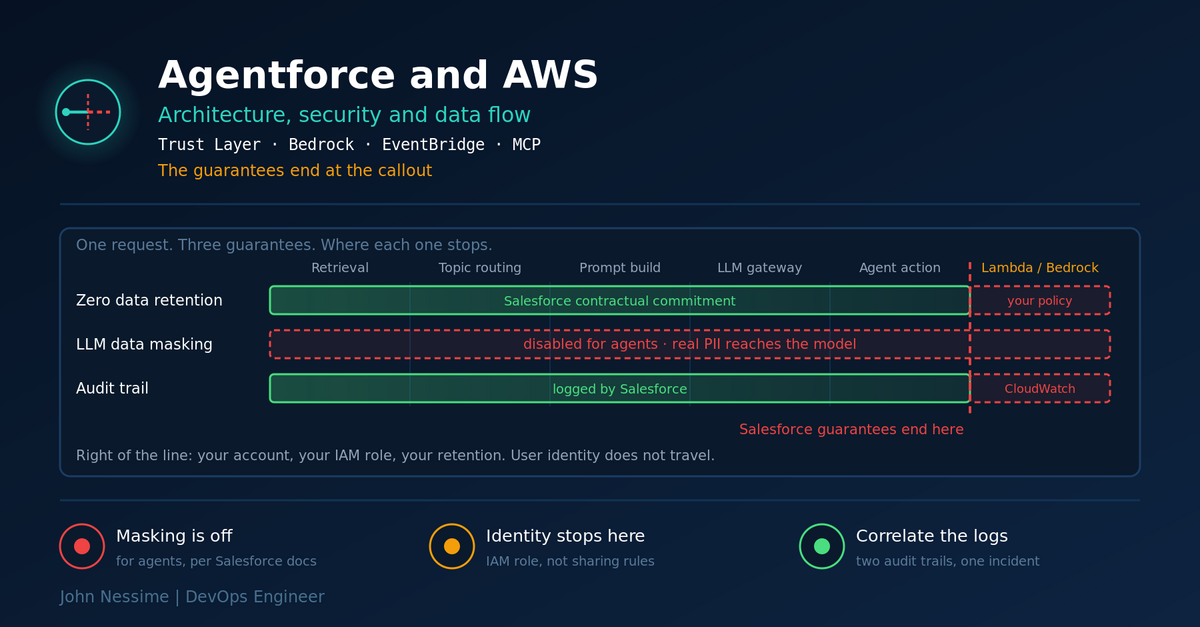
Agentforce and AWS: Where the Trust Layer Stops and Your Logs Begin

Agentforce and AWS wire together in four standard patterns, and every one of them has a point where Salesforce's guarantees stop and yours start. This traces a single request across each boundary it crosses, covers the Trust Layer default most write-ups get wrong (LLM data masking is disabled for agents), and sets out what changes the moment a callout lands in your own account: retention, audit trail, and user identity that does not travel.

Continue ReadingAgentforce and AWS: Where the Trust Layer Stops and Your Logs Begin

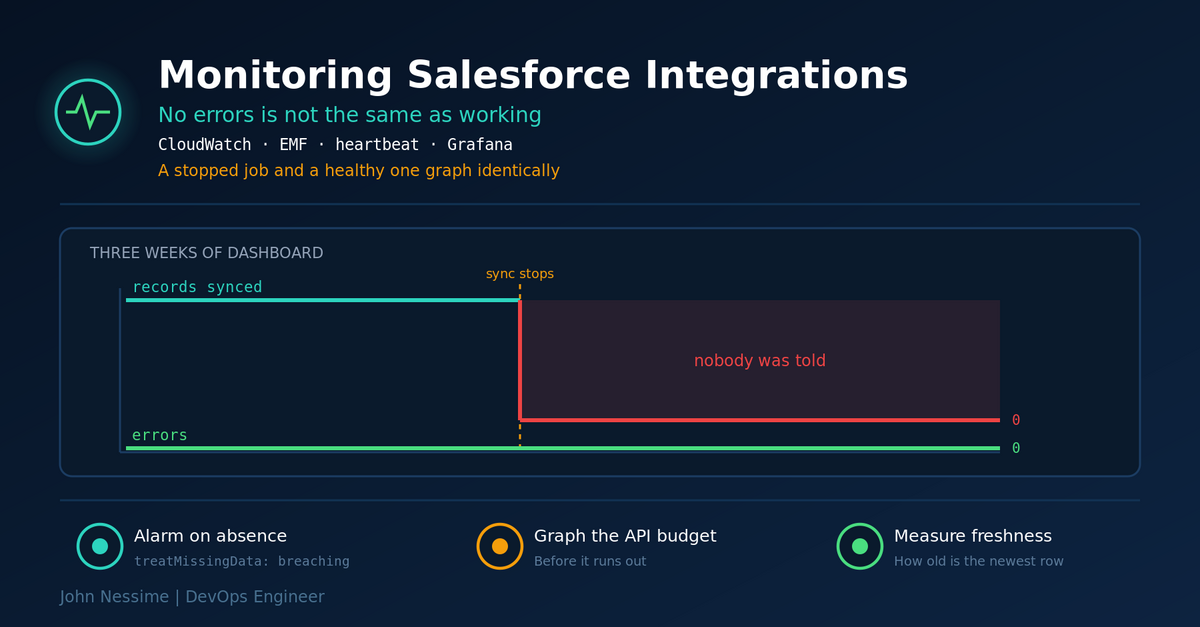
Zero Errors, Zero Records: Monitoring Salesforce Integrations with CloudWatch and Grafana

The error count was zero every day for three weeks. So was the invocation count. A stopped integration and a healthy one produce identical graphs, and every CloudWatch default is tuned to stay quiet when data stops arriving. Four signals worth emitting, and the alarm config that actually fires.

Continue ReadingZero Errors, Zero Records: Monitoring Salesforce Integrations with CloudWatch and Grafana