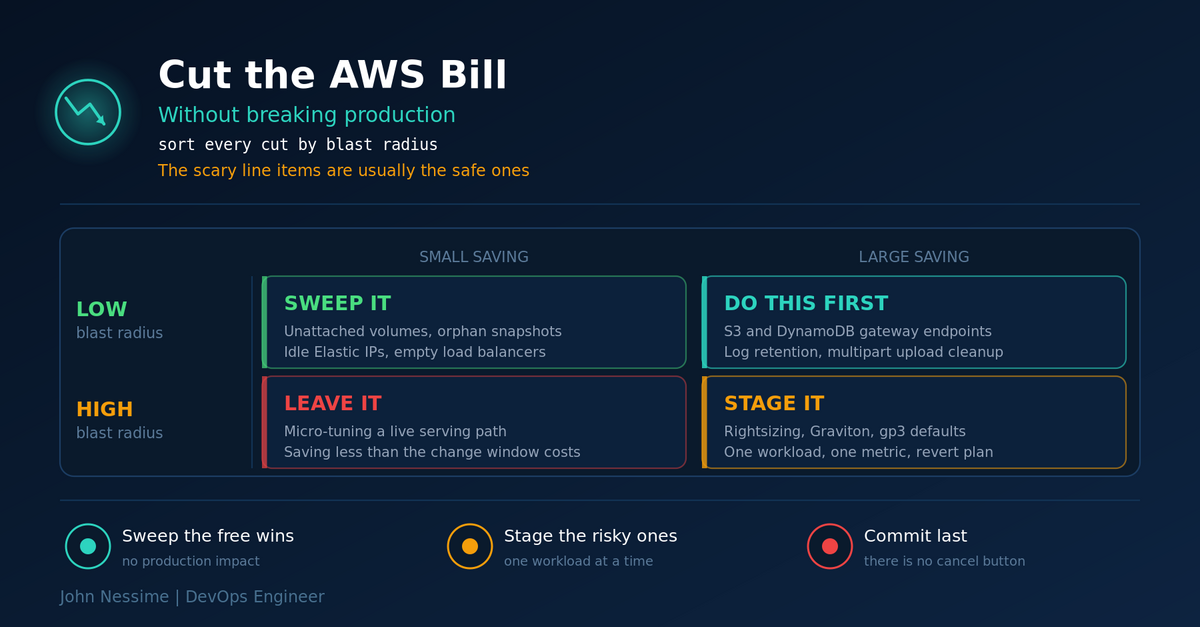
Cut AWS Costs Without Breaking Production: A Blast-Radius Playbook

Most AWS cost work goes wrong because it starts with the biggest line item, which is also the riskiest. Order the work by blast radius instead: free networking and storage fixes first, performance envelopes one workload at a time, and commitments last. Includes the commands to find the waste and the cuts that look harmless and are not.
Continue ReadingCut AWS Costs Without Breaking Production: A Blast-Radius Playbook

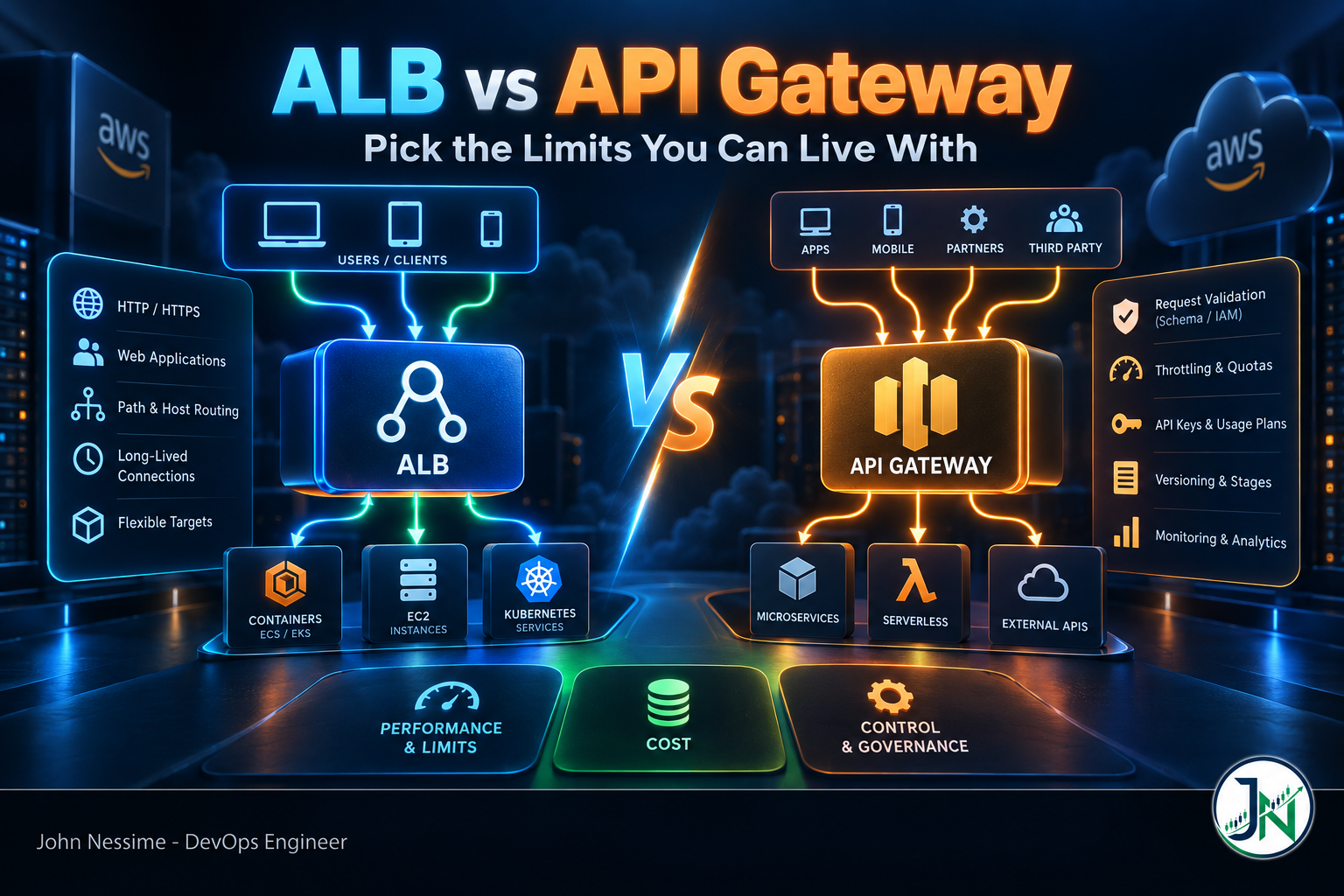
ALB vs API Gateway: Pick the Limits You Can Live With

Choosing between an Application Load Balancer and API Gateway is not a feature comparison. It is a choice of hard limits, a billing curve and an authentication story. Here is how each one bills you, which constraints surface months later, what ALB's native JWT validation changes, and a decision procedure you can run in ten minutes.

Continue ReadingALB vs API Gateway: Pick the Limits You Can Live With

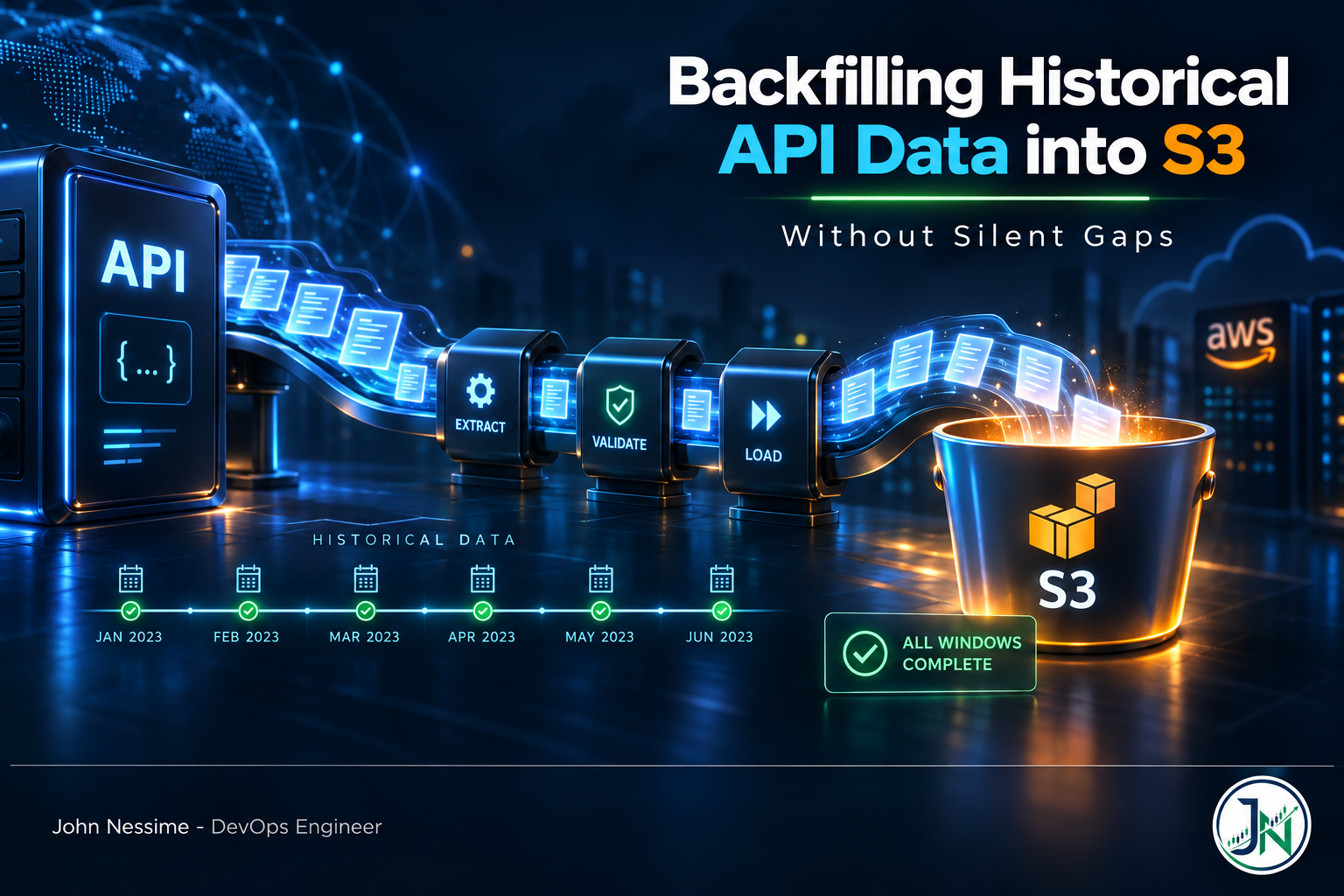
Backfilling Historical API Data into S3 Without Silent Gaps

A backfill that exits zero can still be missing a week of data, and nothing will tell you. This is a practical guide to the failure families behind silent gaps: pagination drift under a mutating source, retries that duplicate pages, prefix layouts designed for writes instead of reads, the seam where backfill meets live ingest, and the storage class rules that make mistakes expensive. Includes deterministic key derivation, S3 conditional writes, Athena partition projection, and a per-window manifest pattern that turns completeness into something you can query.

Continue ReadingBackfilling Historical API Data into S3 Without Silent Gaps

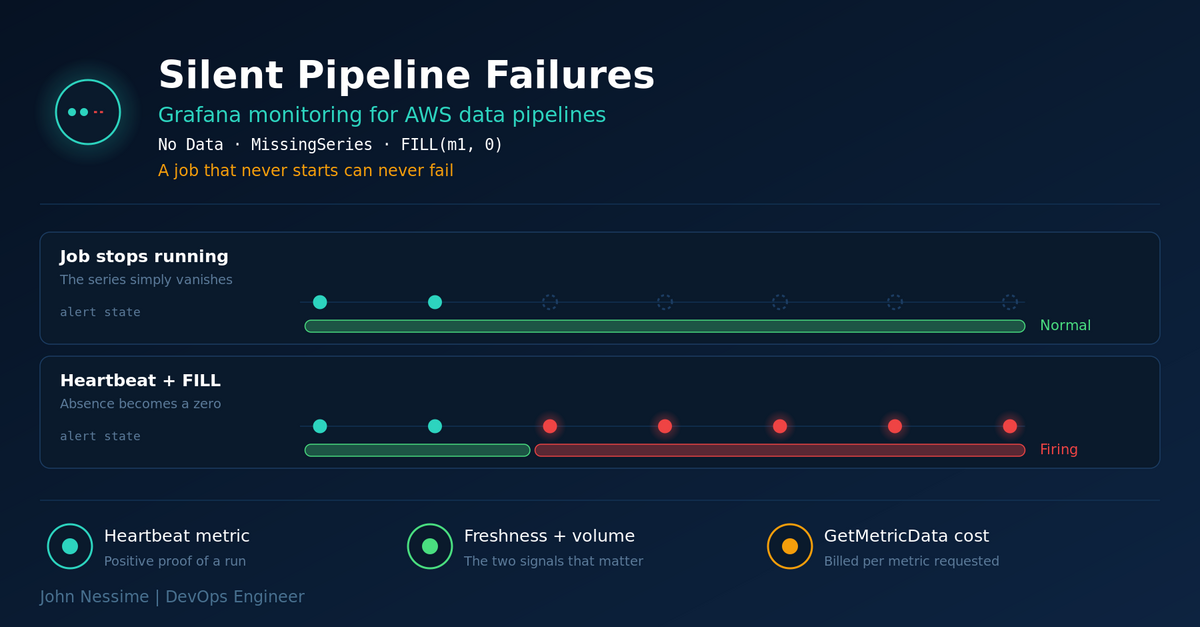
Grafana Monitoring for AWS Data Pipelines: The Green Dashboard Problem

A Glue job that stops running emits no metrics, so the dashboard stays green and the alert quietly resolves itself. Here is why Grafana monitoring for AWS data pipelines misses that failure, and the heartbeat, metric math and no-data configuration that closes the gap, along with the CloudWatch query costs and IAM boundaries nobody warns you about.

Continue ReadingGrafana Monitoring for AWS Data Pipelines: The Green Dashboard Problem

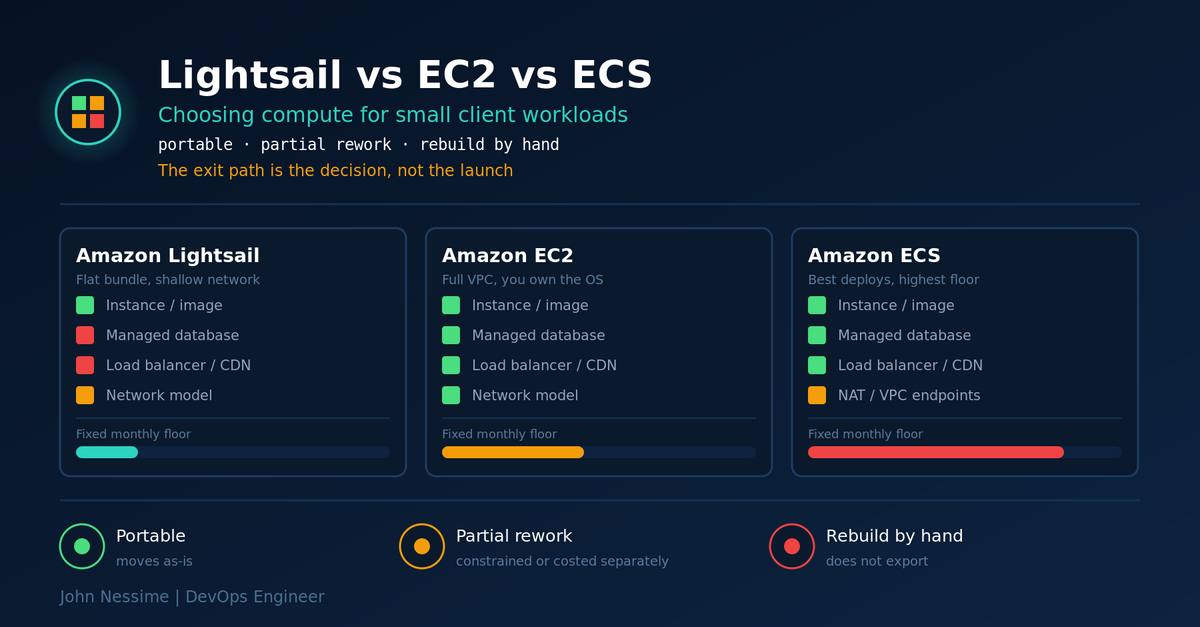
Lightsail vs EC2 vs ECS: What I Actually Pick for Small Client Workloads

Choosing between Lightsail, EC2 and ECS for a small client workload is not a performance question. It is a question about which constraints you are accepting and how expensive they are to reverse. Profiles of all three with where each wins and loses, the cost levers that actually move the bill, a six-step decision procedure, and the arguments that fall apart on contact with a real project.

Continue ReadingLightsail vs EC2 vs ECS: What I Actually Pick for Small Client Workloads

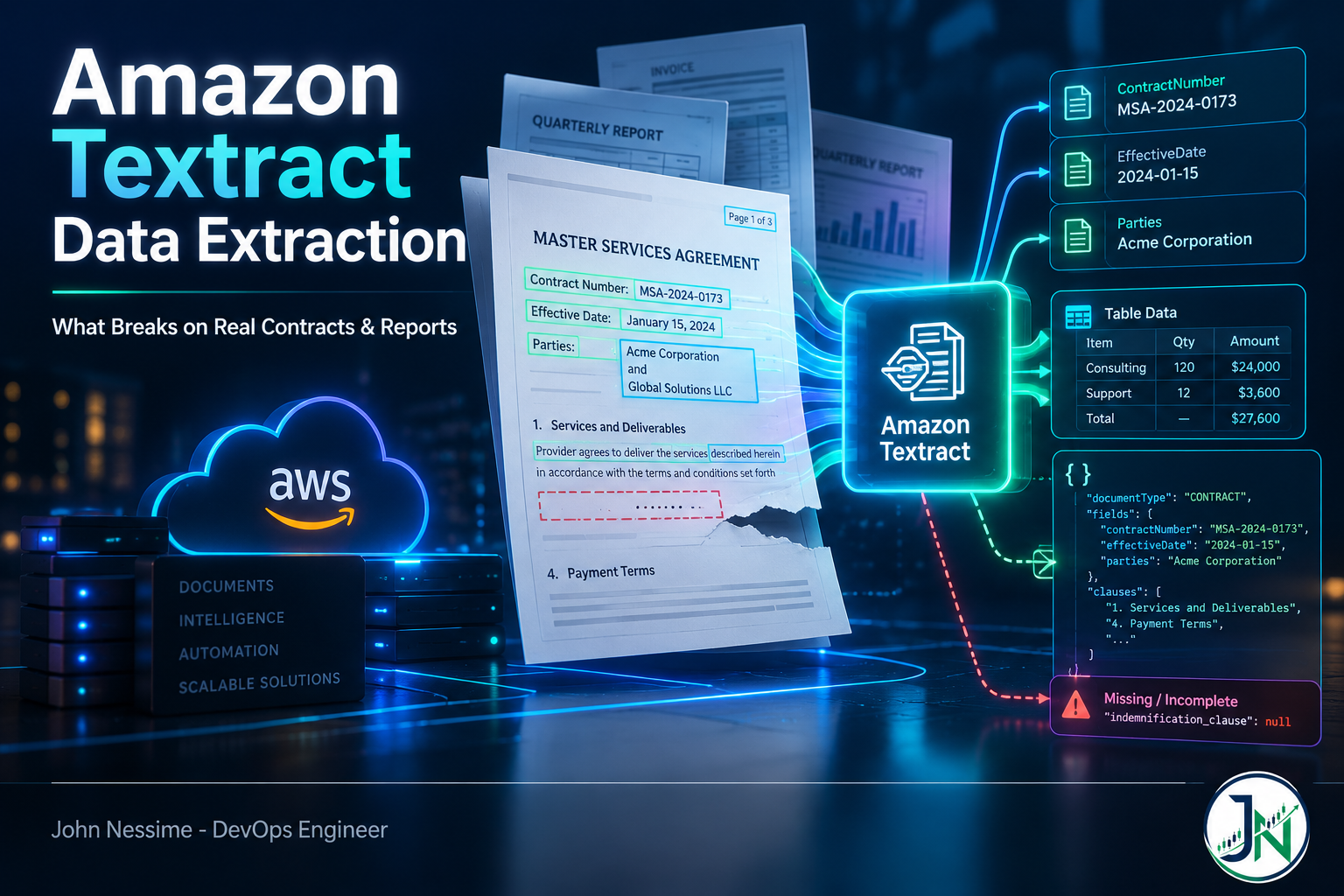
Amazon Textract Data Extraction: What Breaks on Real Contracts and Reports

Textract rarely fails loudly. It returns a plausible result that is quietly incomplete: a truncated result set, a tick box read as an empty string, a clause split across a page break. A practitioner's guide to the failure modes that actually bite when you point Amazon Textract at contracts, technical reports and correspondence, plus how to choose between sync and async, which feature types are worth paying for, and where Textract stops being the right tool.

Continue ReadingAmazon Textract Data Extraction: What Breaks on Real Contracts and Reports

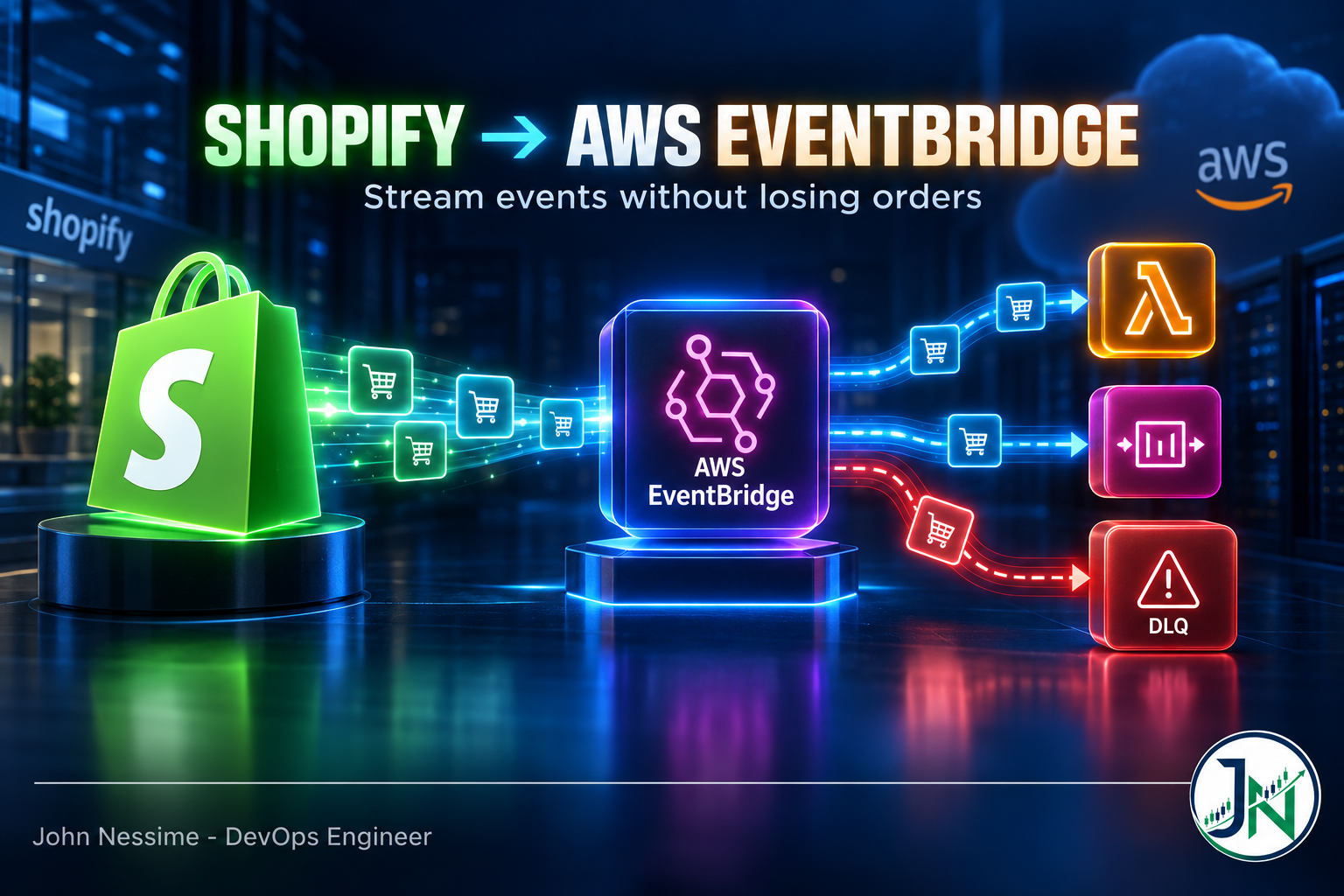
Streaming Shopify Events into AWS Without Losing Orders

Wiring Shopify webhooks into Amazon EventBridge takes an afternoon. Keeping every order is the hard part. A walk through the five failure families that actually bite when streaming Shopify events into AWS: the partner source that silently drops everything, duplicate and out-of-order deliveries, rule patterns that match nothing, targets that fail without a dead-letter queue, and the 64 KB metering rule that quietly inflates the bill.

Continue ReadingStreaming Shopify Events into AWS Without Losing Orders

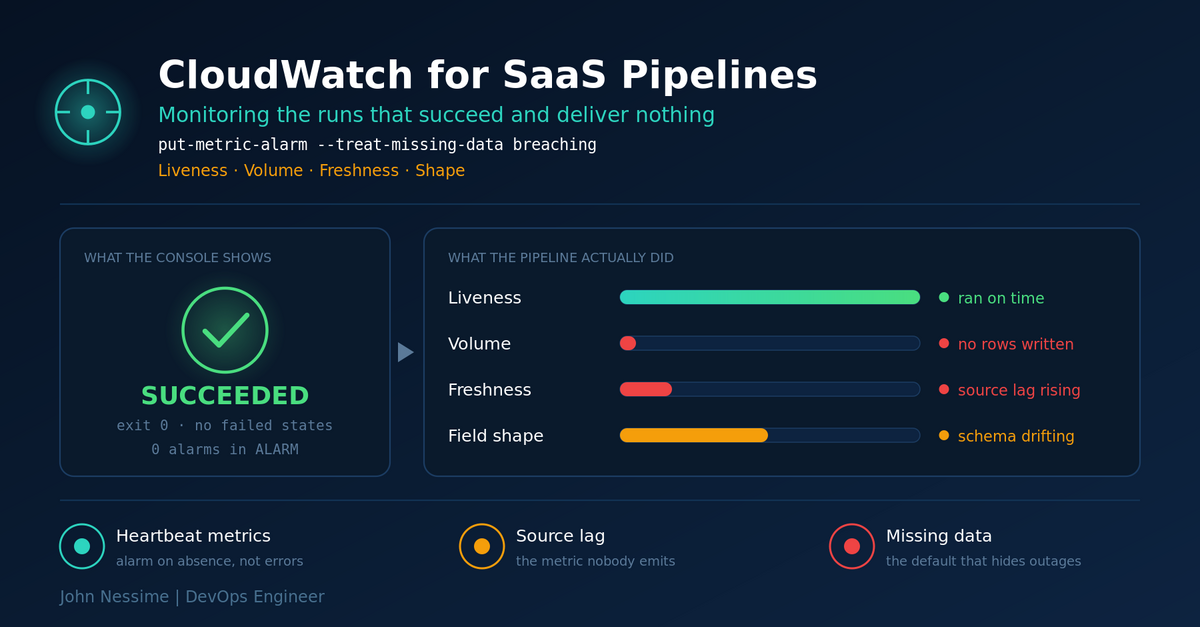
CloudWatch Data Pipeline Monitoring: Catching the Runs That Succeed and Deliver Nothing

Your SaaS pipeline will fail far more often by succeeding at nothing than by throwing an exception, and every CloudWatch default treats an absent metric as a non-event. Here are the four signals worth alarming on: liveness, volume, freshness and shape, plus the missing-data traps that leave alarms permanently green.

Continue ReadingCloudWatch Data Pipeline Monitoring: Catching the Runs That Succeed and Deliver Nothing

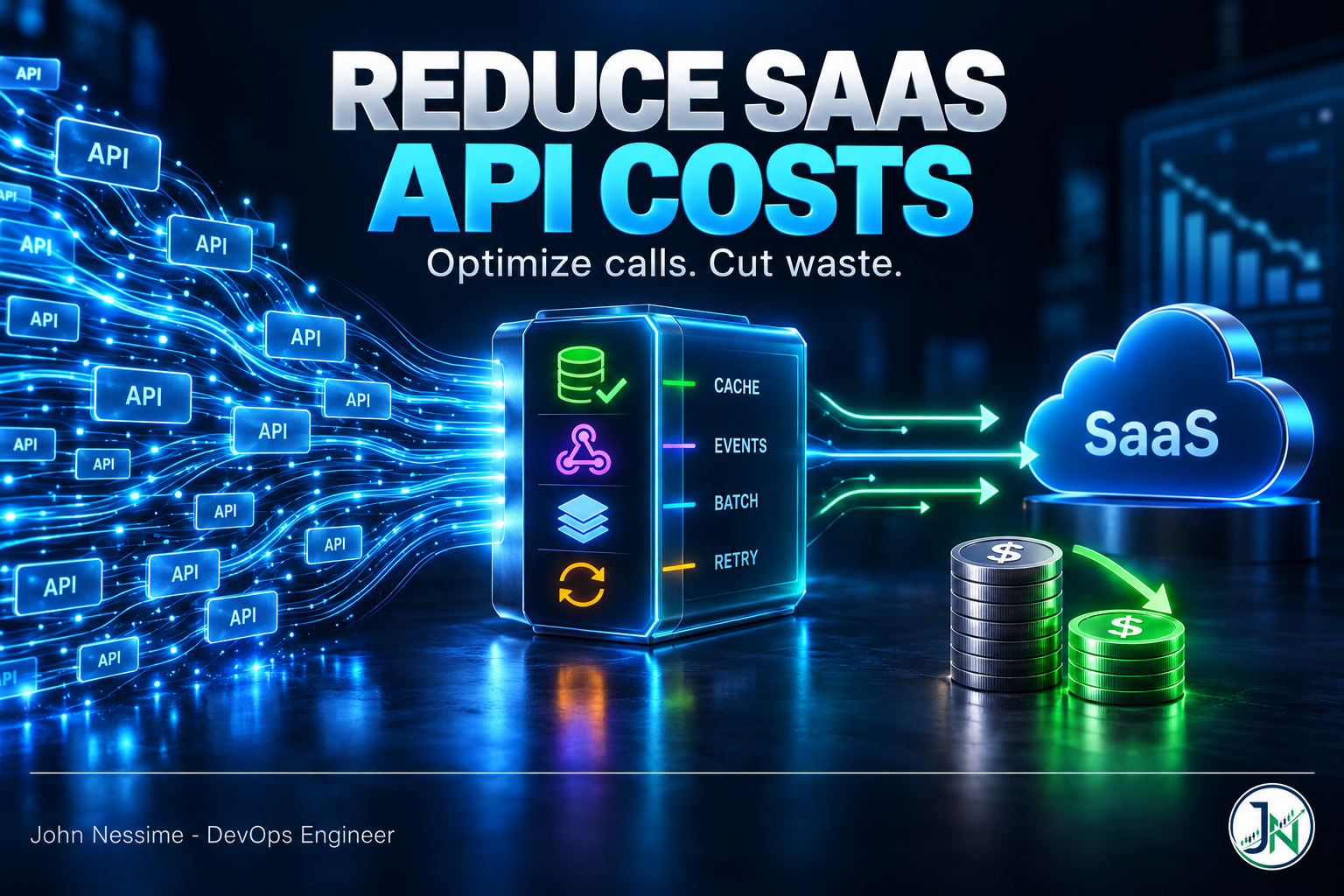
Optimizing API Calls to Reduce SaaS Costs: Six Levers That Actually Move the Bill

Third-party API spend is the one production signal with no error rate attached to it, which is why it creeps up quietly. This is a working engineer's guide to reducing SaaS API costs by changing the shape of your calls: reading the billing unit before you optimise anything, killing pointless polling with conditional requests and webhooks, collapsing N+1 patterns, caching with stampede protection and per-tenant keys, stopping your own retry amplification, and attributing spend so you can prove the work paid off.

Continue ReadingOptimizing API Calls to Reduce SaaS Costs: Six Levers That Actually Move the Bill