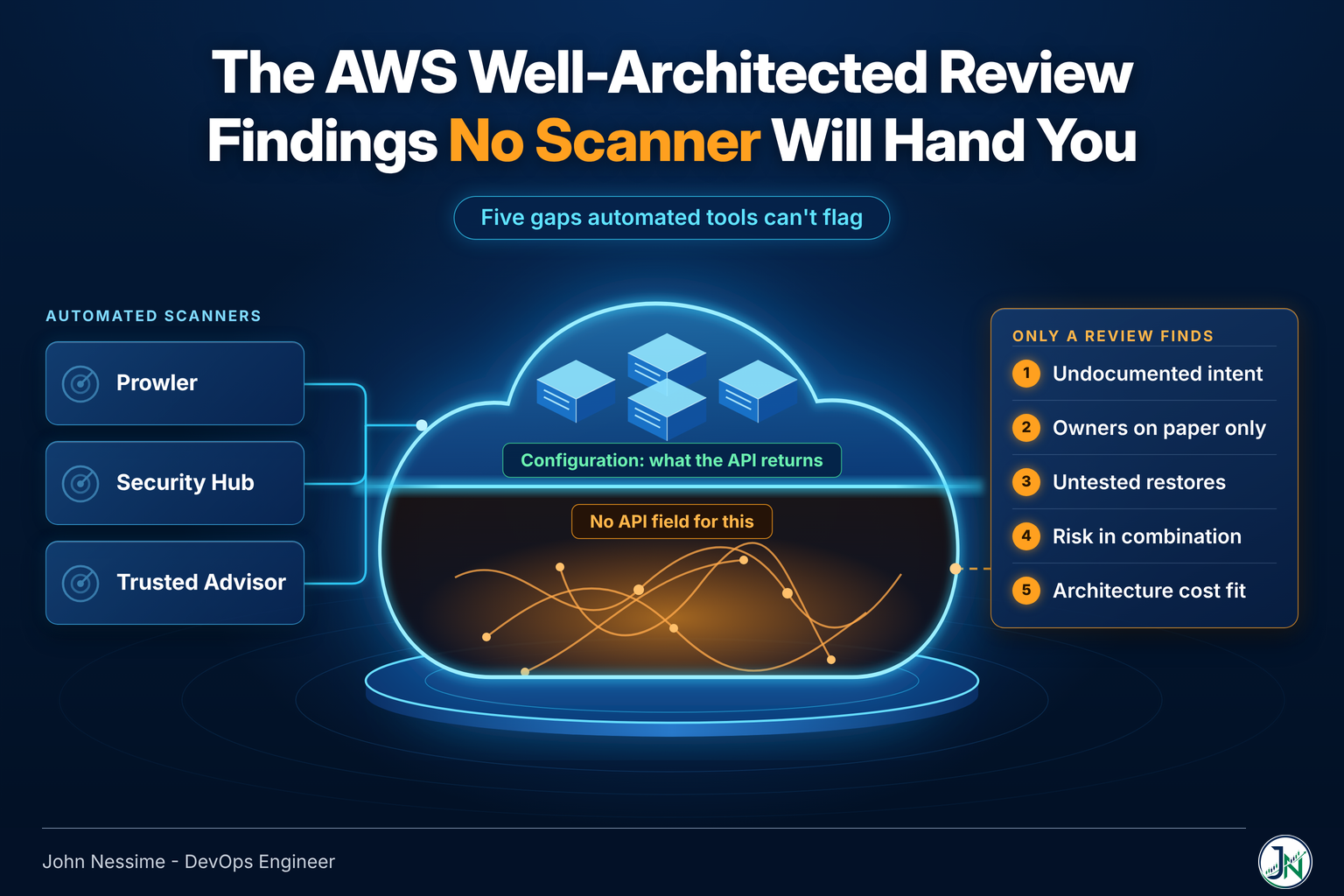
The AWS Well-Architected Review Findings No Scanner Will Hand You

Security Hub is green, Trusted Advisor is green, and the thing that takes the workload down isn't in either report. Five gap families I work through in an AWS Well-Architected review that no configuration scanner can reach: undocumented intent, paper ownership, untested recovery, correlated blast radius, and cost efficiency measured against the wrong architecture.
Continue ReadingThe AWS Well-Architected Review Findings No Scanner Will Hand You

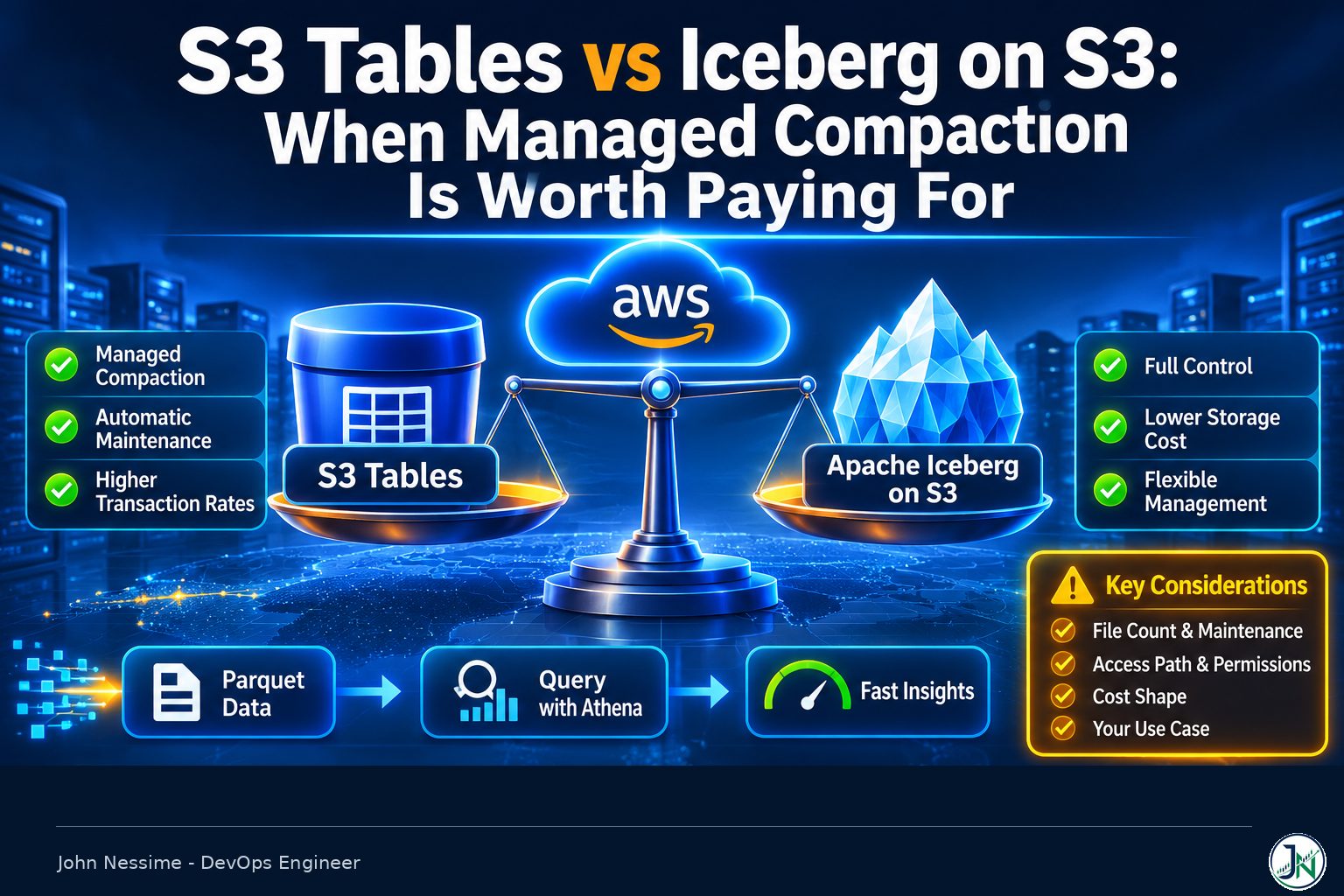
S3 Tables vs Iceberg on S3: When Managed Compaction Is Worth Paying For

Managed Iceberg is not a storage upgrade, it is a decision about who owns compaction, snapshot expiry and orphan cleanup. A practical comparison of S3 Tables against Iceberg in general purpose S3 buckets, covering the maintenance you actually get, the Lake Formation trap in the access path, how the two bills are shaped, and a seven-step decision procedure you can run against a single table.

Continue ReadingS3 Tables vs Iceberg on S3: When Managed Compaction Is Worth Paying For

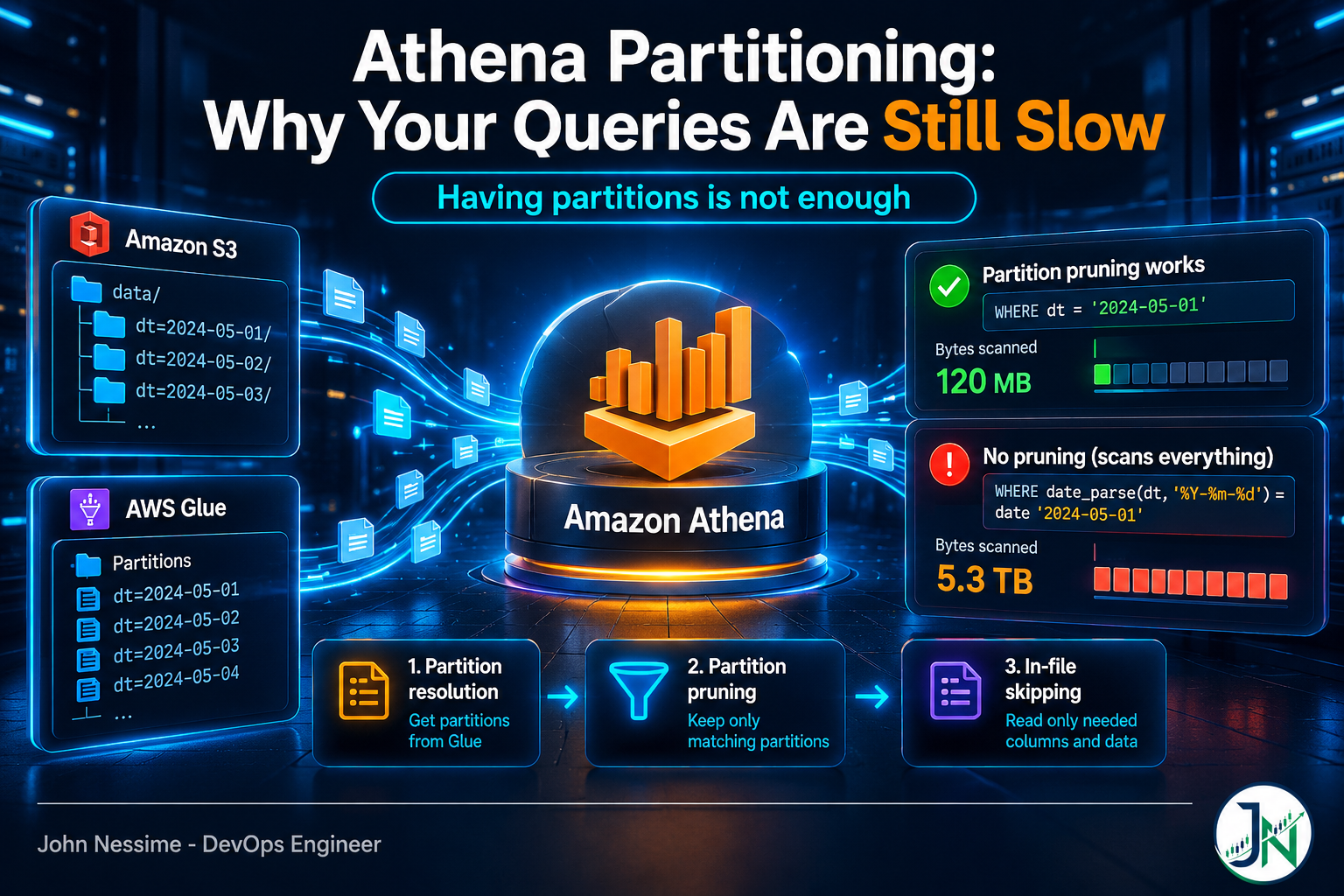
Athena Partitioning: Why Your Queries Are Still Slow

Partitioning an Athena table is not the same as getting the benefit of it. A walkthrough of the three failure families behind slow queries on partitioned external data: predicates that never prune, catalog lookups that dominate planning, and file layouts that undo everything. Includes partition projection trade-offs, Glue partition indexes, compaction patterns, and how to tell which problem you have.

Continue ReadingAthena Partitioning: Why Your Queries Are Still Slow

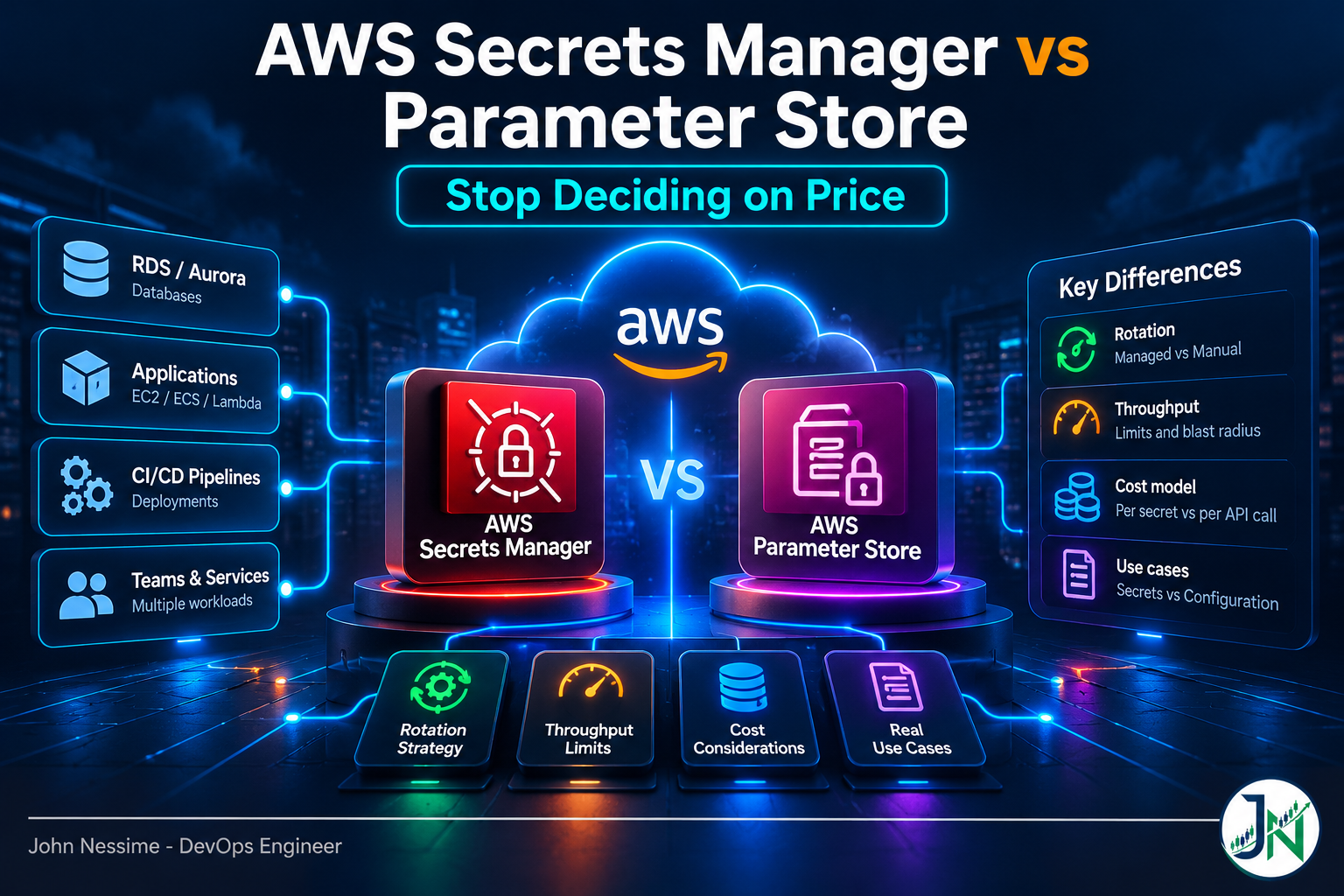
AWS Secrets Manager vs Parameter Store: Stop Deciding on Price

Most teams pick between AWS Secrets Manager and SSM Parameter Store on price, then get bitten months later by rotation semantics, a shared throughput quota, or a recovery window that blocks a redeploy. Here are the four levers that actually decide it, per value, plus a decision procedure you can run against a real inventory.

Continue ReadingAWS Secrets Manager vs Parameter Store: Stop Deciding on Price

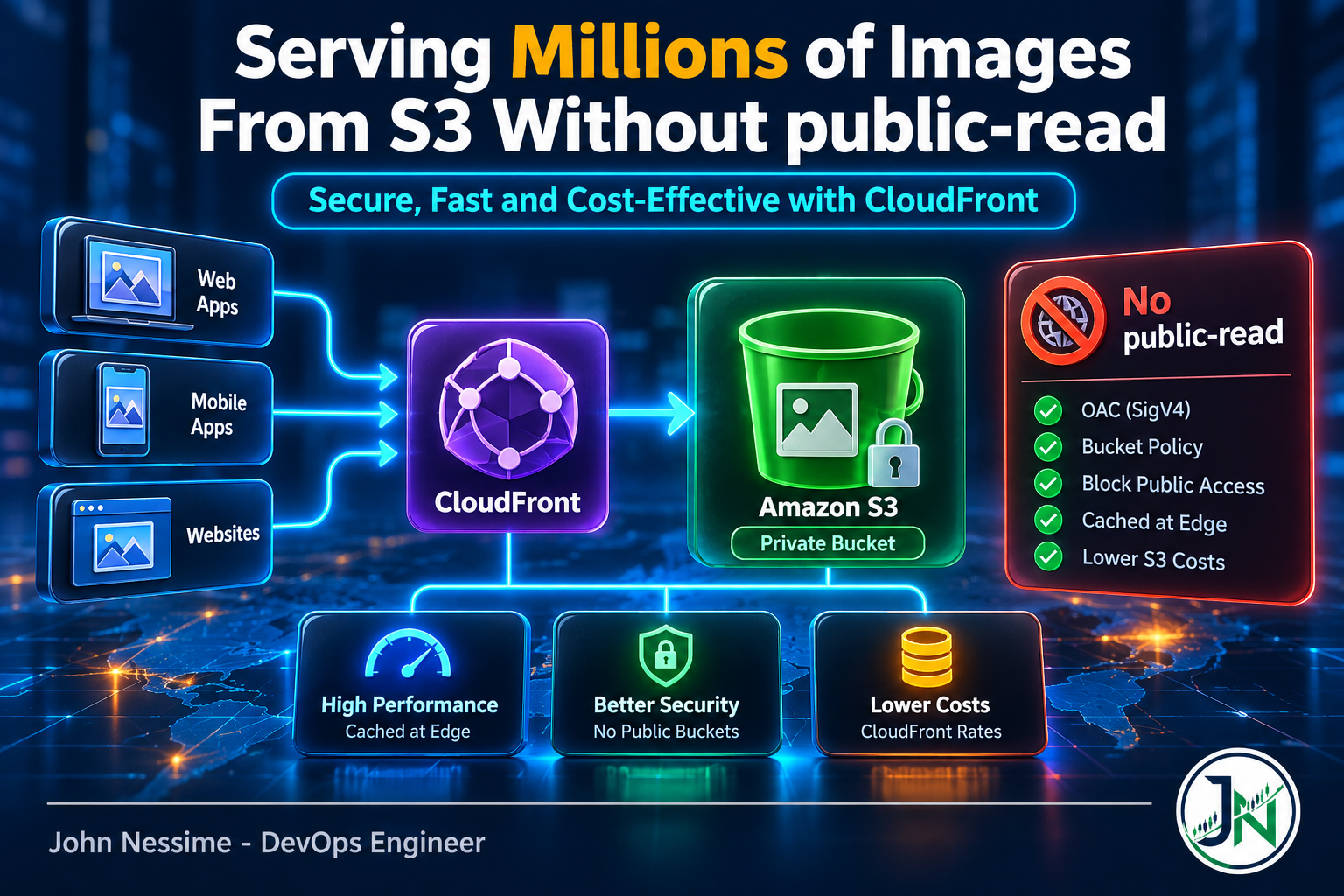
Serving Millions of Images From S3 Without public-read

A public S3 object gives every viewer a second path to your bytes, one that skips your cache, ignores your headers and bills on a different rate card. Here is how to serve S3 images without public-read at scale: origin access control, the bucket policy condition that matters, the 403-versus-404 trap that turns missing thumbnails into origin load, and cache design that survives millions of objects.

Continue ReadingServing Millions of Images From S3 Without public-read

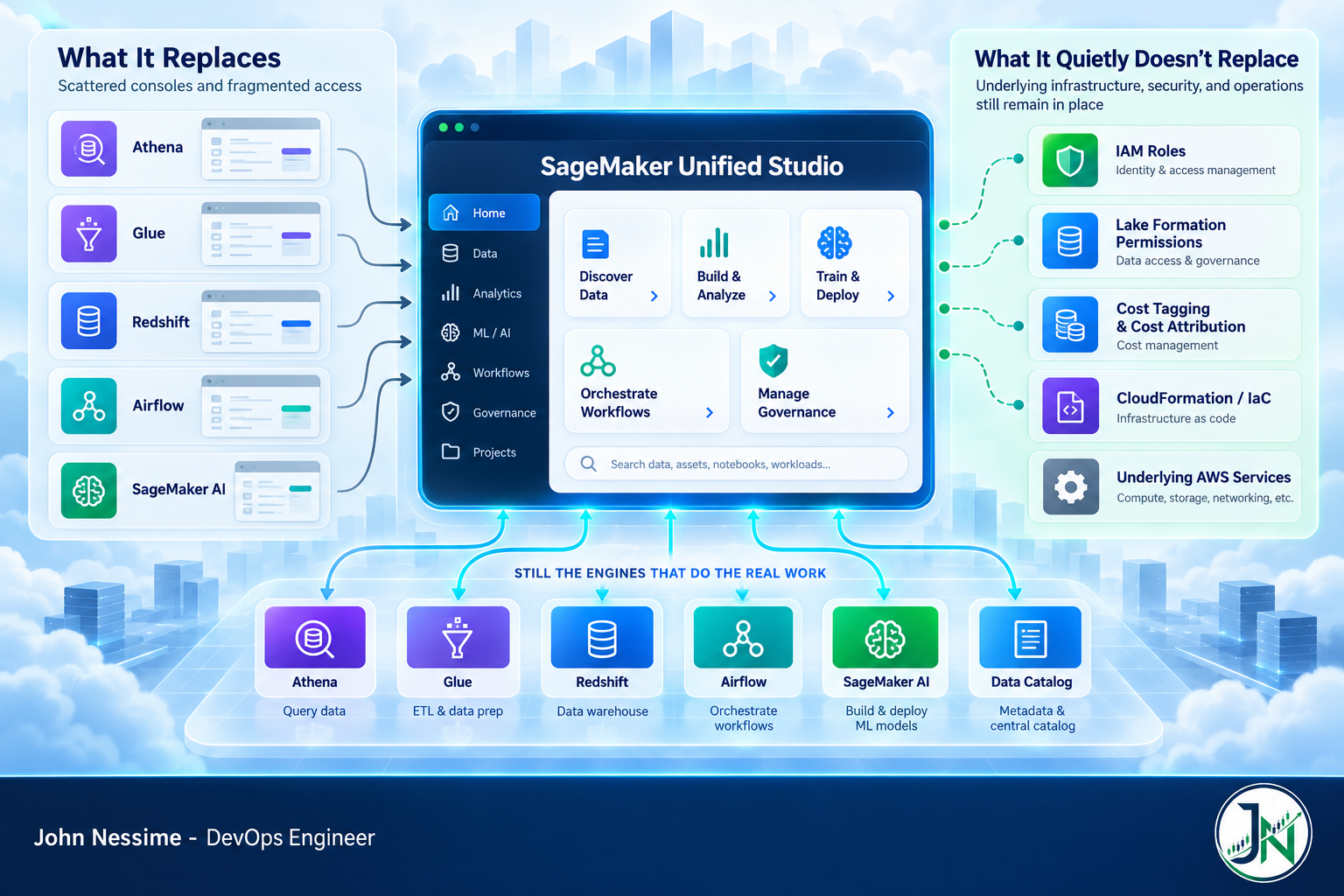
SageMaker Unified Studio: What It Replaces, and What It Quietly Doesn’t

SageMaker Unified Studio is a front door, not a runtime. It consolidates the interface while leaving your bill, your IAM design and your infrastructure as code exactly where they were, and it quietly hands you a DataZone governance system to operate. Here is what it genuinely replaces, what it doesn't, the failure modes that bite during adoption, and how to decide whether it is worth it for your team.

Continue ReadingSageMaker Unified Studio: What It Replaces, and What It Quietly Doesn’t

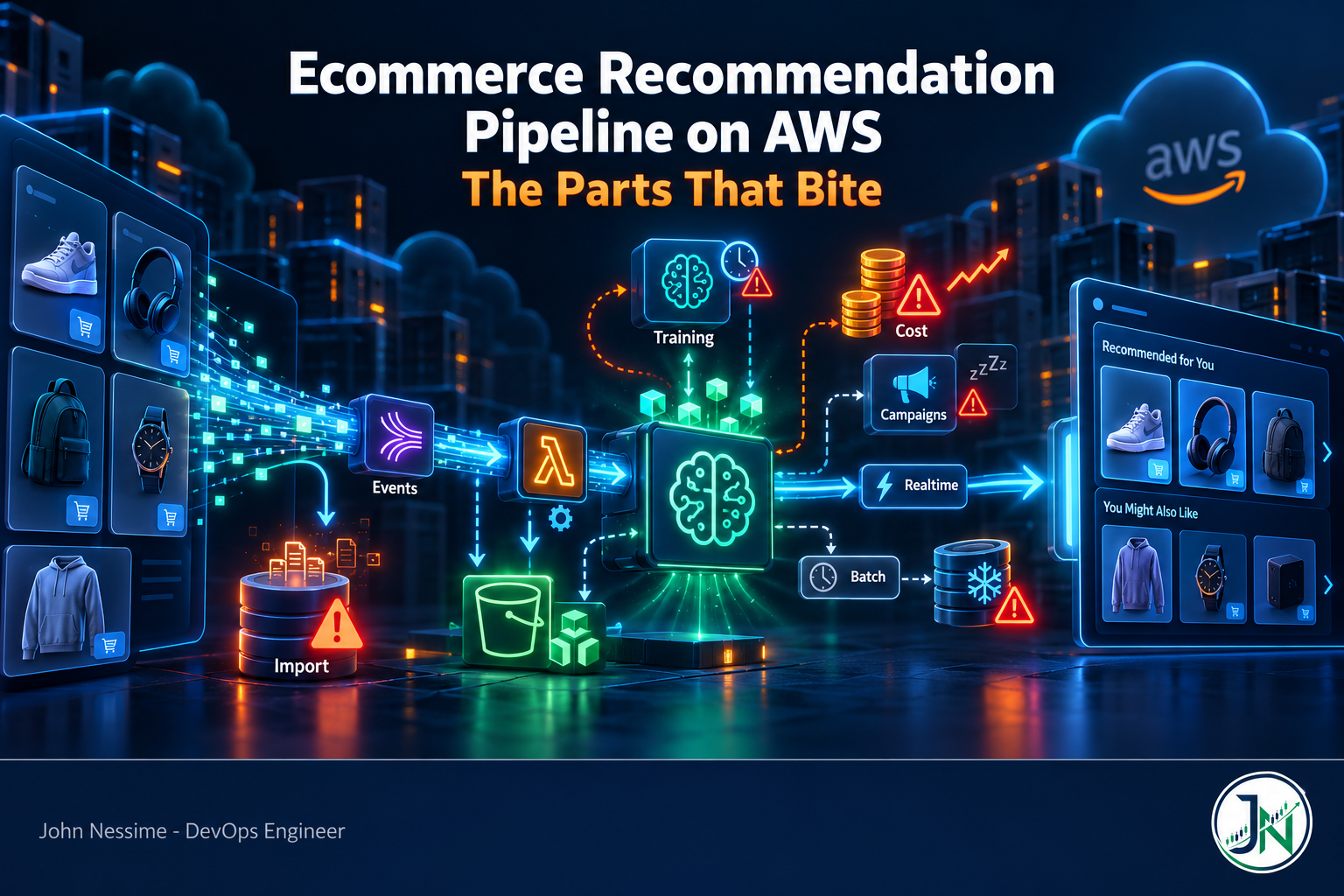
Building an Ecommerce Recommendation Pipeline on AWS: The Parts That Bite

An idle Amazon Personalize setup does not throw errors. It just bills. A practical walkthrough of the five decisions that shape an AWS ecommerce recommendation pipeline: domain recommenders versus custom recipes, bulk versus streaming ingestion, schema limits, training cadence, and real-time versus batch serving, with the failure modes that stay invisible until the invoice arrives.

Continue ReadingBuilding an Ecommerce Recommendation Pipeline on AWS: The Parts That Bite

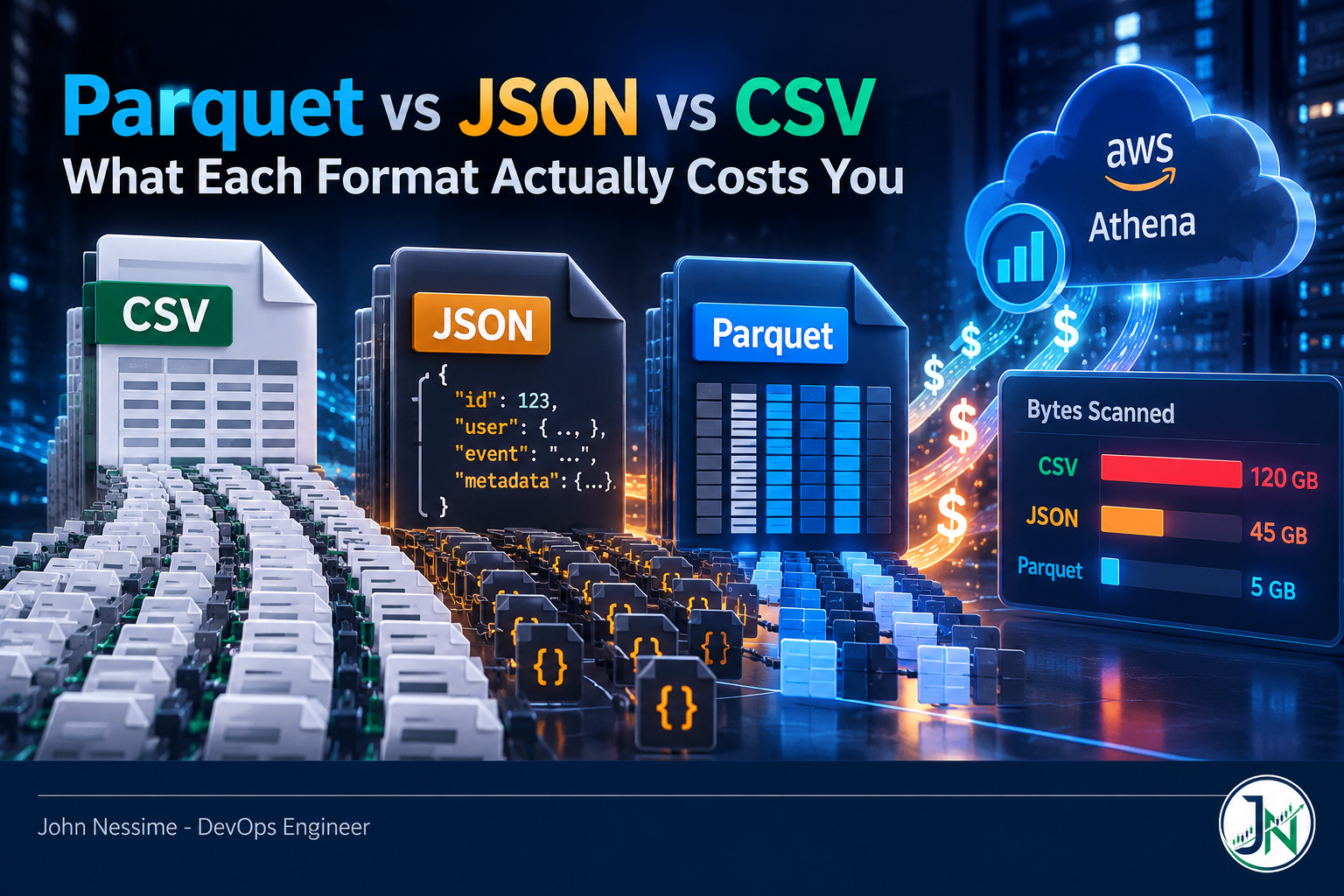
Parquet vs JSON vs CSV: What Each Format Actually Costs You

Format choice shows up as a bill, not a performance complaint. A working breakdown of where the money actually goes across Parquet, JSON and CSV: column pruning, row-group skipping, the gzip splittability trap, and request overhead. Includes a procedure for measuring the difference on your own data, and an honest account of where Parquet costs you.

Continue ReadingParquet vs JSON vs CSV: What Each Format Actually Costs You

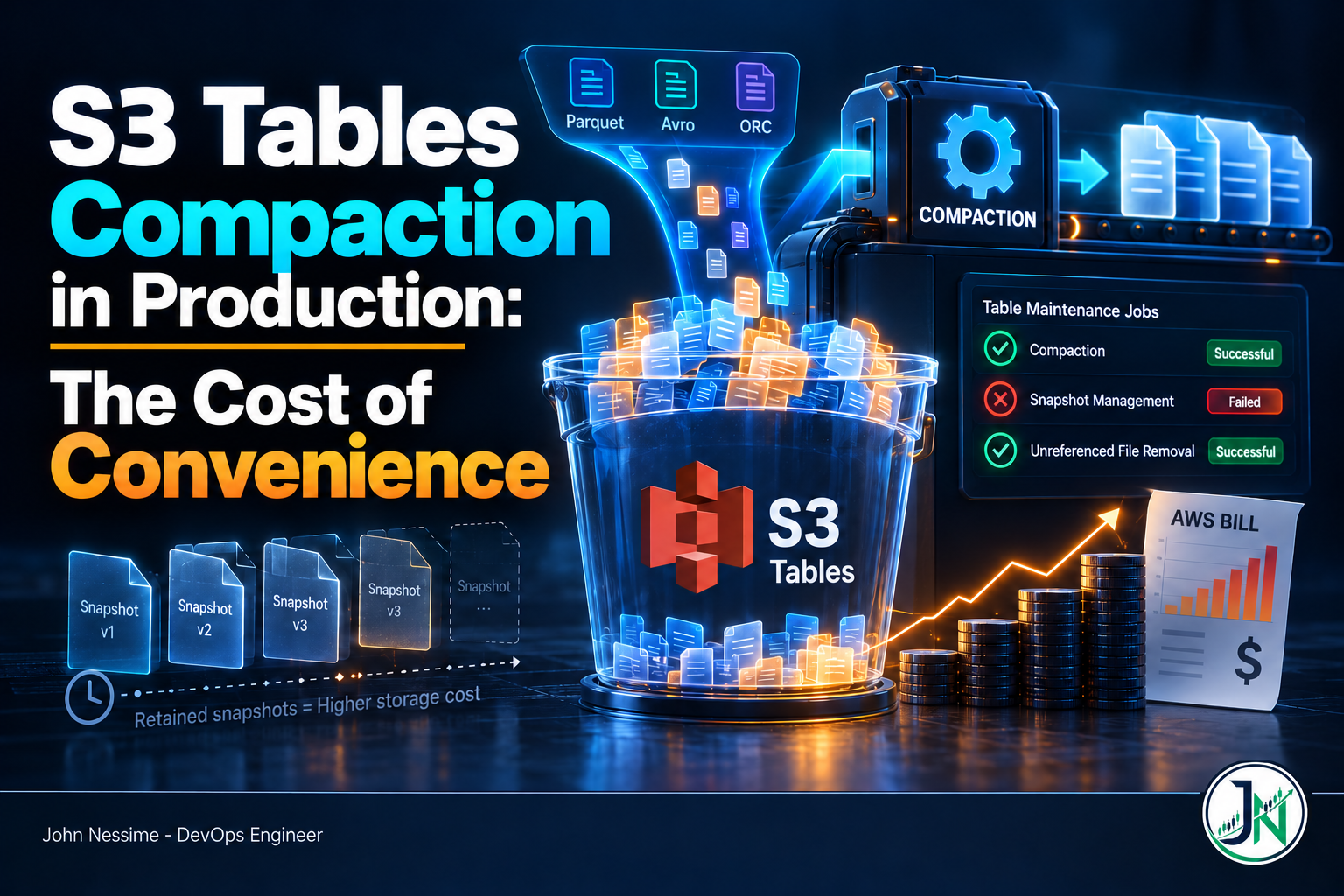
S3 Tables Compaction in Production: The Cost of Convenience

Managed Iceberg compaction in S3 Tables removes real operational work, but it will not tell you when it stops. A practical look at the maintenance jobs that fail silently, the retention cascade that keeps superseded data on your bill for two weeks, how compaction charges actually accumulate, and the handful of knobs worth touching.

Continue ReadingS3 Tables Compaction in Production: The Cost of Convenience