One Customer, Four Systems: Unifying Shopify, Stripe, CRM and Support Data

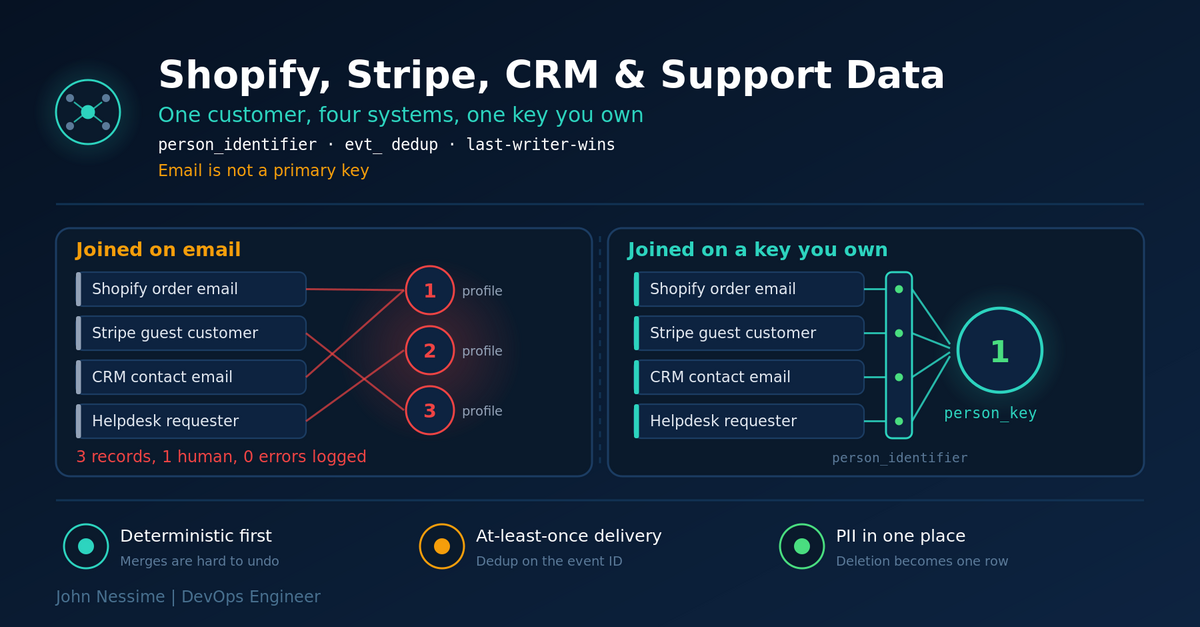
Three CRM records, one person, and nothing in the logs to explain it. A practical walkthrough of what actually breaks when you unify Shopify, Stripe, CRM and support data: guest-checkout identity, duplicate and out-of-order webhooks, revenue that never ties to payouts, deletion requests that miss half your copies, and reverse ETL write loops. Organized by failure family, with schema and handler patterns you can apply directly.

Continue ReadingOne Customer, Four Systems: Unifying Shopify, Stripe, CRM and Support Data

Bulk WordPress Migration: Moving 20 Sites to a New VPS in One Weekend

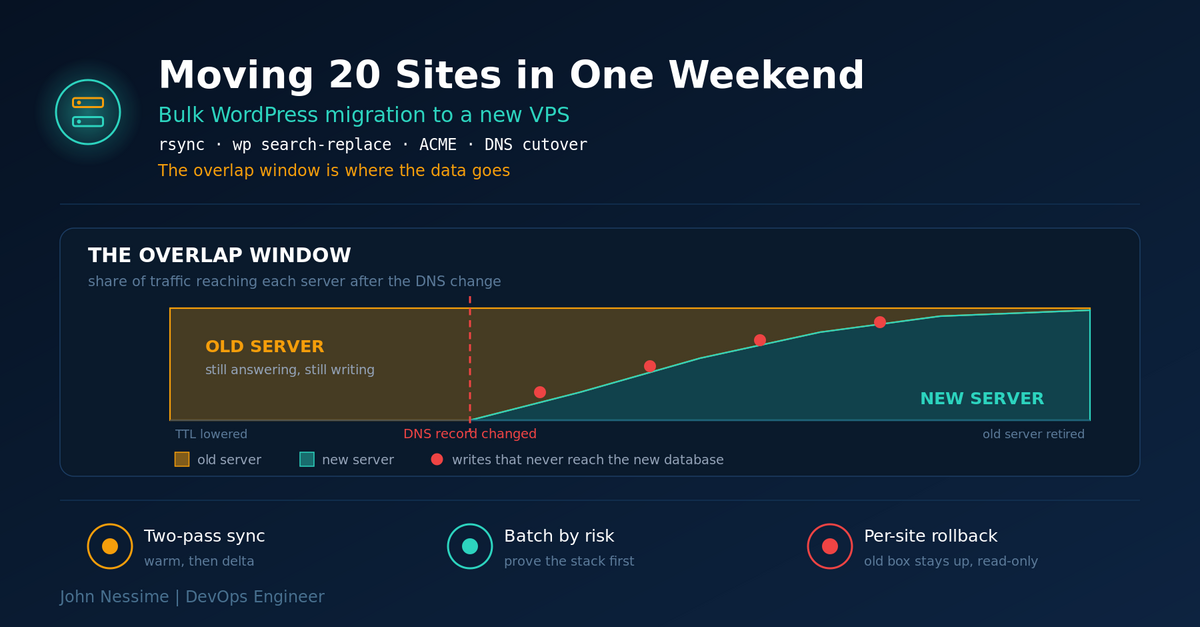
Moving one WordPress site is easy. Moving twenty in a weekend is a pipeline, and the failures that cost you are the quiet ones: writes landing on the old server, cron firing on two boxes, certificates blocked by ACME rate limits. Here is the fleet migration process I use, from manifest to per-site rollback.

Continue ReadingBulk WordPress Migration: Moving 20 Sites to a New VPS in One Weekend

Primavera P6 vs Unifier vs Aconex vs Textura: Which Oracle Product Do You Actually Need?

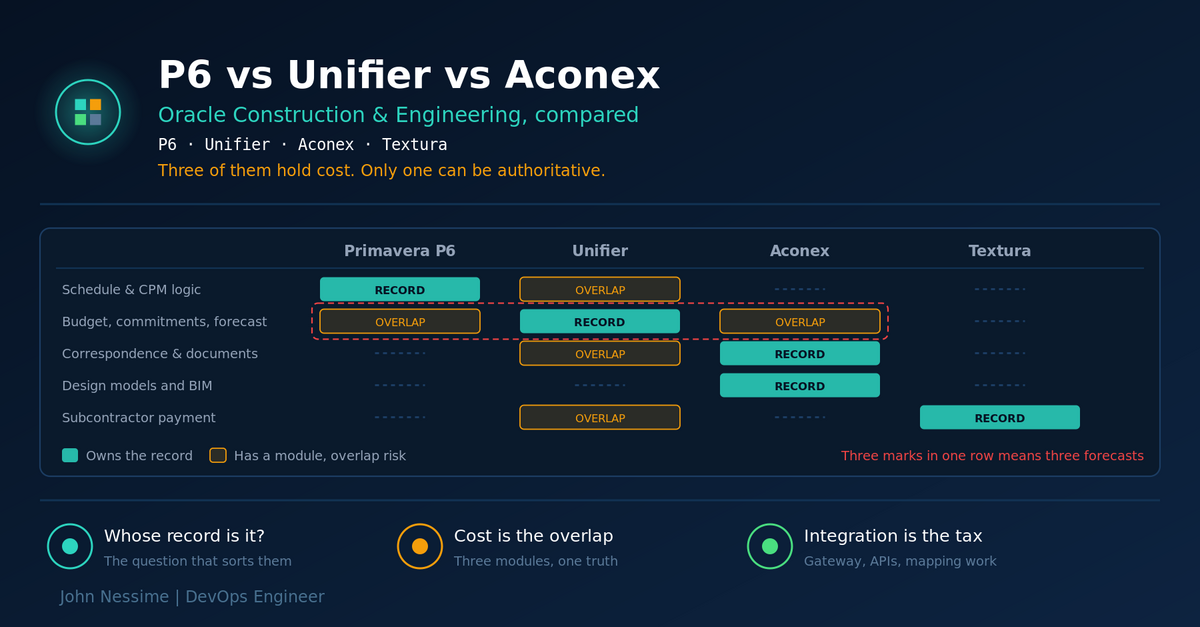
All four Oracle Construction and Engineering products overlap on purpose, and three of them hold cost. The damage comes from owning two and never deciding which one is authoritative. A practical comparison by whose record each product holds, plus a decision procedure and the integration constraints nobody scopes.

Continue ReadingPrimavera P6 vs Unifier vs Aconex vs Textura: Which Oracle Product Do You Actually Need?

Building a Secure Client Document Vault Your Accounting Firm Can Defend

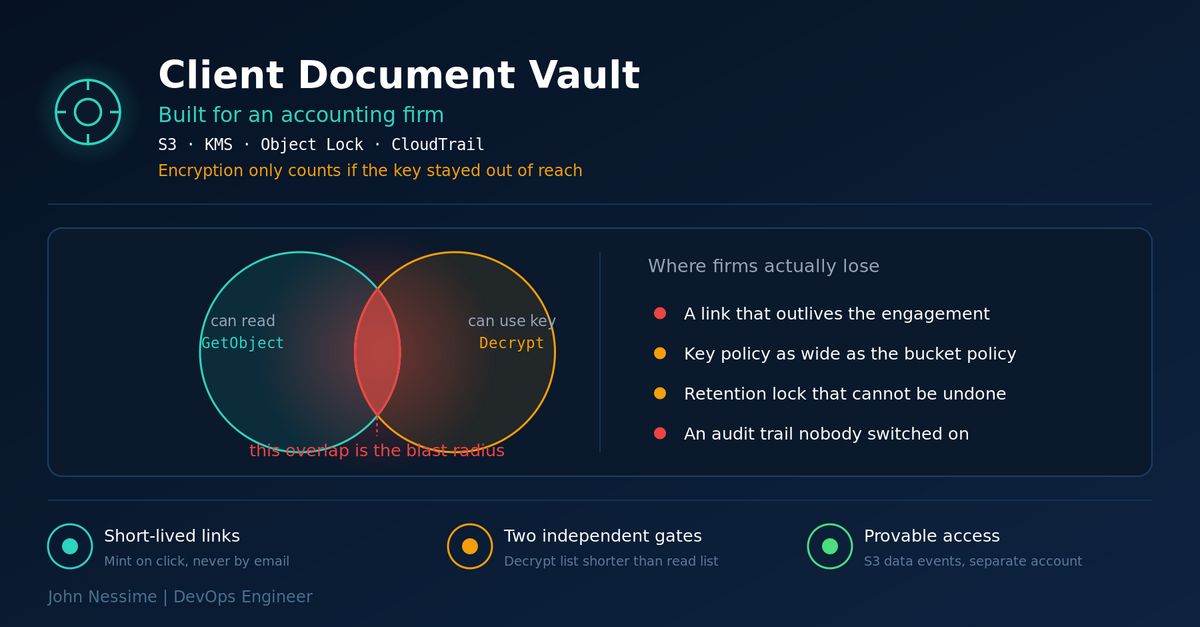
Most accounting-firm document vaults do not fail at the bucket. They fail at the edges: a download link that outlives the engagement, a KMS key policy as wide as the bucket policy, a retention lock that cannot be undone, and an audit trail nobody switched on. Six failure families, and the control that closes each.

Continue ReadingBuilding a Secure Client Document Vault Your Accounting Firm Can Defend

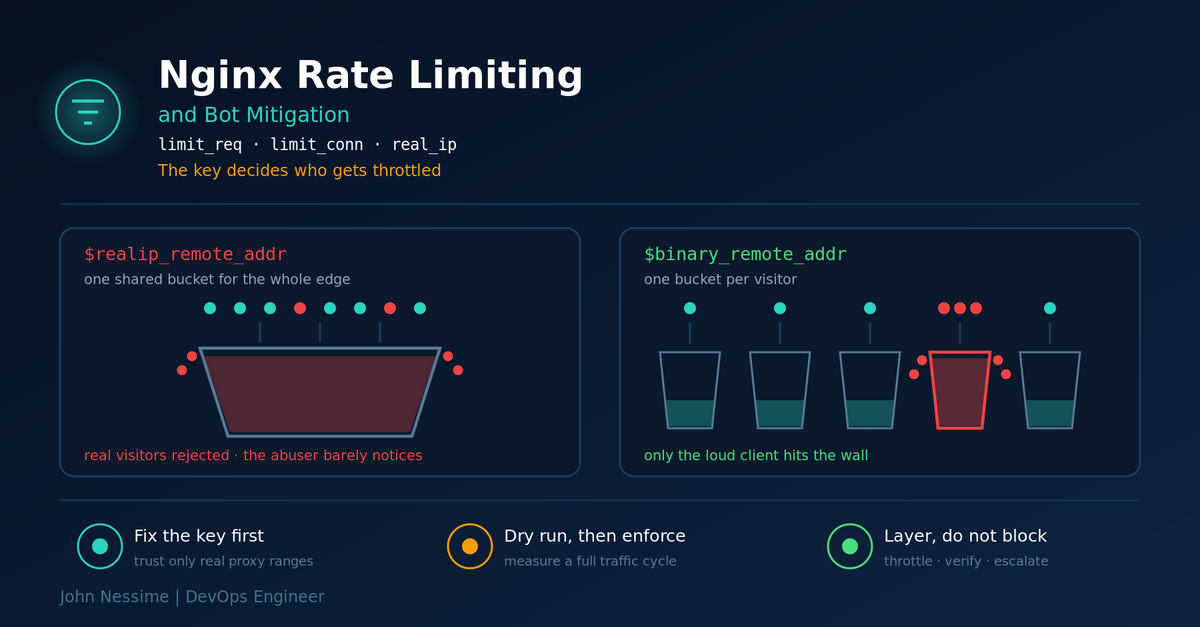
Nginx Rate Limiting and Bot Mitigation Without Blocking Real Users

A limit_req block that parses cleanly can still be doing absolutely nothing, or throttling every visitor behind one CDN edge. This guide covers Nginx rate limiting and bot mitigation as they actually behave in production: getting the key right behind a proxy, what burst and nodelay do to your traffic shape, sizing zones correctly, rolling out in dry run mode, and layering bot handling from robots.txt through user agent maps to firewall escalation.

Continue ReadingNginx Rate Limiting and Bot Mitigation Without Blocking Real Users