Turning External Documents Into Structured Data With Amazon Textract

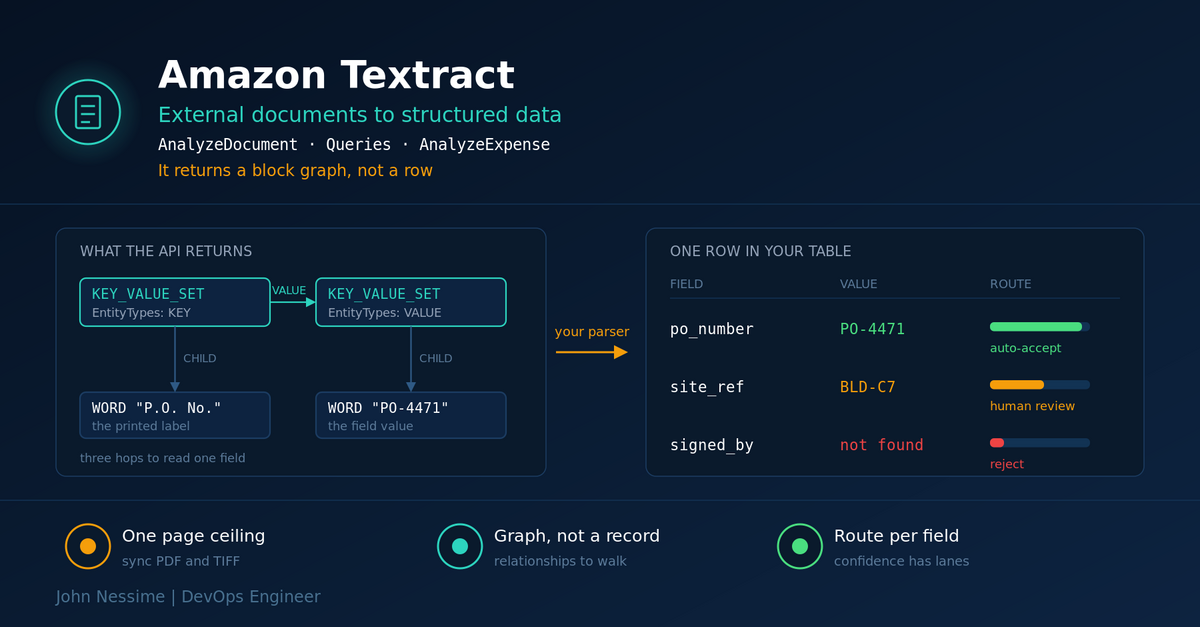
Amazon Textract almost never fails loudly. A working guide to turning external PDFs and scans into structured data: picking the right operation per document family, parsing the block graph, routing on per-field confidence, and catching the limits that silently truncate your records.
Continue ReadingTurning External Documents Into Structured Data With Amazon Textract

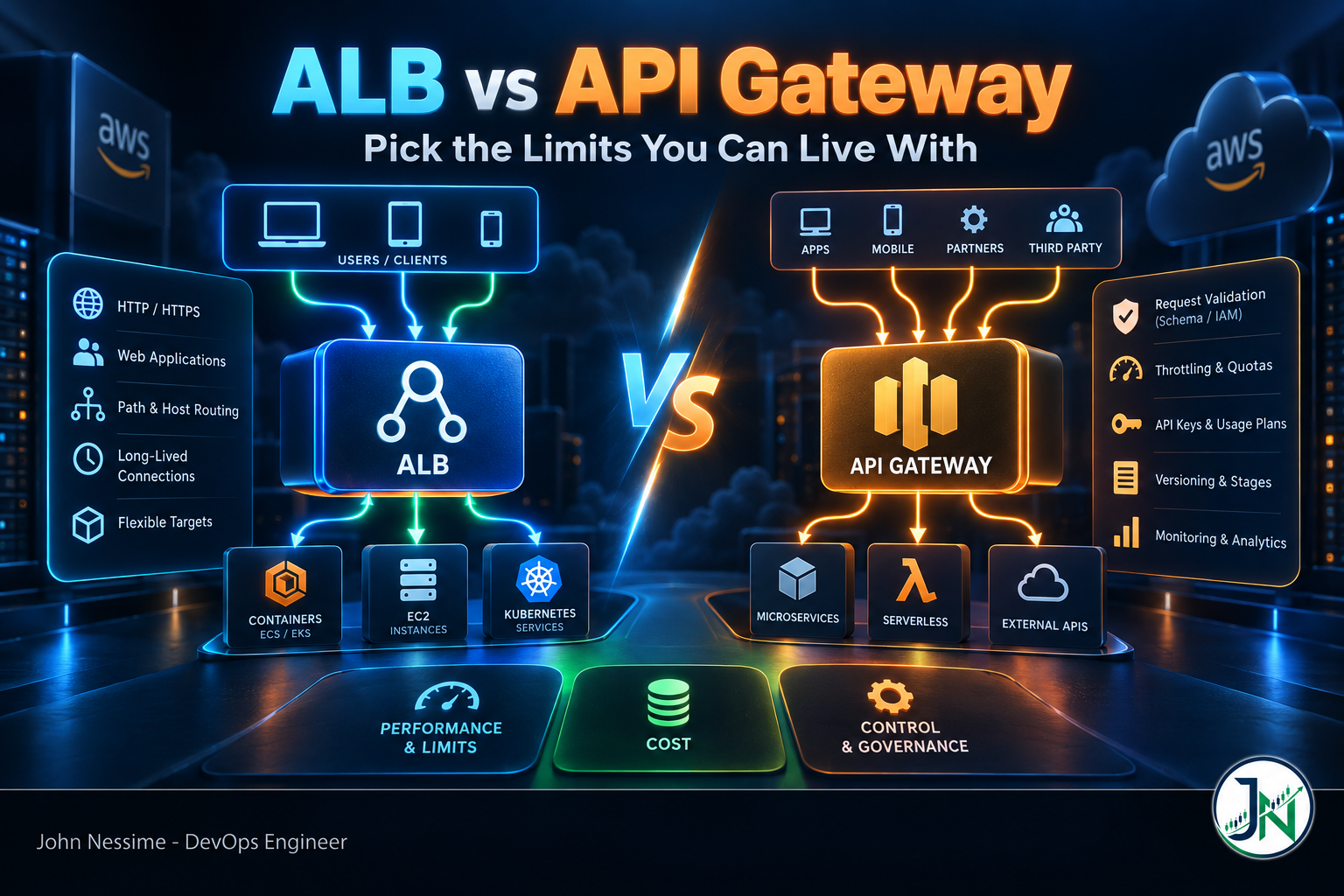
ALB vs API Gateway: Pick the Limits You Can Live With

Choosing between an Application Load Balancer and API Gateway is not a feature comparison. It is a choice of hard limits, a billing curve and an authentication story. Here is how each one bills you, which constraints surface months later, what ALB's native JWT validation changes, and a decision procedure you can run in ten minutes.

Continue ReadingALB vs API Gateway: Pick the Limits You Can Live With

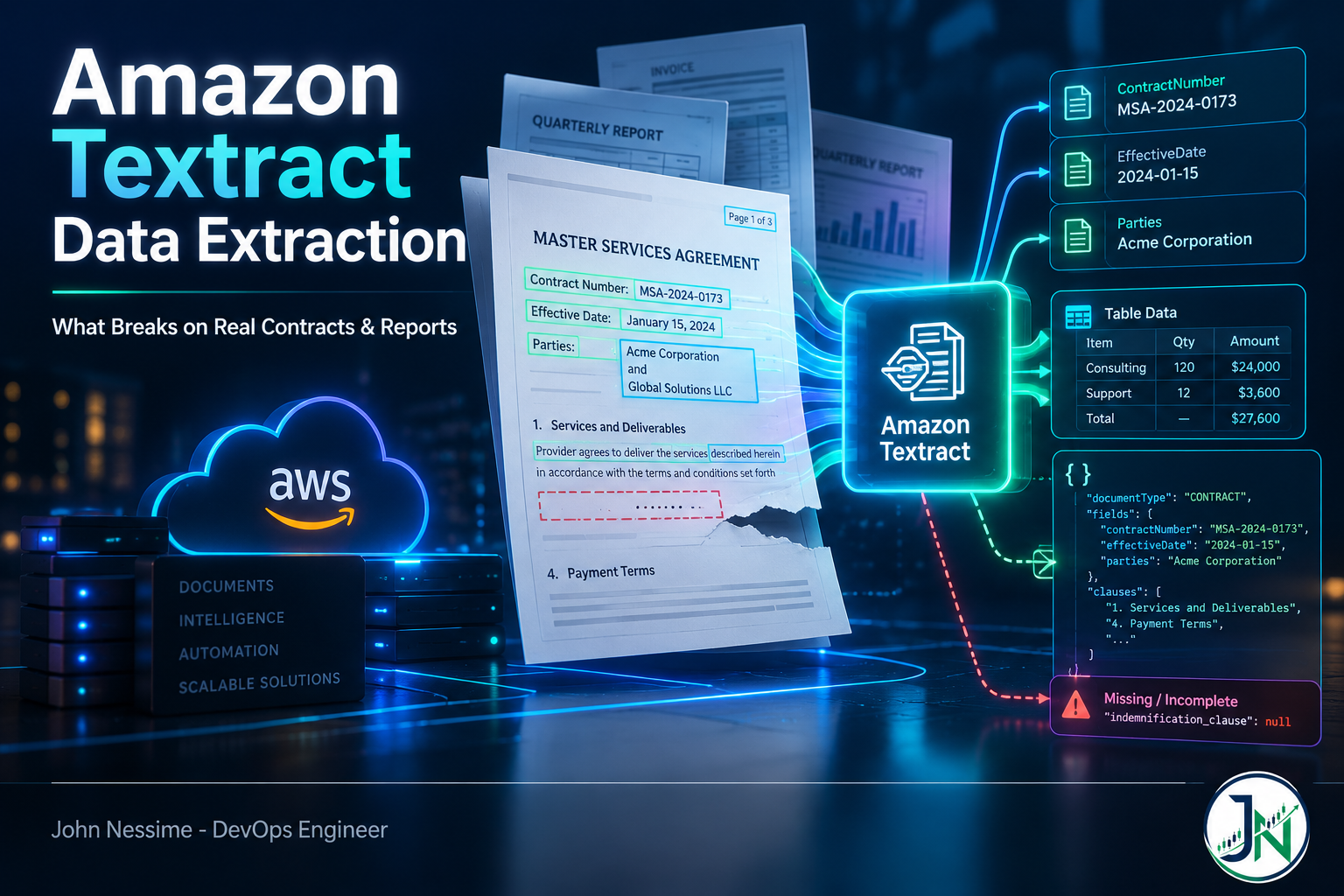
Amazon Textract Data Extraction: What Breaks on Real Contracts and Reports

Textract rarely fails loudly. It returns a plausible result that is quietly incomplete: a truncated result set, a tick box read as an empty string, a clause split across a page break. A practitioner's guide to the failure modes that actually bite when you point Amazon Textract at contracts, technical reports and correspondence, plus how to choose between sync and async, which feature types are worth paying for, and where Textract stops being the right tool.

Continue ReadingAmazon Textract Data Extraction: What Breaks on Real Contracts and Reports

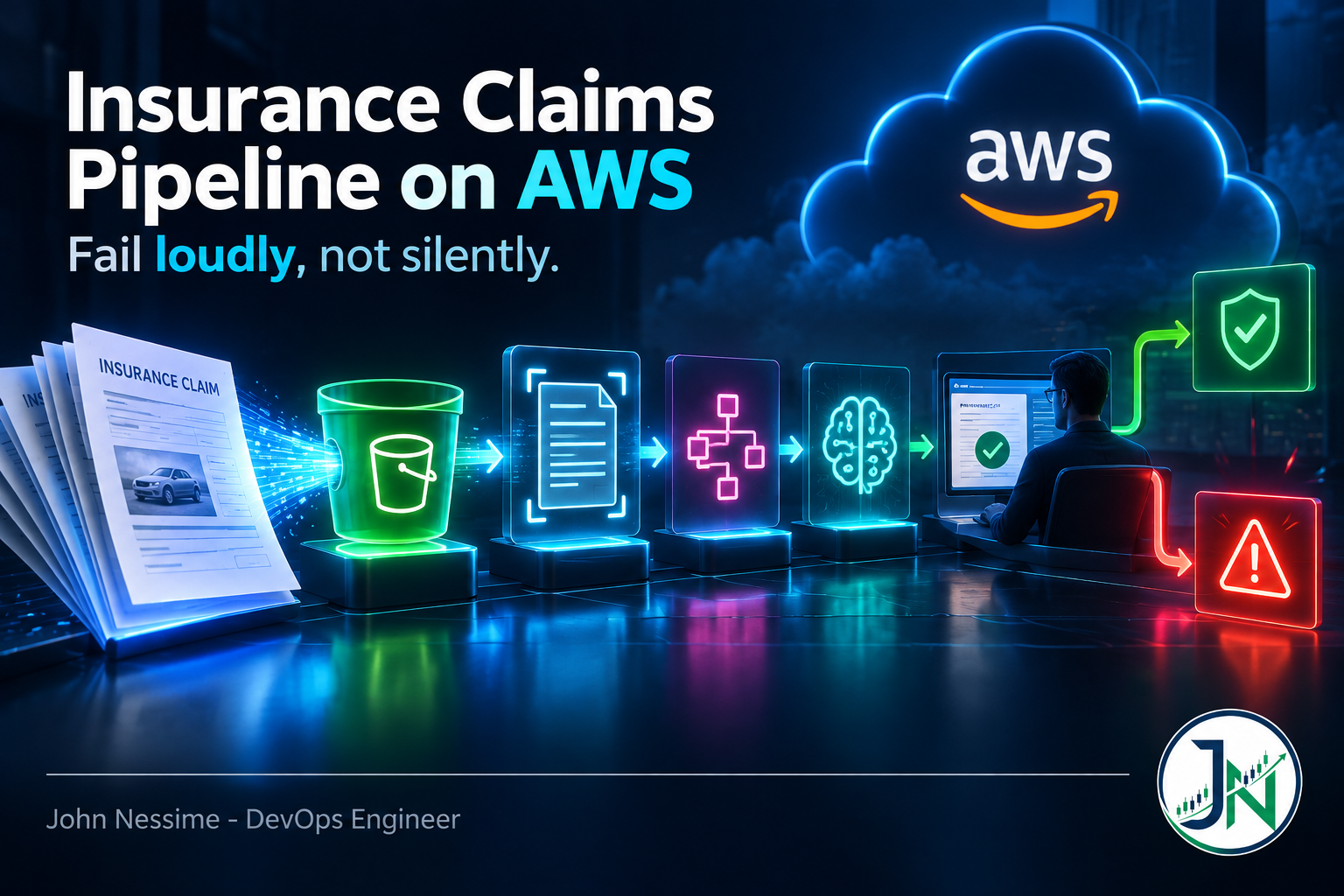
Building an Insurance Claims Processing Pipeline on AWS That Fails Loudly

Claims pipelines rarely crash. They succeed, emit clean JSON, and hand a wrong number to a payment system. Six failure families in an insurance claims processing pipeline on AWS, with the Textract, Bedrock Data Automation and Step Functions details that decide whether a bad extraction is visible or silent.

Continue ReadingBuilding an Insurance Claims Processing Pipeline on AWS That Fails Loudly

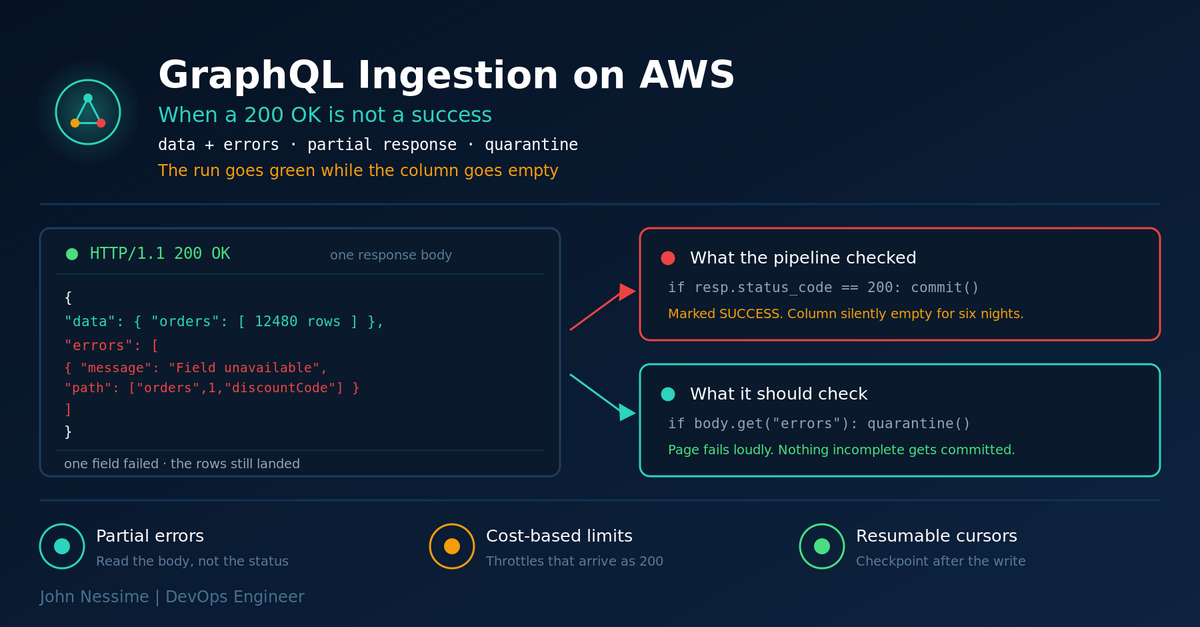
Building a GraphQL Data Ingestion Pipeline on AWS That Doesn’t Lie to You

A GraphQL source can hand you a 200 OK, a populated data block, and a quietly broken column in the same response. Here is how to build a GraphQL data ingestion pipeline on AWS that catches partial errors, respects cost-based rate limits, resumes cleanly from a cursor, and notices when the schema moves under you.

Continue ReadingBuilding a GraphQL Data Ingestion Pipeline on AWS That Doesn’t Lie to You

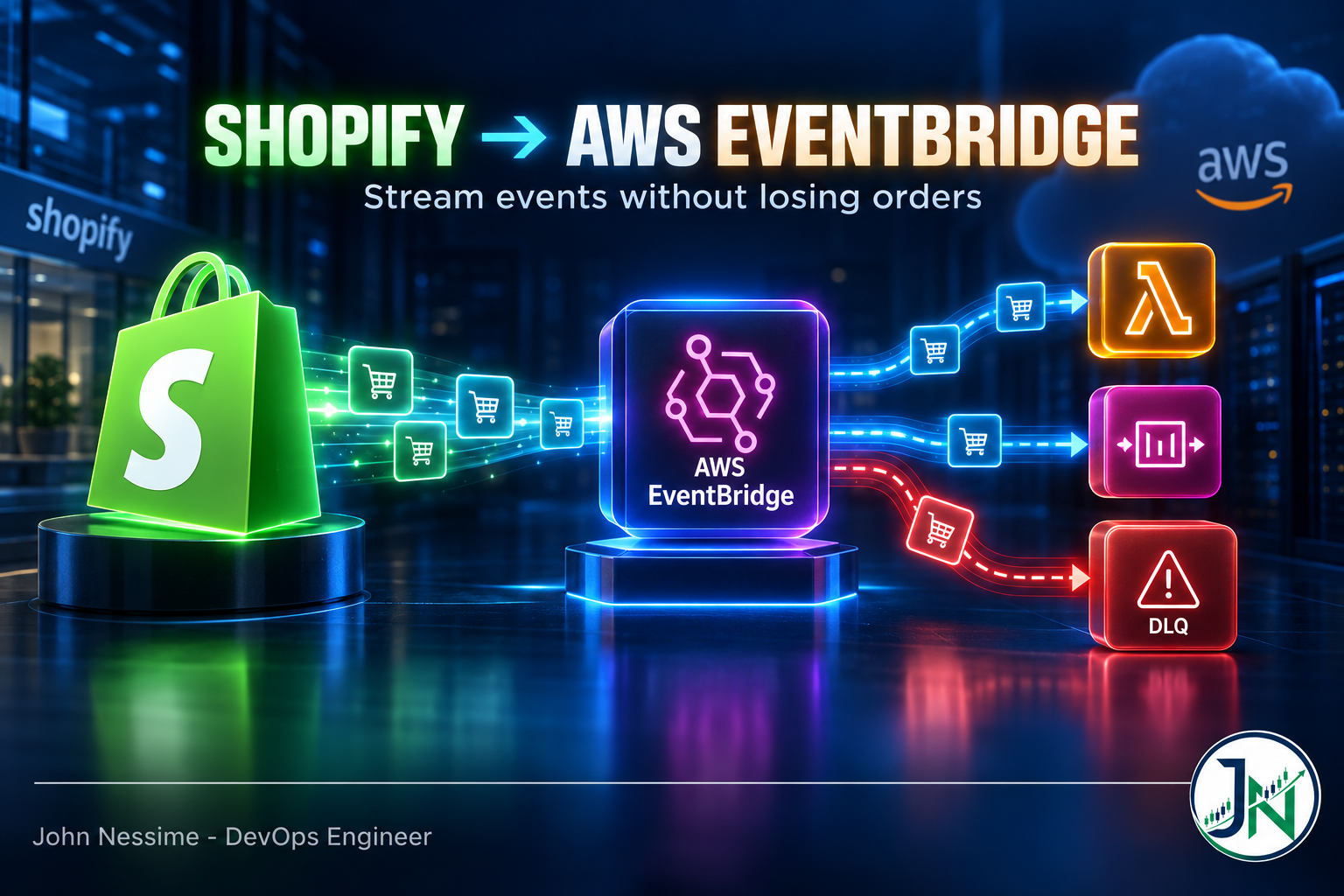
Streaming Shopify Events into AWS Without Losing Orders

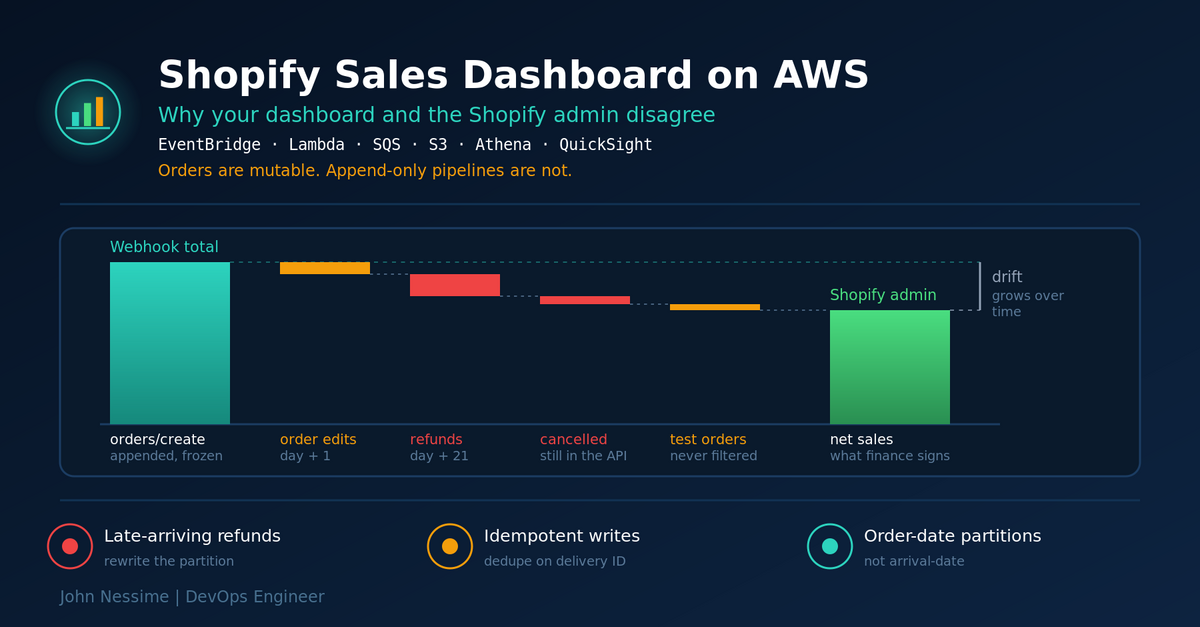
Wiring Shopify webhooks into Amazon EventBridge takes an afternoon. Keeping every order is the hard part. A walk through the five failure families that actually bite when streaming Shopify events into AWS: the partner source that silently drops everything, duplicate and out-of-order deliveries, rule patterns that match nothing, targets that fail without a dead-letter queue, and the 64 KB metering rule that quietly inflates the bill.

Continue ReadingStreaming Shopify Events into AWS Without Losing Orders

Apache Airflow on AWS: Building SaaS and API Pipelines That Don’t Lie to You

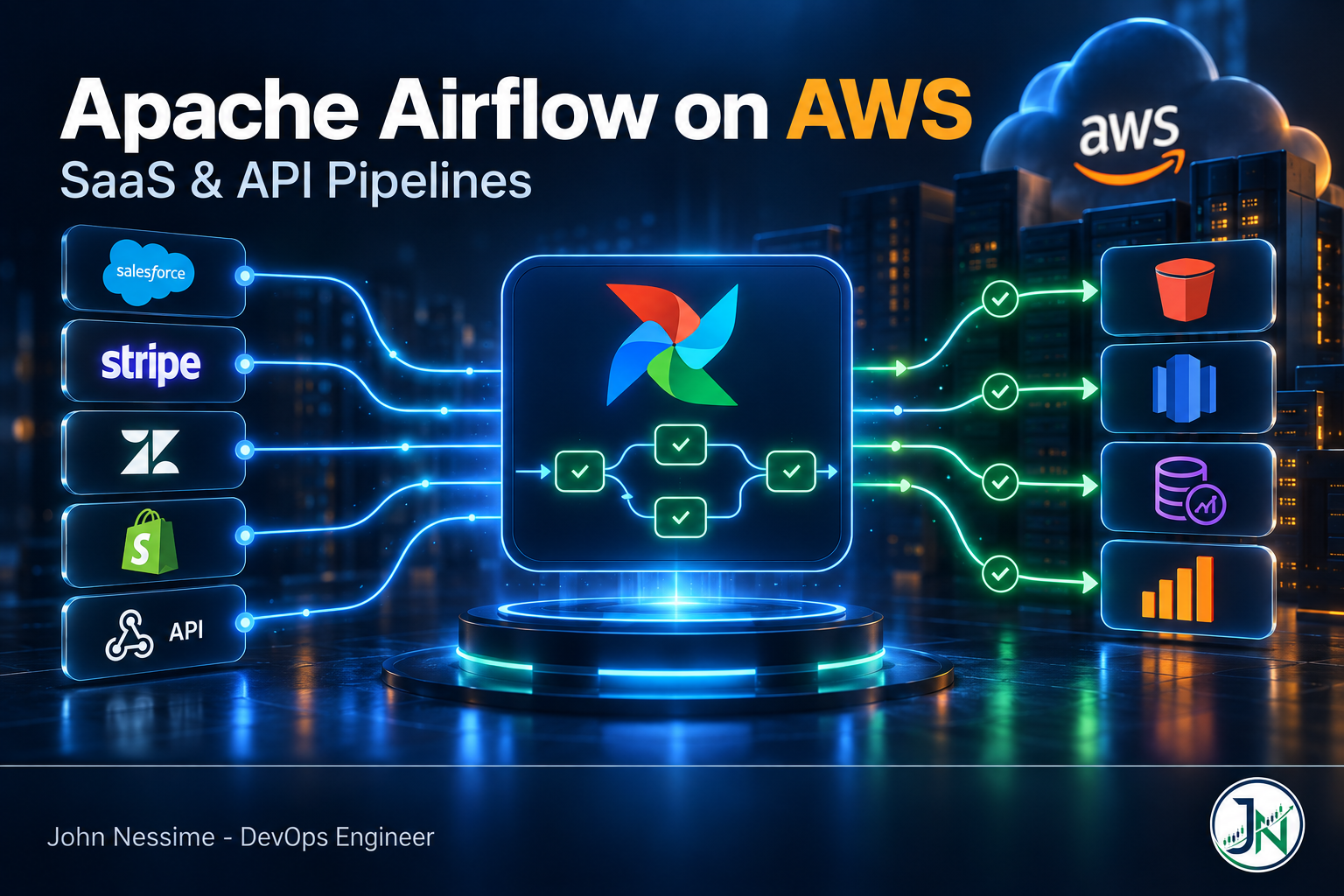
Most API pipeline failures are green DAGs producing incomplete data. A practical guide to running Apache Airflow on AWS for SaaS and API extraction: choosing between MWAA provisioned, MWAA Serverless and self-managed, the pool setting that silently stops throttling when you go deferrable, retry and pagination design, secrets handling, and the four cost lines that actually move.

Continue ReadingApache Airflow on AWS: Building SaaS and API Pipelines That Don’t Lie to You