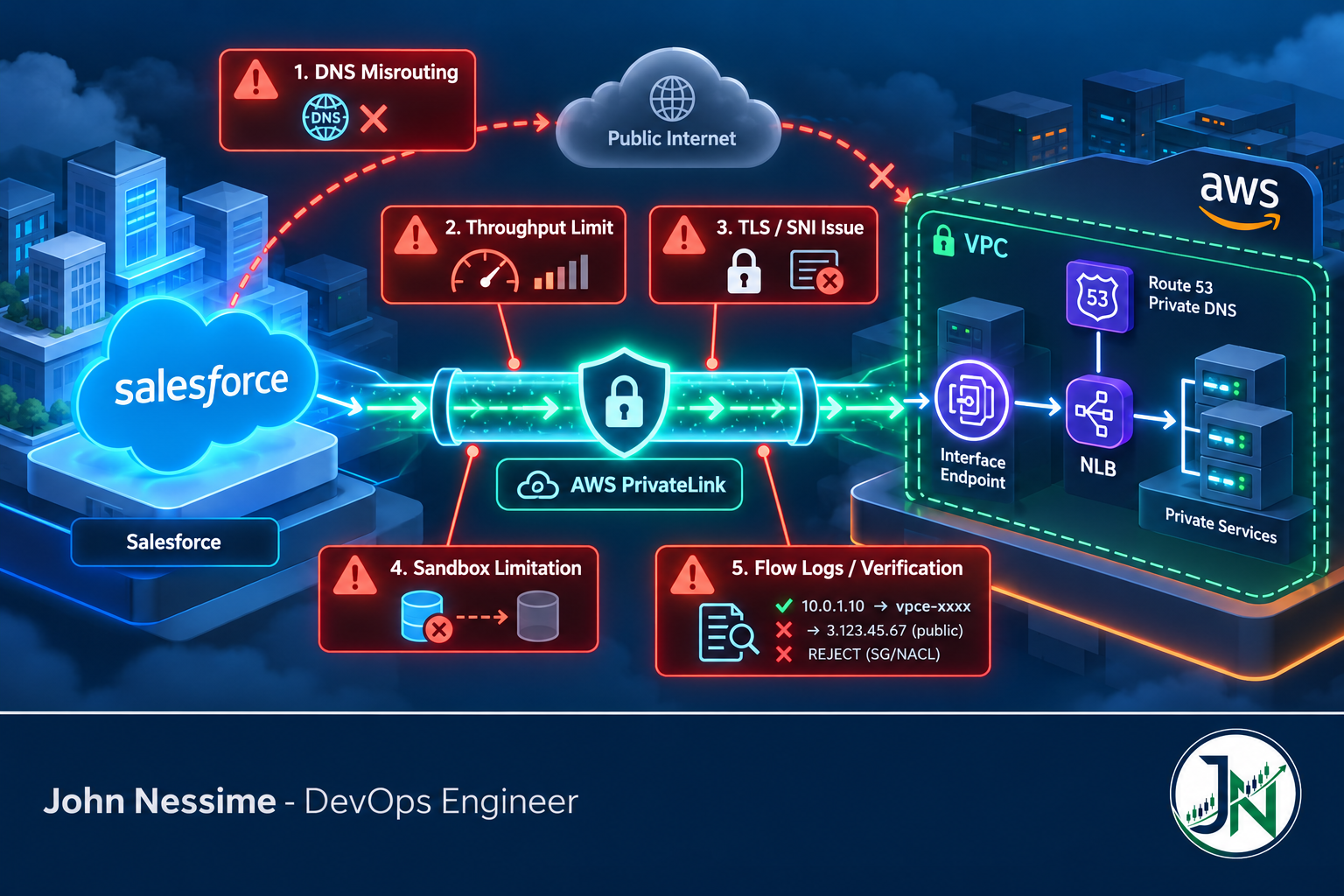
Salesforce AWS PrivateLink: The Failures Nobody Warns You About

Salesforce Private Connect over AWS PrivateLink does not fail loudly. It fails by working: green statuses, successful callouts, and packets still crossing the public internet because one DNS record was wrong. Here are the six failure families that actually bite, and how to prove your traffic is private.
Continue ReadingSalesforce AWS PrivateLink: The Failures Nobody Warns You About

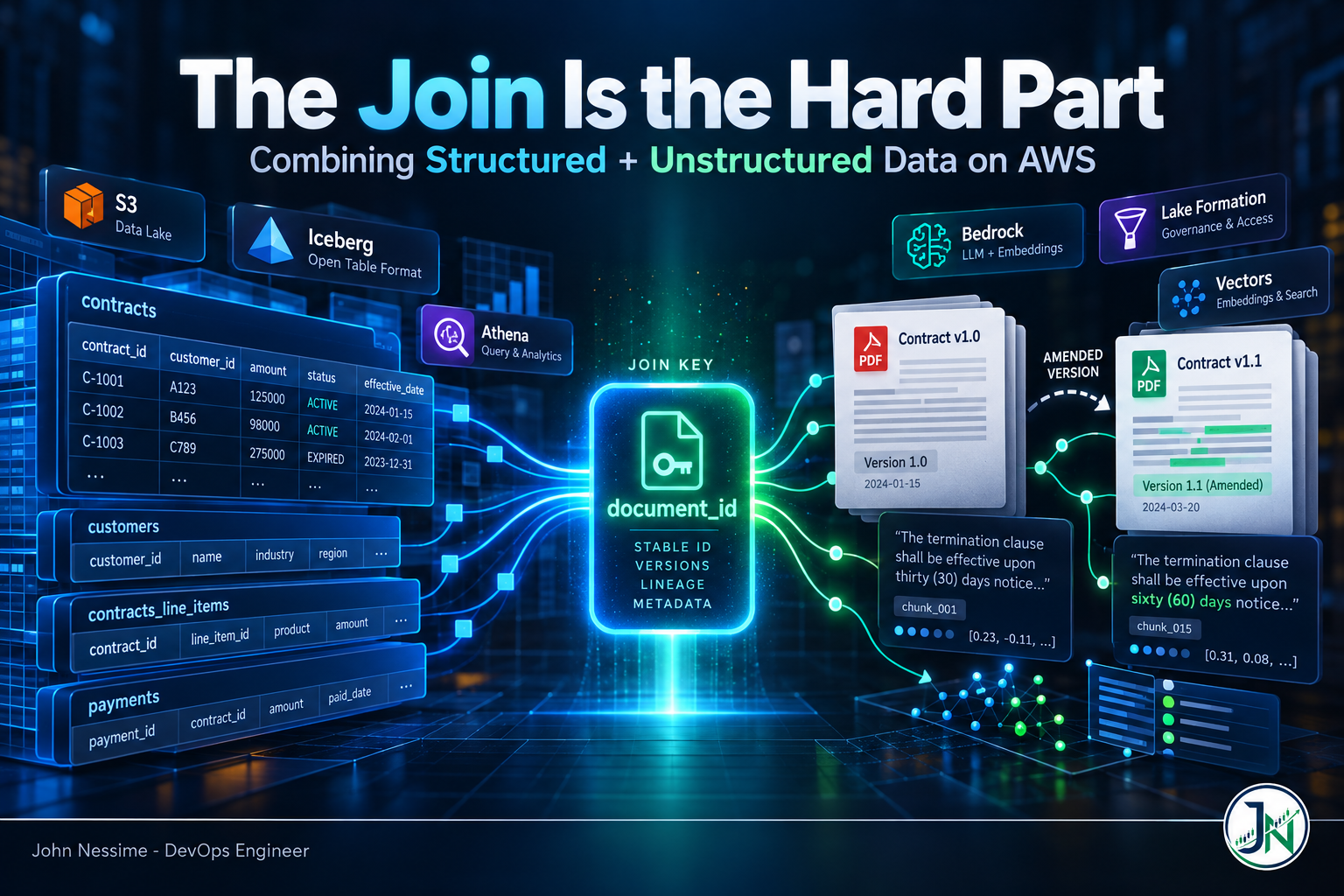
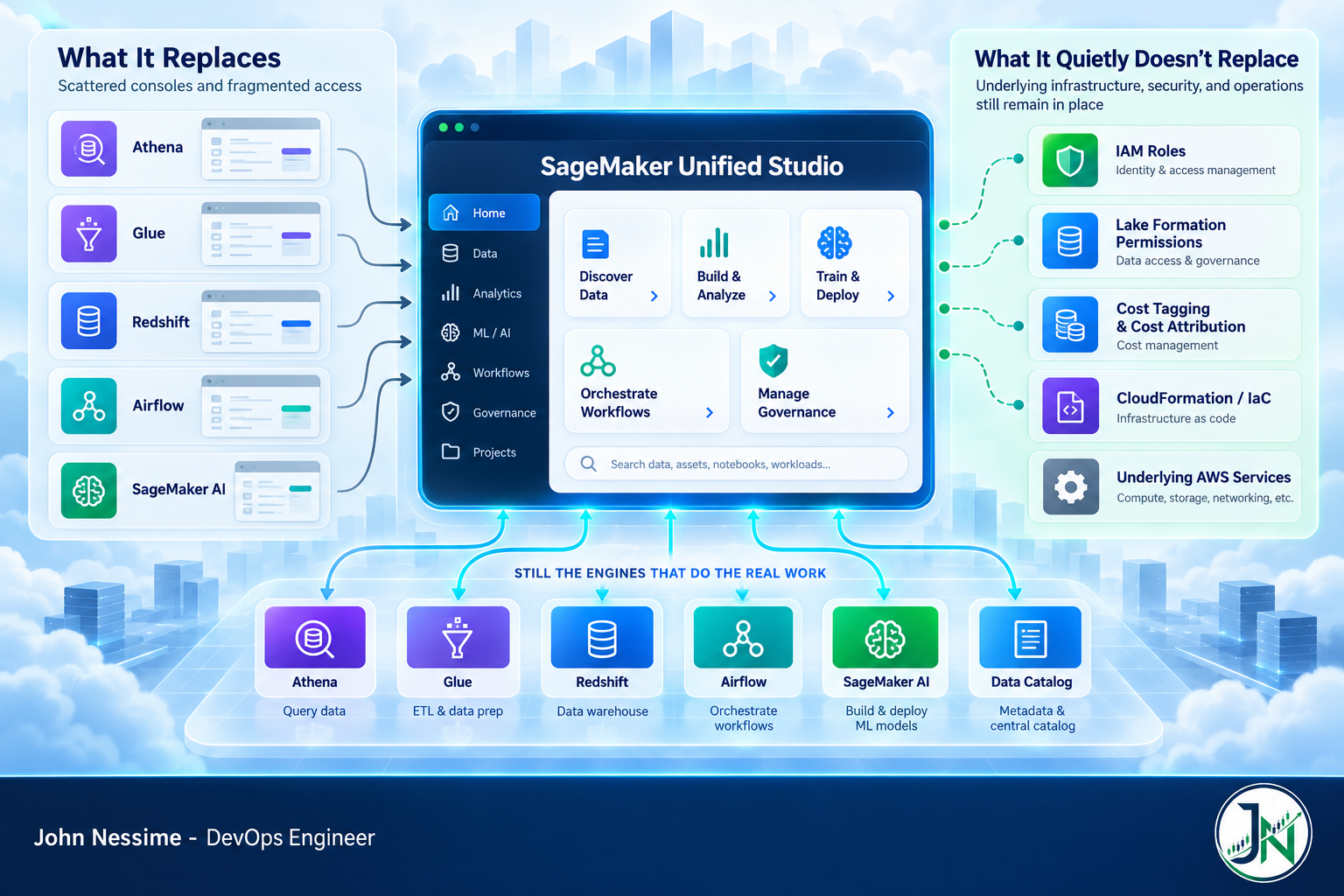
SageMaker Unified Studio: What It Replaces, and What It Quietly Doesn’t

SageMaker Unified Studio is a front door, not a runtime. It consolidates the interface while leaving your bill, your IAM design and your infrastructure as code exactly where they were, and it quietly hands you a DataZone governance system to operate. Here is what it genuinely replaces, what it doesn't, the failure modes that bite during adoption, and how to decide whether it is worth it for your team.

Continue ReadingSageMaker Unified Studio: What It Replaces, and What It Quietly Doesn’t

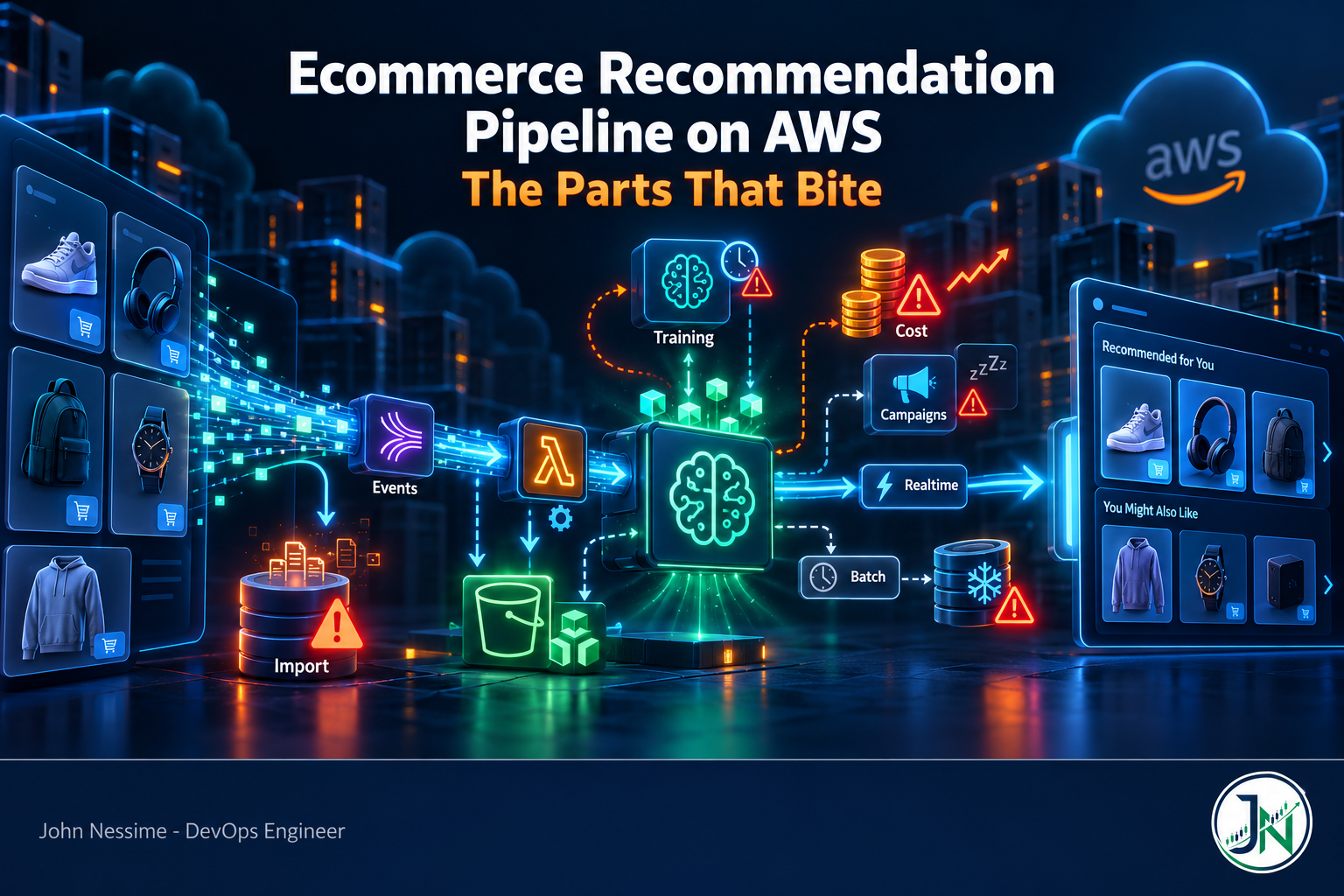
Building an Ecommerce Recommendation Pipeline on AWS: The Parts That Bite

An idle Amazon Personalize setup does not throw errors. It just bills. A practical walkthrough of the five decisions that shape an AWS ecommerce recommendation pipeline: domain recommenders versus custom recipes, bulk versus streaming ingestion, schema limits, training cadence, and real-time versus batch serving, with the failure modes that stay invisible until the invoice arrives.

Continue ReadingBuilding an Ecommerce Recommendation Pipeline on AWS: The Parts That Bite

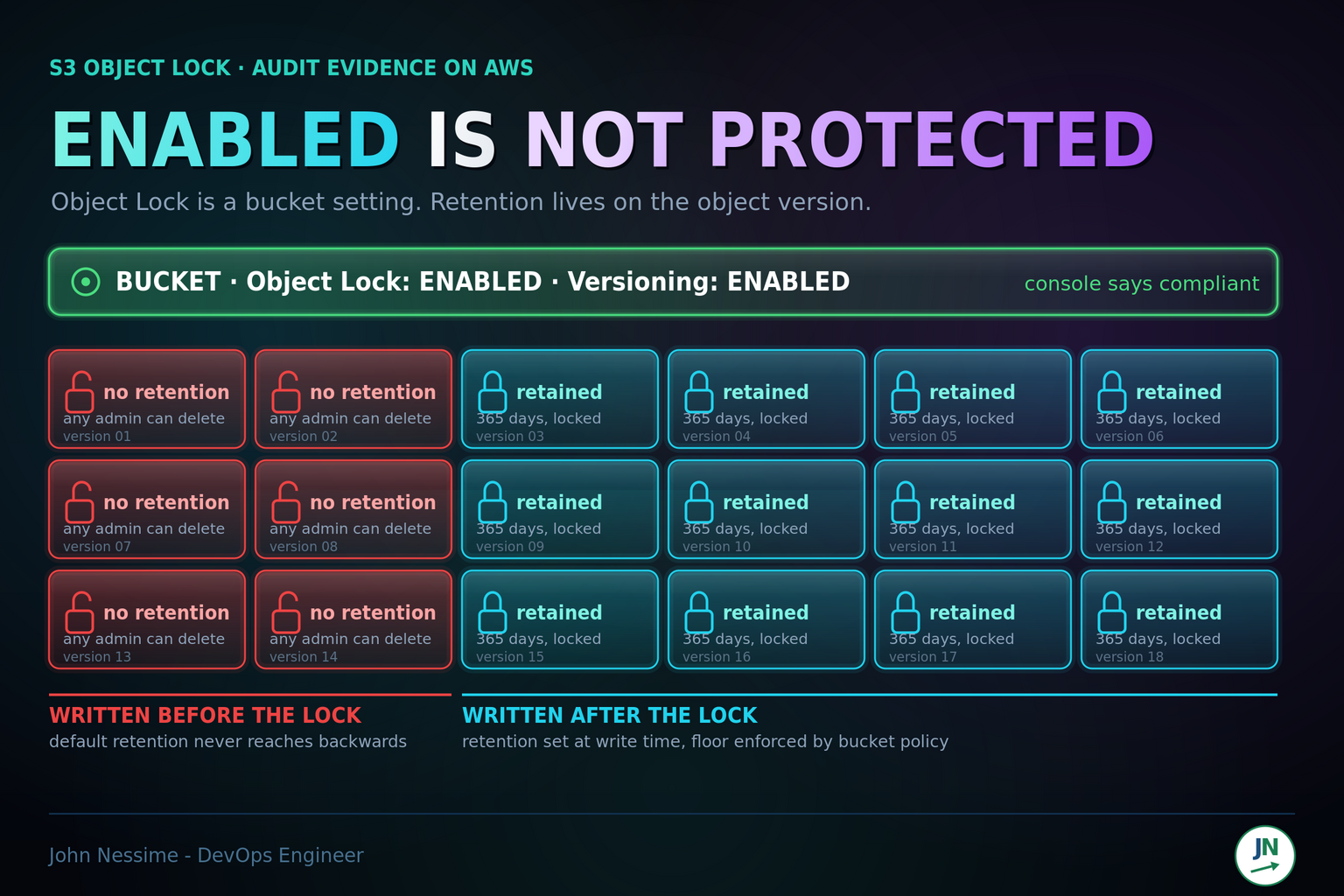
Building an Audit Evidence Repository on AWS: Immutable Retention Without Regret

Enabling S3 Object Lock on a bucket does not protect the objects already in it. This is how to build an audit evidence repository on AWS that survives the question auditors actually ask, covering retention modes you cannot undo, delete markers that hide protected versions, chain of custody, and the storage bill compliance mode makes permanent.

Continue ReadingBuilding an Audit Evidence Repository on AWS: Immutable Retention Without Regret
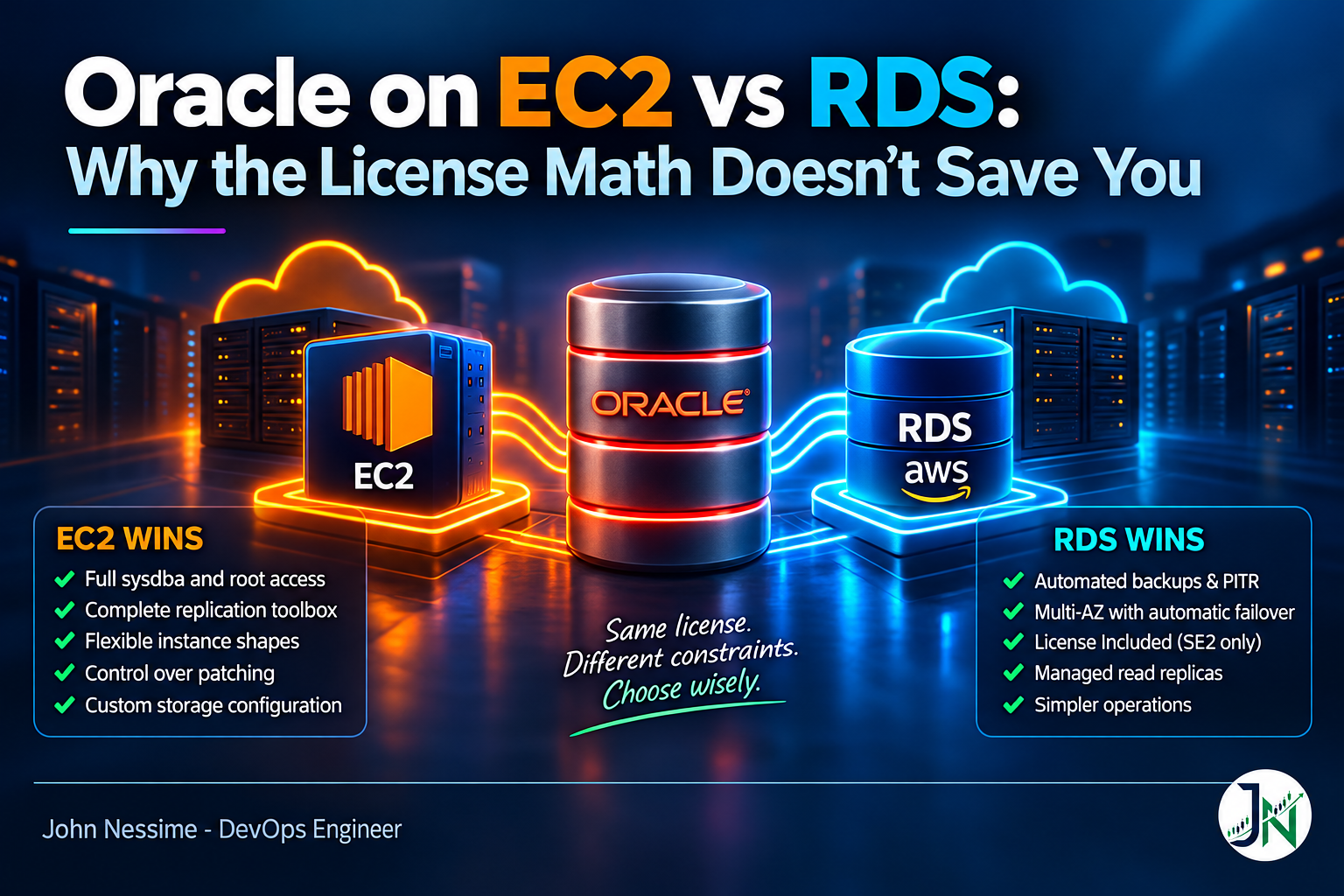
Read more about the article Oracle on EC2 vs RDS: Why the License Math Doesn’t Save You
Oracle on EC2 vs RDS: The same BYOL licensing rules, but different operational responsibilities, administrative privileges, and infrastructure constraints.

Oracle on EC2 vs RDS: Why the License Math Doesn’t Save You

Oracle counts a vCPU the same way on EC2 and on RDS, so the platform choice never saves you licensing money. What it does change is sysdba access, block size and file limits, who owns backups and failover, and the Multi-AZ setting that quietly doubles your BYOL count.

Continue ReadingOracle on EC2 vs RDS: Why the License Math Doesn’t Save You

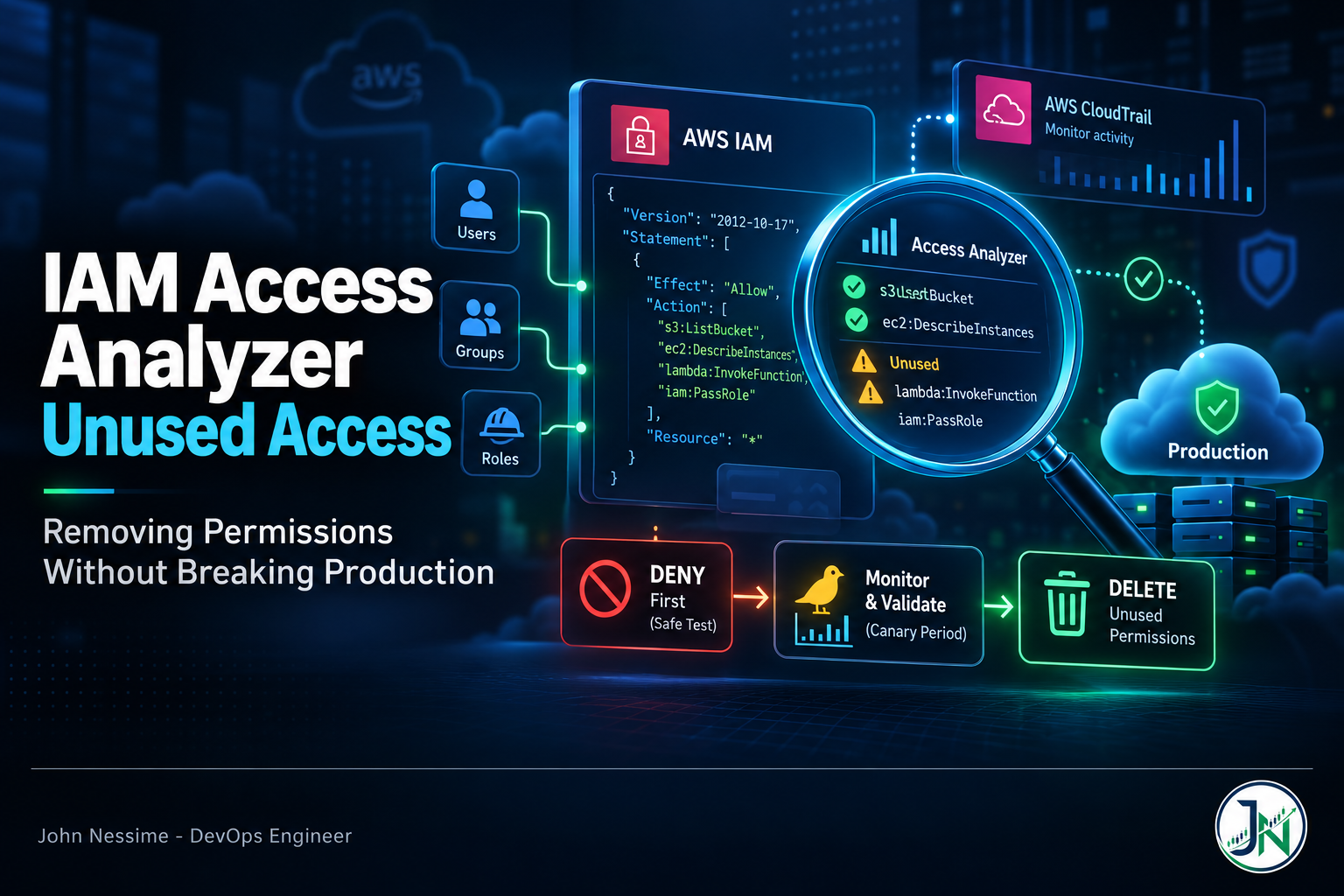
IAM Access Analyzer Unused Access: Removing Permissions Without Breaking Production

Unused access findings tell you what AWS did not record activity for, which is not the same as what your workload does not need. Here are the four blind spots in the underlying data, and a deny-before-delete procedure that lets you trim IAM permissions with a one-call rollback.

Continue ReadingIAM Access Analyzer Unused Access: Removing Permissions Without Breaking Production

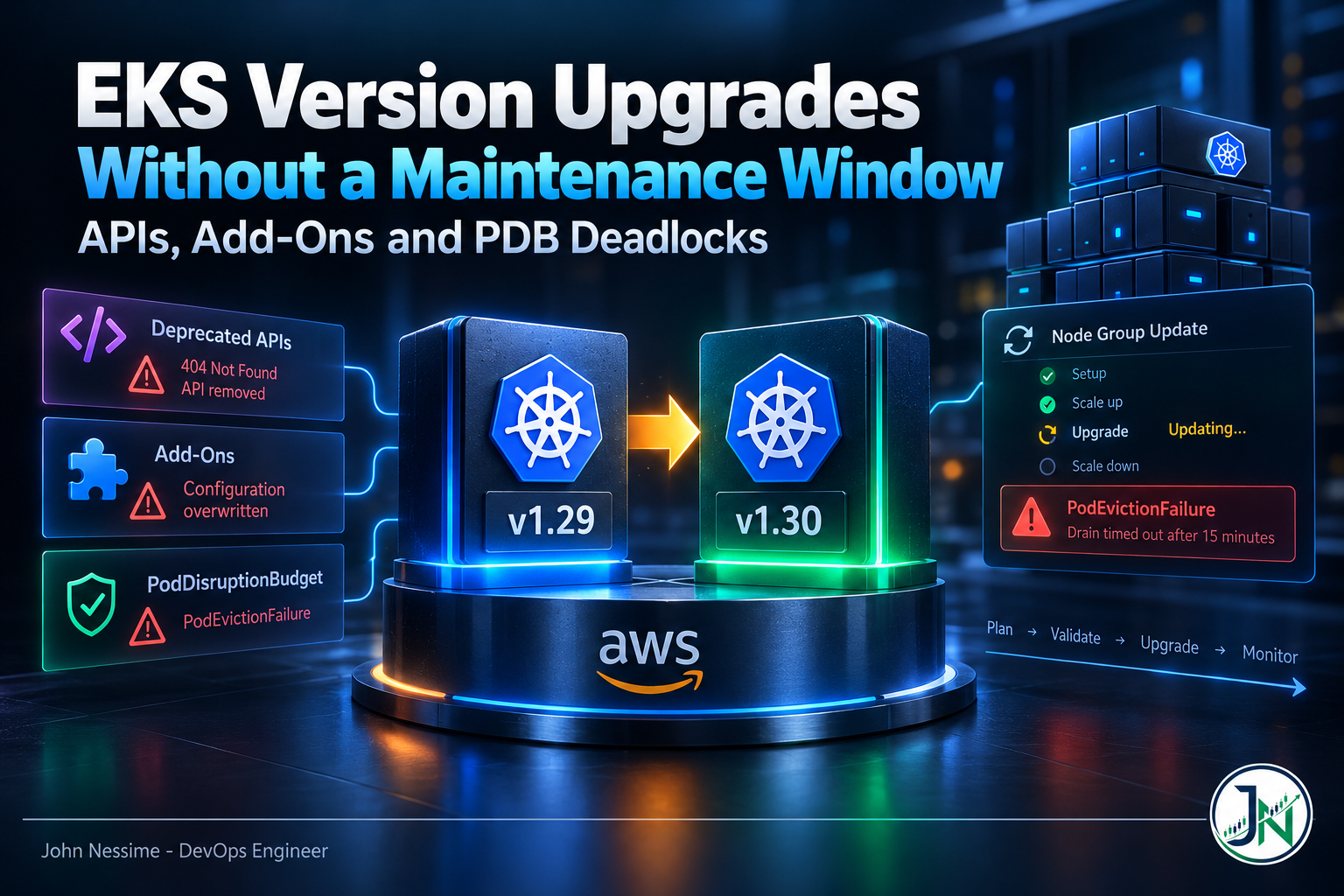
EKS Version Upgrades Without a Maintenance Window: APIs, Add-Ons and PDB Deadlocks

The control plane bump is the part AWS handles and almost never breaks. The damage happens in the data plane rollout afterwards. A practical walk through the three failure families that actually stall EKS version upgrades: removed APIs you did not know you were calling, add-on updates that silently discard your configuration, and pod disruption budgets that deadlock the node drain, plus what each escape hatch really costs.

Continue ReadingEKS Version Upgrades Without a Maintenance Window: APIs, Add-Ons and PDB Deadlocks

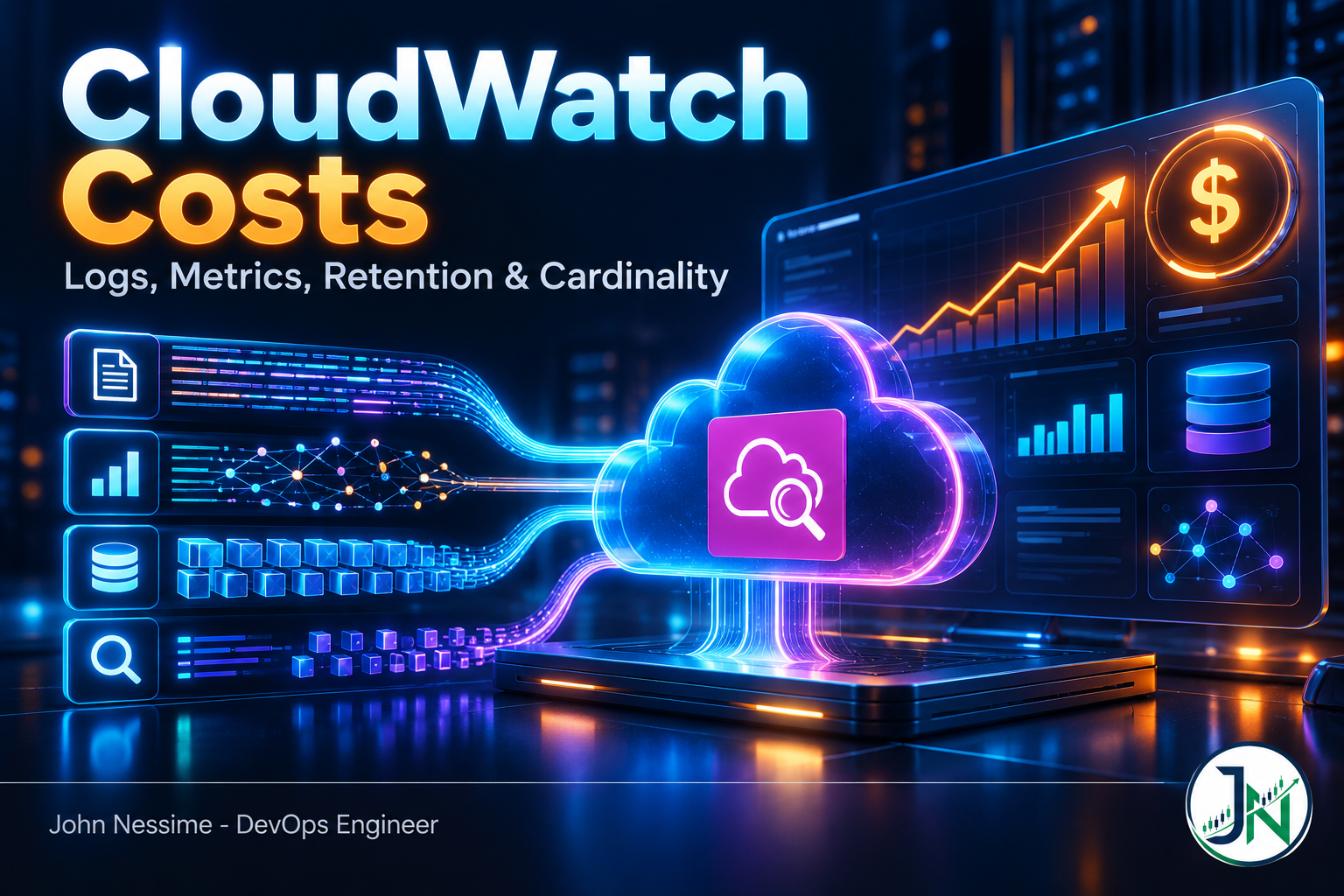
The Real Cost of CloudWatch: Logs, Metrics, Retention and Cardinality

CloudWatch rarely fails loudly, it accumulates. This is a breakdown of the four independent meters behind the bill: ingestion, storage, Logs Insights scans and custom metric cardinality. Why the same log line gets billed three times, why log groups never expire by default, how a single dimension can multiply your metrics bill without your traffic changing, and how to attribute the spend to specific log groups before you start deleting things.

Continue ReadingThe Real Cost of CloudWatch: Logs, Metrics, Retention and Cardinality