Building an Audit Evidence Repository on AWS: Immutable Retention Without Regret

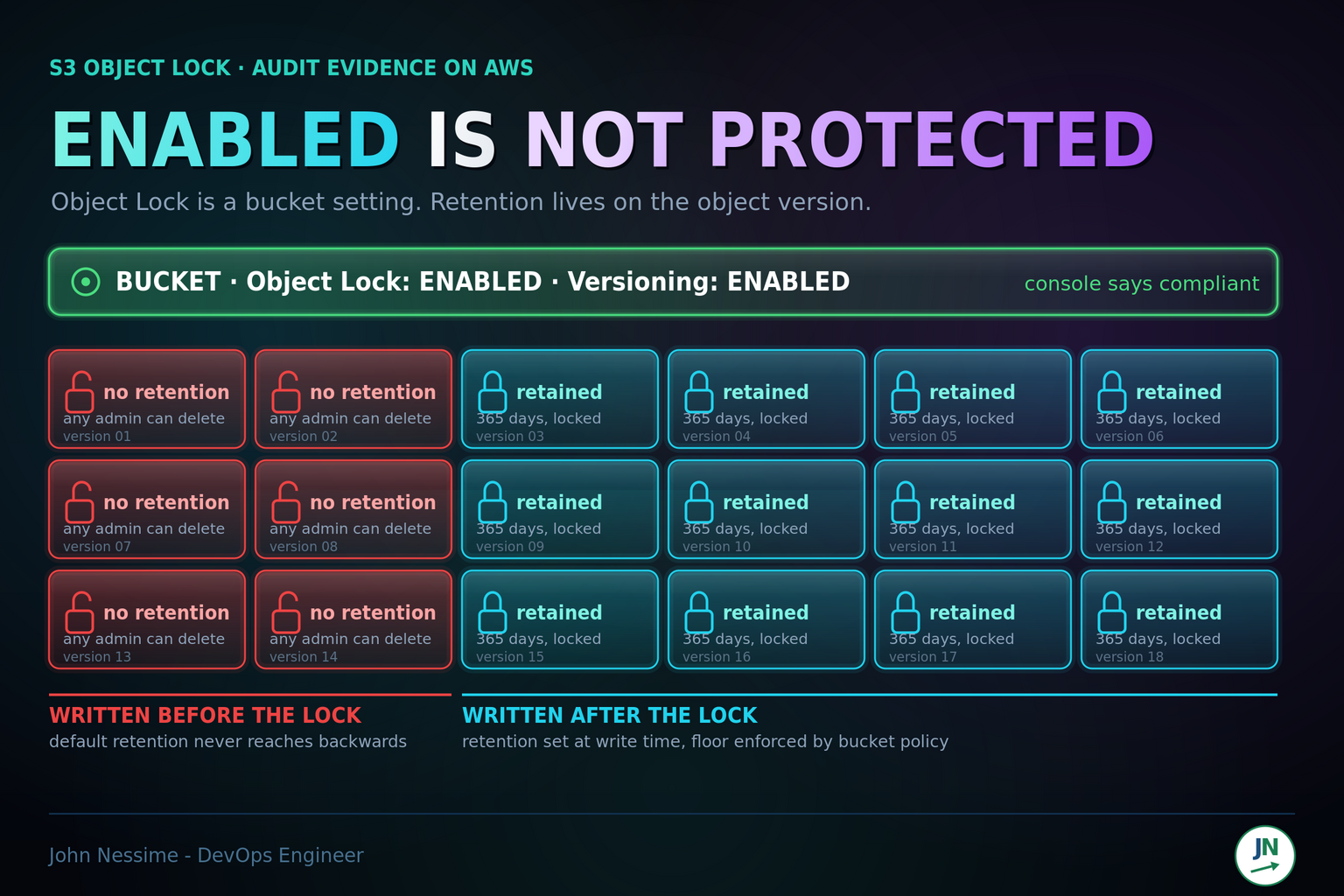
Enabling S3 Object Lock on a bucket does not protect the objects already in it. This is how to build an audit evidence repository on AWS that survives the question auditors actually ask, covering retention modes you cannot undo, delete markers that hide protected versions, chain of custody, and the storage bill compliance mode makes permanent.
Continue ReadingBuilding an Audit Evidence Repository on AWS: Immutable Retention Without Regret
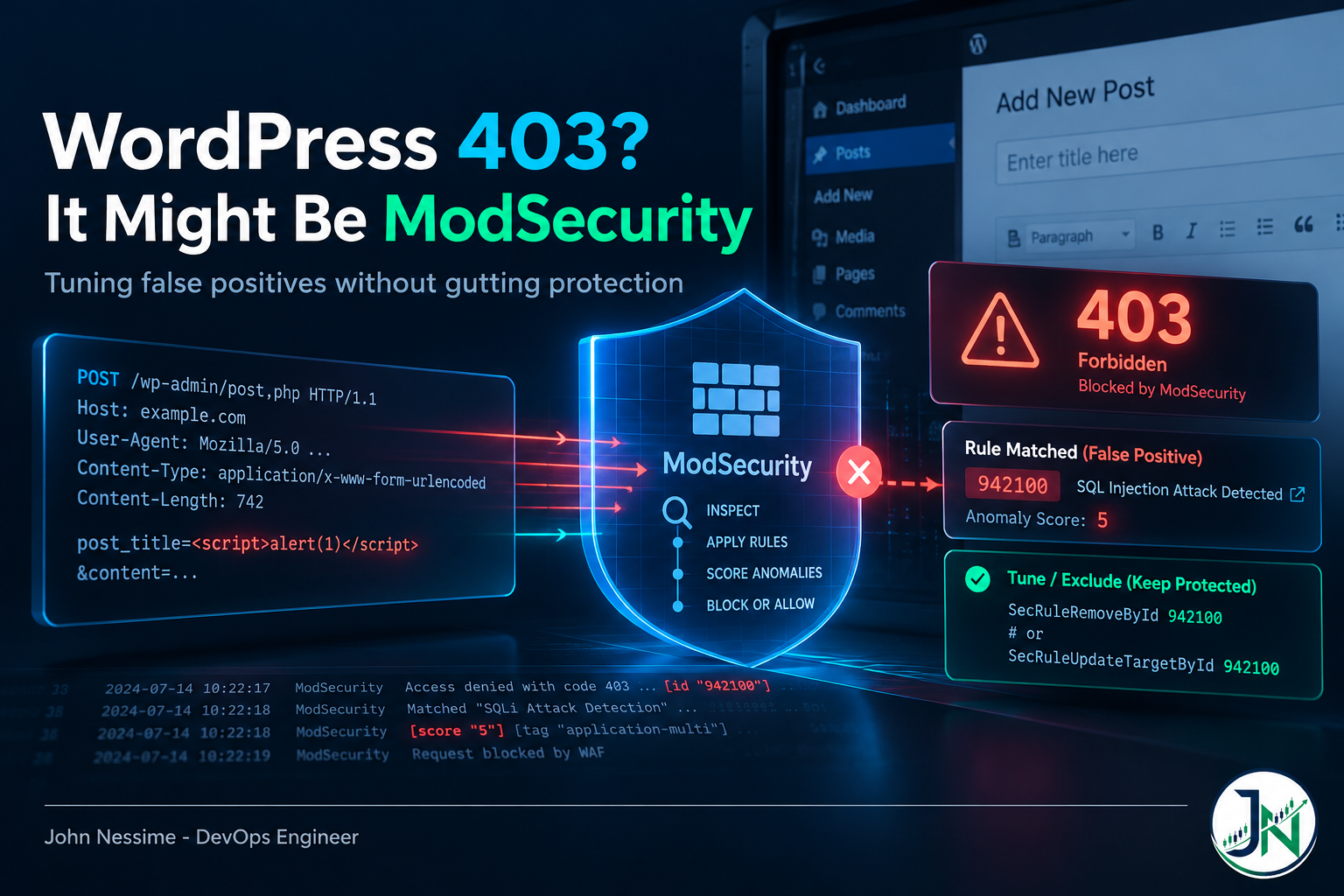
Read more about the article Your WordPress 403 Isn’t the Rule You Think: Tuning ModSecurity False Positives
A WordPress 403 error isn't always caused by a malicious request. ModSecurity false positives can block legitimate updates. Inspect anomaly scores and tune specific WAF rules without weakening site security.

Your WordPress 403 Isn’t the Rule You Think: Tuning ModSecurity False Positives

A 403 from ModSecurity almost never names the rule you need to change. Under anomaly scoring, detection rules only add to a score and a separate blocking rule returns the error. This guide covers reading the audit log backwards, choosing between the four exclusion mechanisms, the WordPress failure families that cause most false positives, and why raising the anomaly threshold quietly destroys your coverage.

Continue ReadingYour WordPress 403 Isn’t the Rule You Think: Tuning ModSecurity False Positives

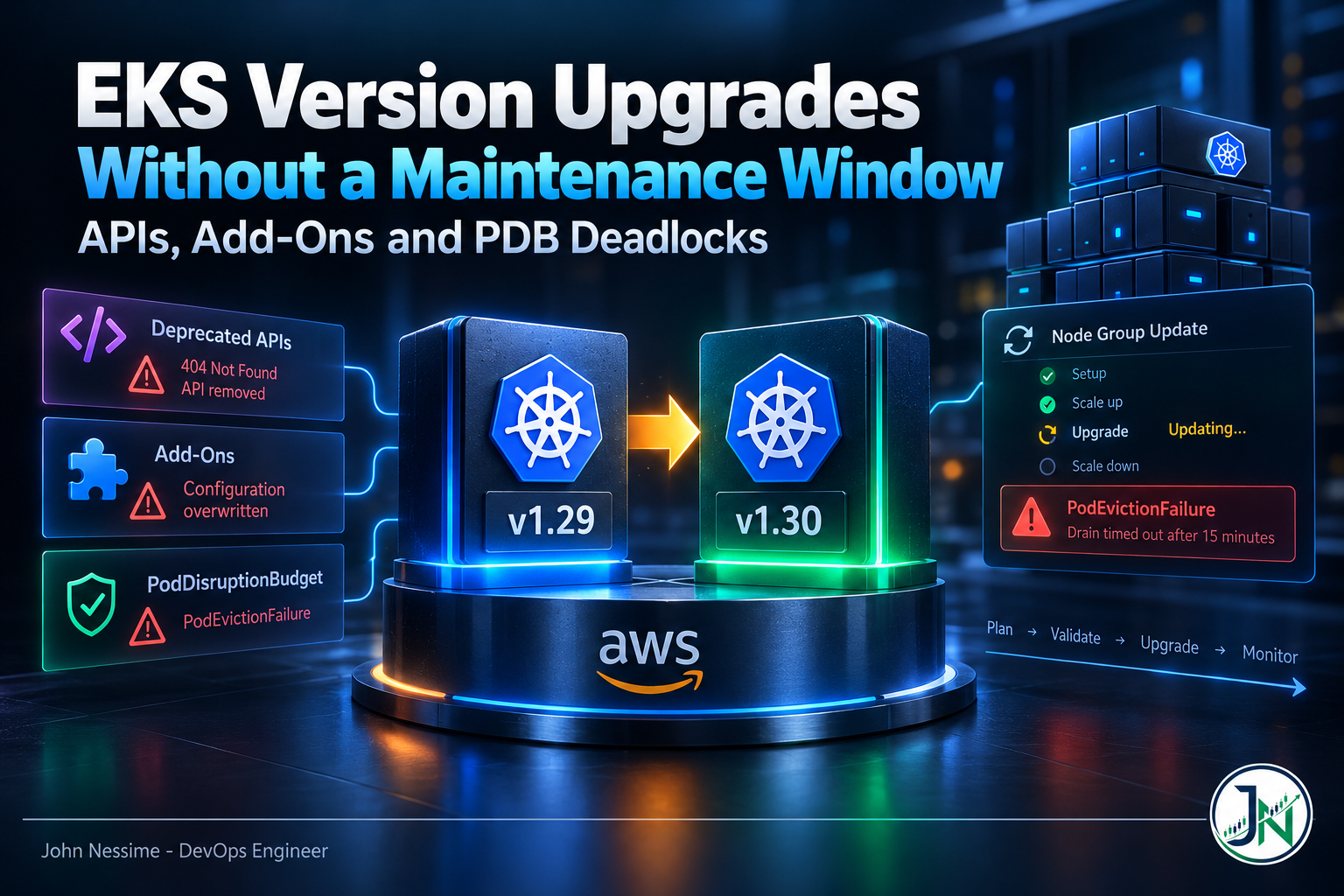
EKS Version Upgrades Without a Maintenance Window: APIs, Add-Ons and PDB Deadlocks

The control plane bump is the part AWS handles and almost never breaks. The damage happens in the data plane rollout afterwards. A practical walk through the three failure families that actually stall EKS version upgrades: removed APIs you did not know you were calling, add-on updates that silently discard your configuration, and pod disruption budgets that deadlock the node drain, plus what each escape hatch really costs.

Continue ReadingEKS Version Upgrades Without a Maintenance Window: APIs, Add-Ons and PDB Deadlocks

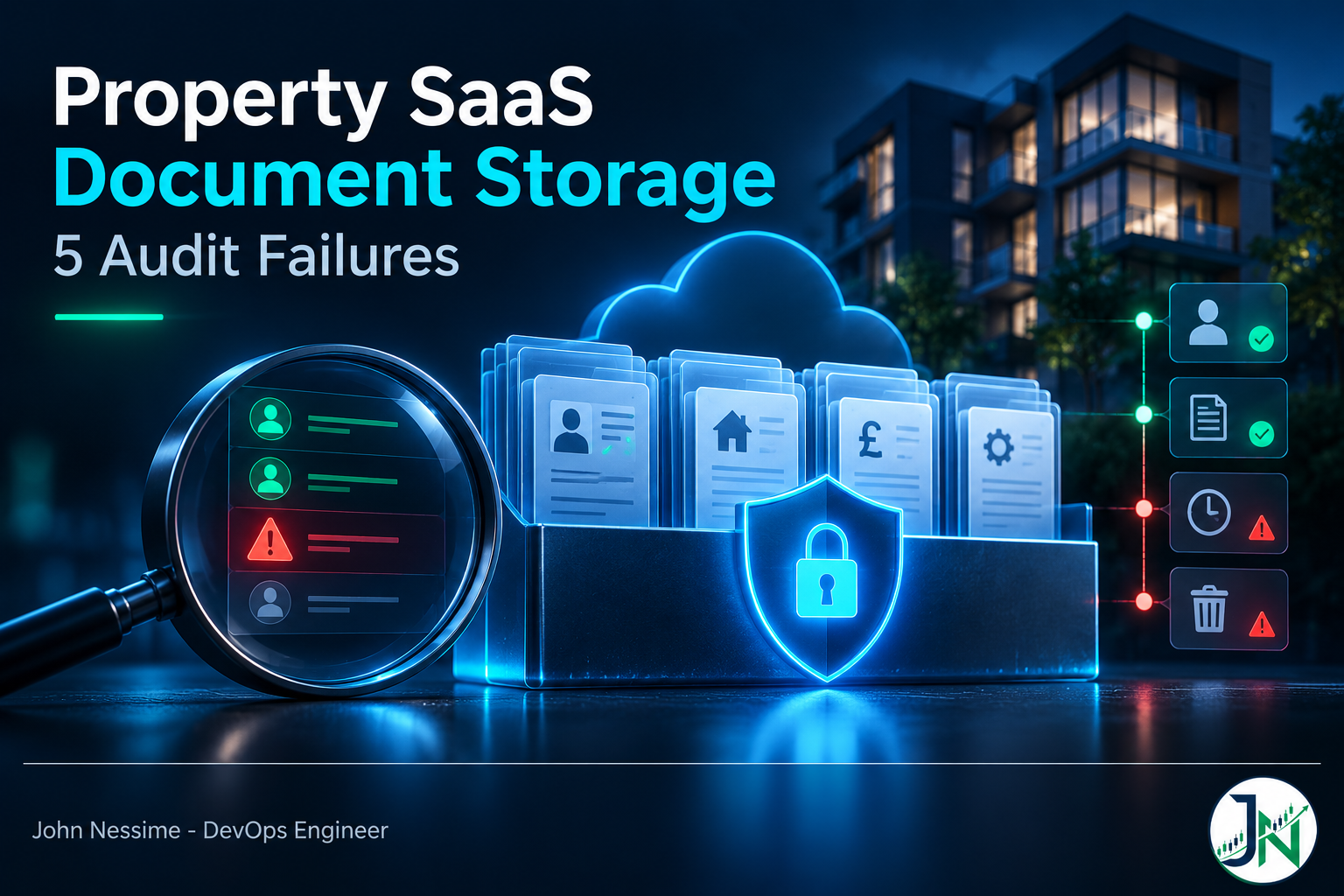
Property SaaS Document Storage: The Five Failures That Show Up in an Audit

Storing tenant IDs, leases and referencing packs is easy until someone asks who actually read them. Five failure families in property SaaS document storage, with the IAM policies, presigned URL mechanics, upload controls and deletion patterns that close each one.

Continue ReadingProperty SaaS Document Storage: The Five Failures That Show Up in an Audit

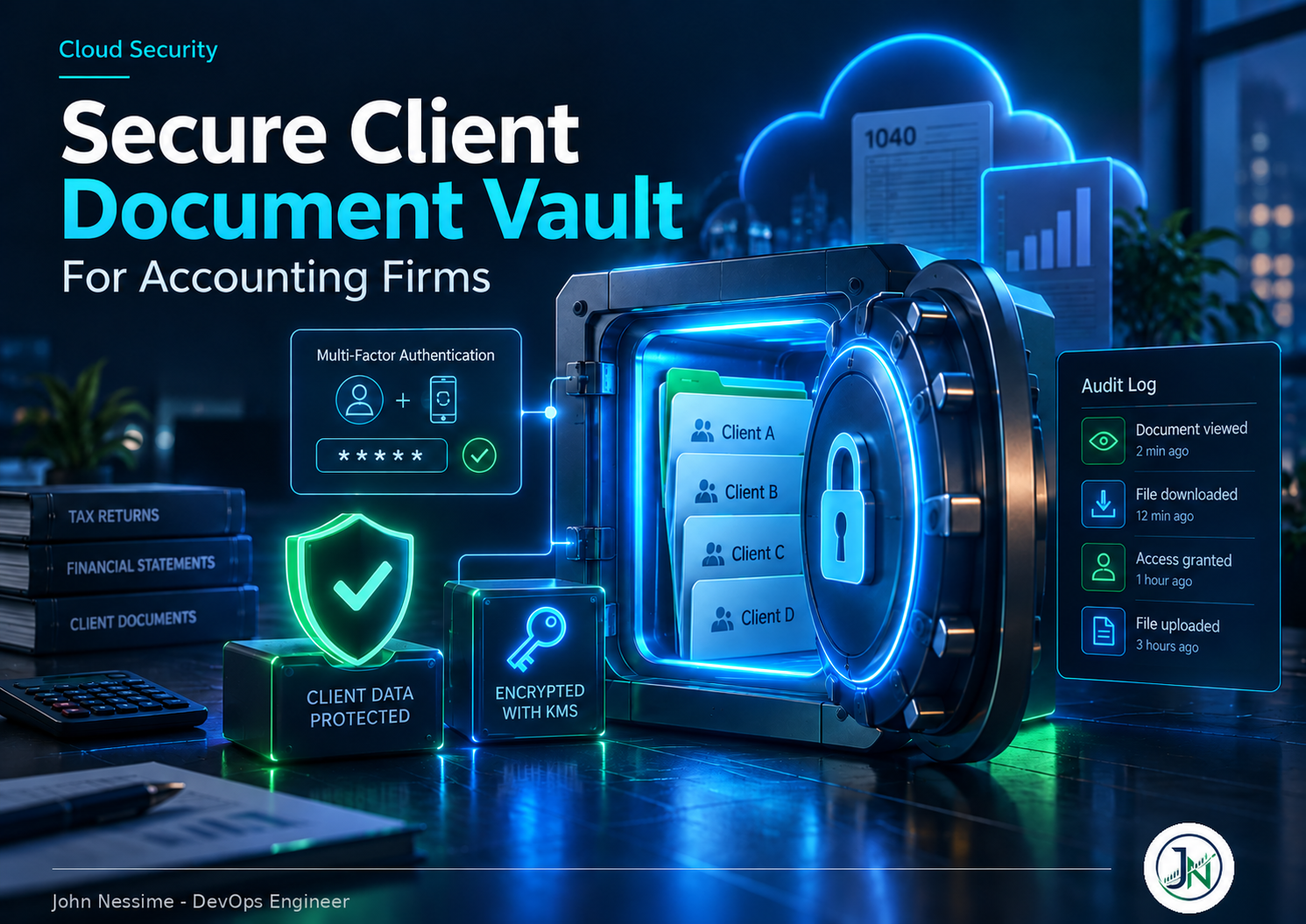
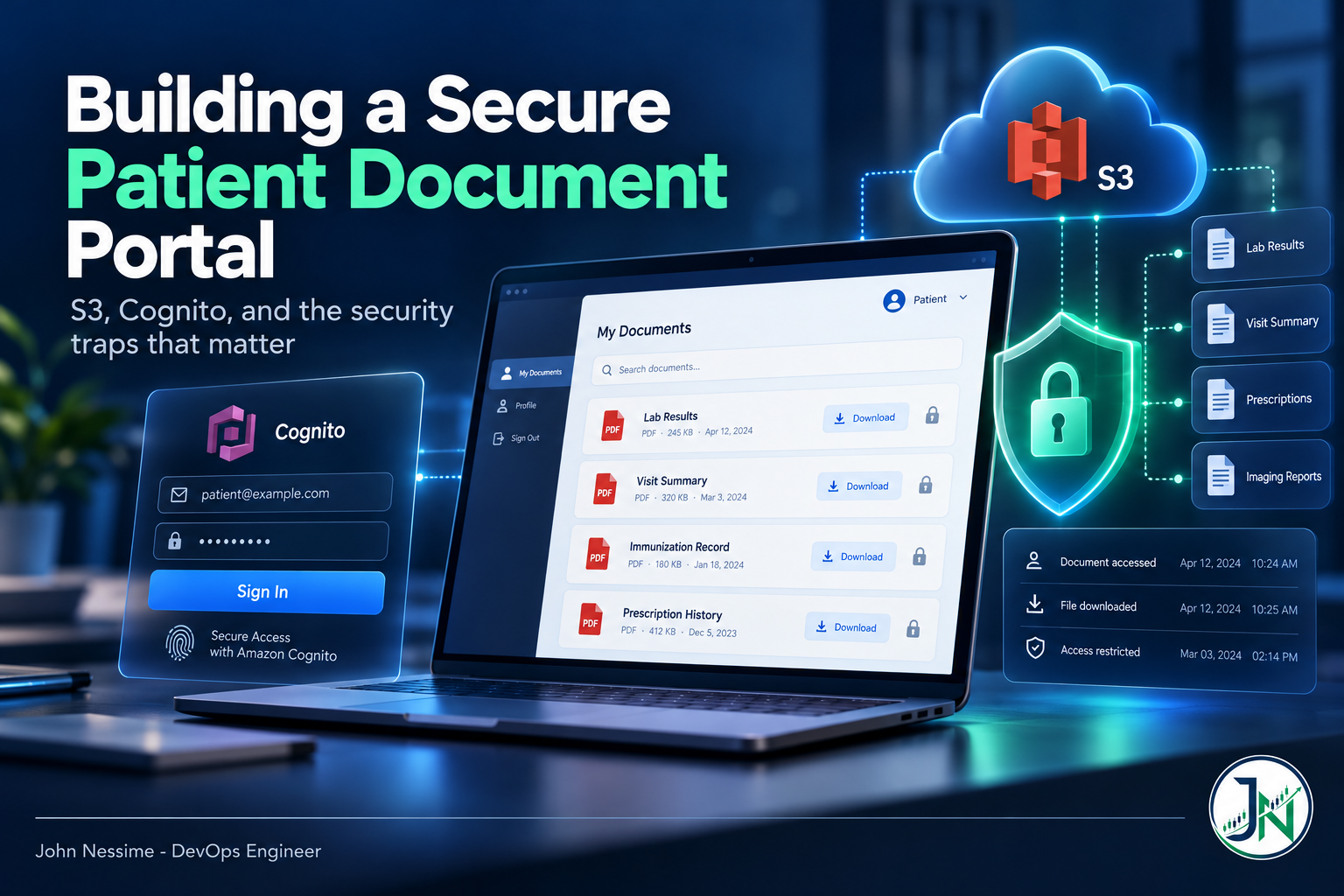
Building a Secure Client Document Vault Your Accounting Firm Can Defend

Most accounting-firm document vaults do not fail at the bucket. They fail at the edges: a download link that outlives the engagement, a KMS key policy as wide as the bucket policy, a retention lock that cannot be undone, and an audit trail nobody switched on. Six failure families, and the control that closes each.

Continue ReadingBuilding a Secure Client Document Vault Your Accounting Firm Can Defend

As-Planned vs As-Built Analysis: Building a Platform That Survives Cross-Examination

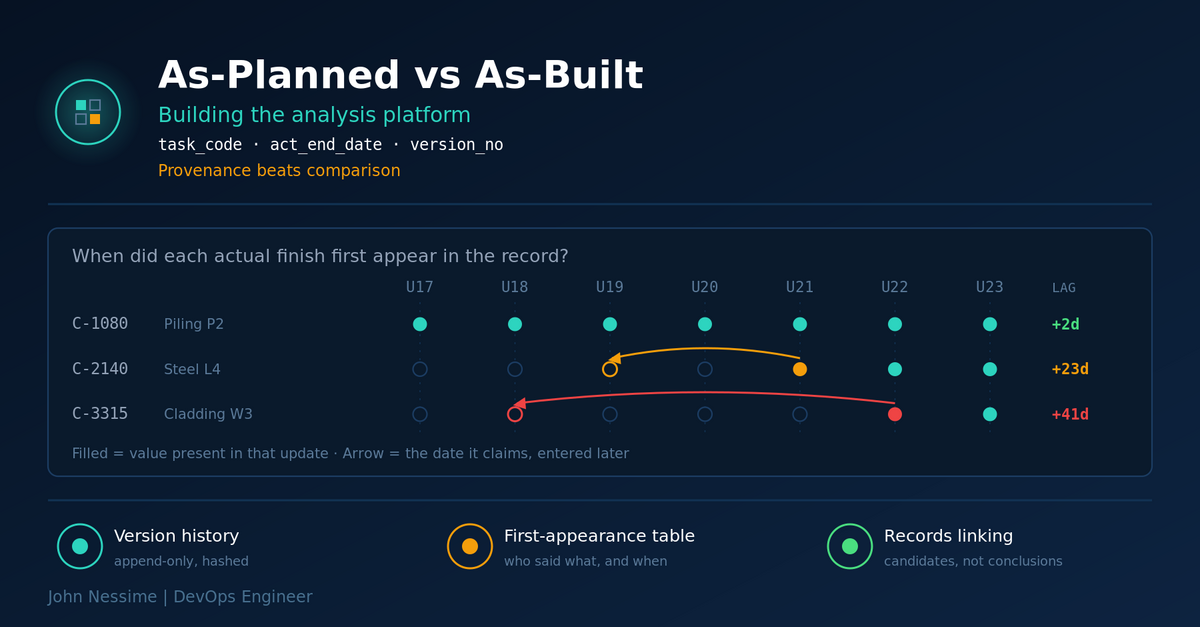
Most as-planned vs as-built analysis compares the baseline to the last P6 update and calls the result an as-built. It isn't one. This is how to build the data layer underneath a delay analysis: versioned XER ingestion, activity identity across renumbering, a first-appearance table that proves when every actual date entered the record, calendar-safe float, and record linking that proposes candidates instead of asserting cause.

Continue ReadingAs-Planned vs As-Built Analysis: Building a Platform That Survives Cross-Examination