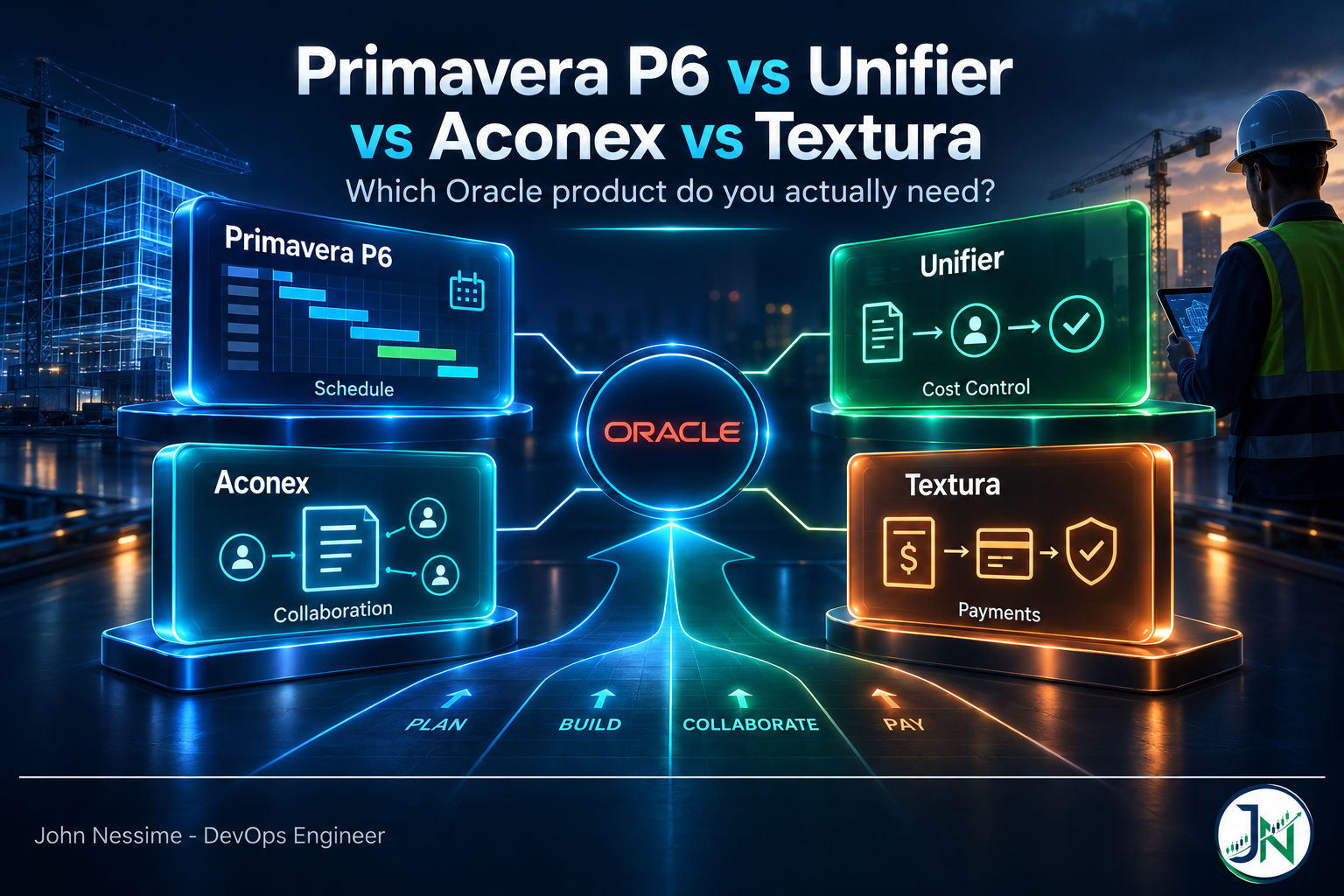
Primavera P6 vs Unifier vs Aconex vs Textura: Which Oracle Product Do You Actually Need?

All four Oracle Construction and Engineering products overlap on purpose, and three of them hold cost. The damage comes from owning two and never deciding which one is authoritative. A practical comparison by whose record each product holds, plus a decision procedure and the integration constraints nobody scopes.

Continue ReadingPrimavera P6 vs Unifier vs Aconex vs Textura: Which Oracle Product Do You Actually Need?

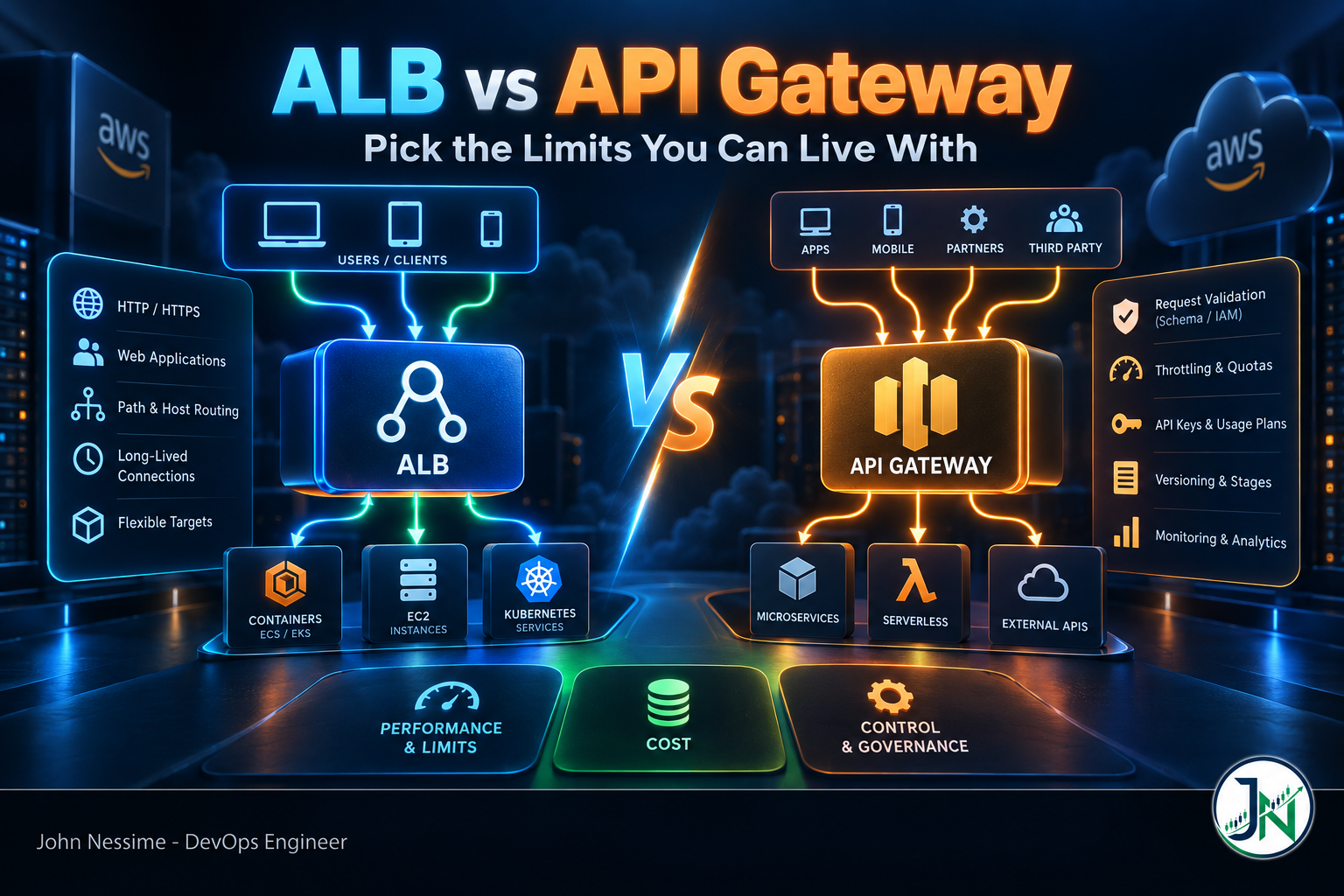
ALB vs API Gateway: Pick the Limits You Can Live With

Choosing between an Application Load Balancer and API Gateway is not a feature comparison. It is a choice of hard limits, a billing curve and an authentication story. Here is how each one bills you, which constraints surface months later, what ALB's native JWT validation changes, and a decision procedure you can run in ten minutes.

Continue ReadingALB vs API Gateway: Pick the Limits You Can Live With

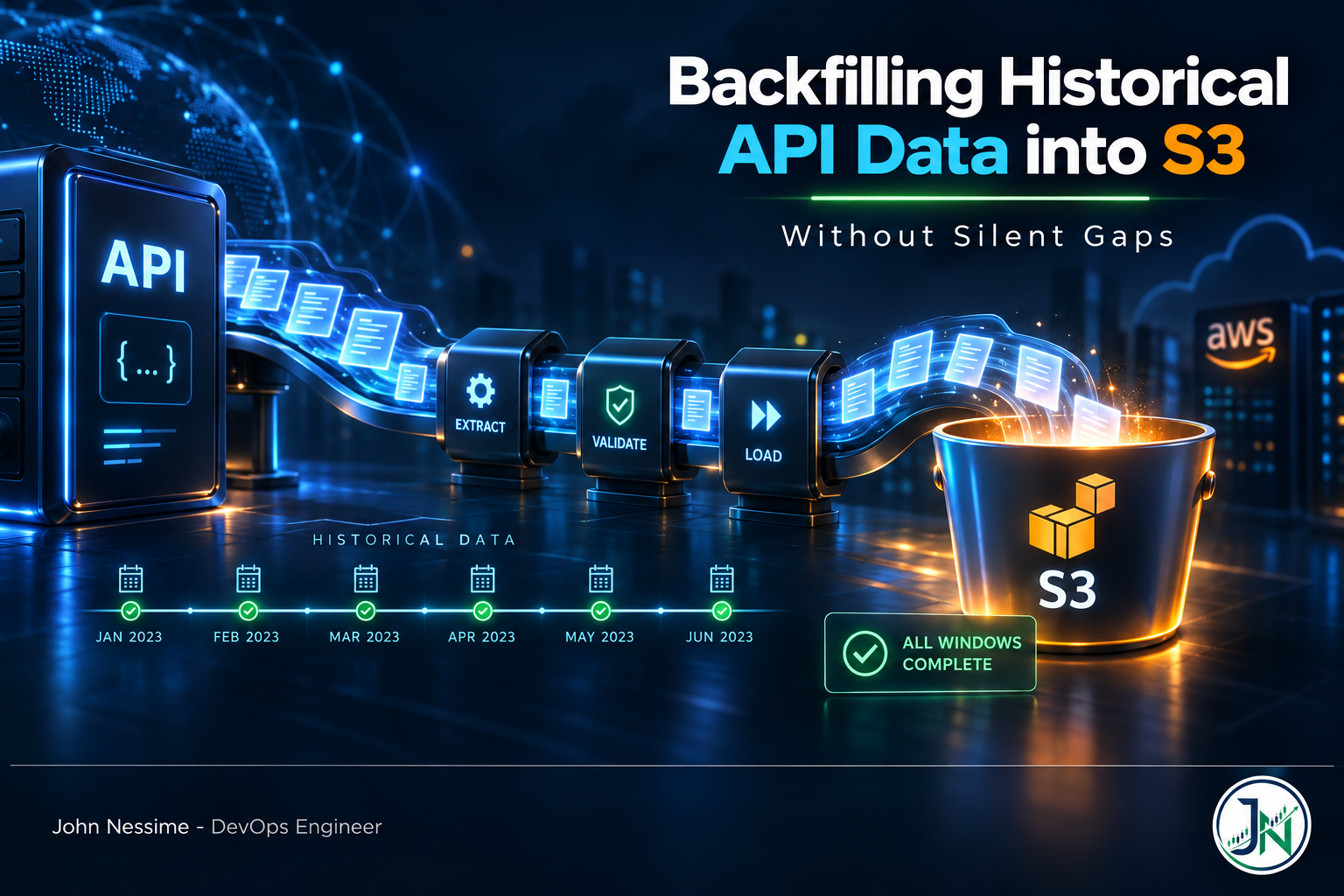
Backfilling Historical API Data into S3 Without Silent Gaps

A backfill that exits zero can still be missing a week of data, and nothing will tell you. This is a practical guide to the failure families behind silent gaps: pagination drift under a mutating source, retries that duplicate pages, prefix layouts designed for writes instead of reads, the seam where backfill meets live ingest, and the storage class rules that make mistakes expensive. Includes deterministic key derivation, S3 conditional writes, Athena partition projection, and a per-window manifest pattern that turns completeness into something you can query.

Continue ReadingBackfilling Historical API Data into S3 Without Silent Gaps

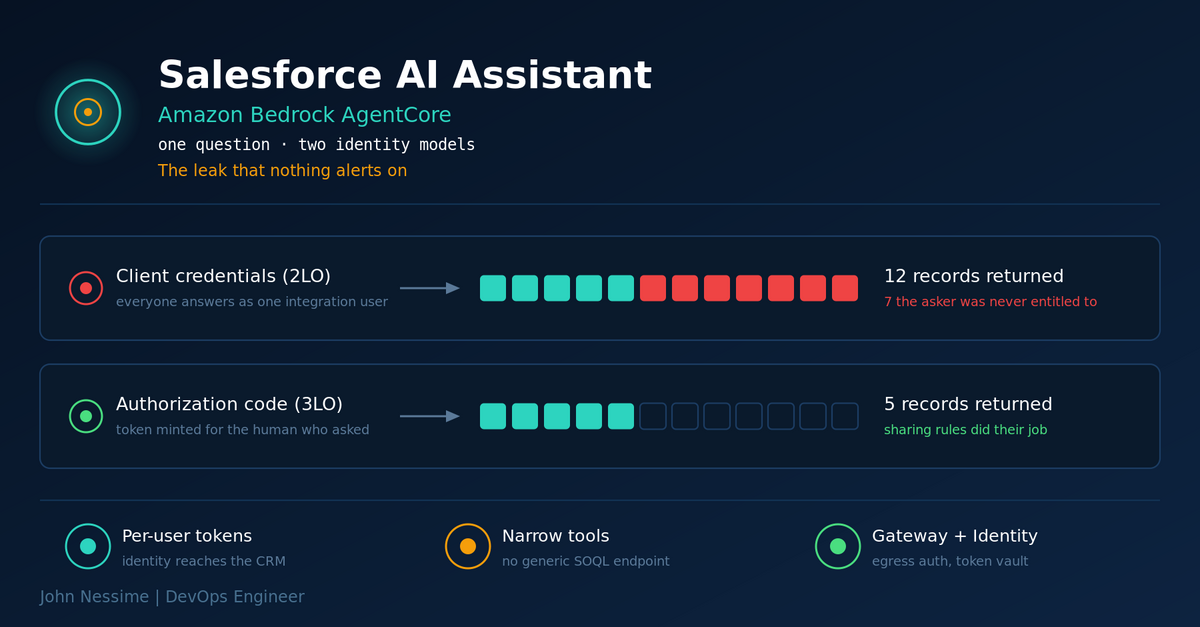
Building a Salesforce AI Assistant on Amazon Bedrock Without Leaking Your CRM

The demo works, then someone sees records they shouldn't. Nothing errors. Here's how to build a Salesforce AI assistant with Amazon Bedrock that respects your sharing model: which doors AWS and Salesforce just closed, why identity propagation is the failure mode that bites, and how to shape the tool surface so the agent can't wander.

Continue ReadingBuilding a Salesforce AI Assistant on Amazon Bedrock Without Leaking Your CRM

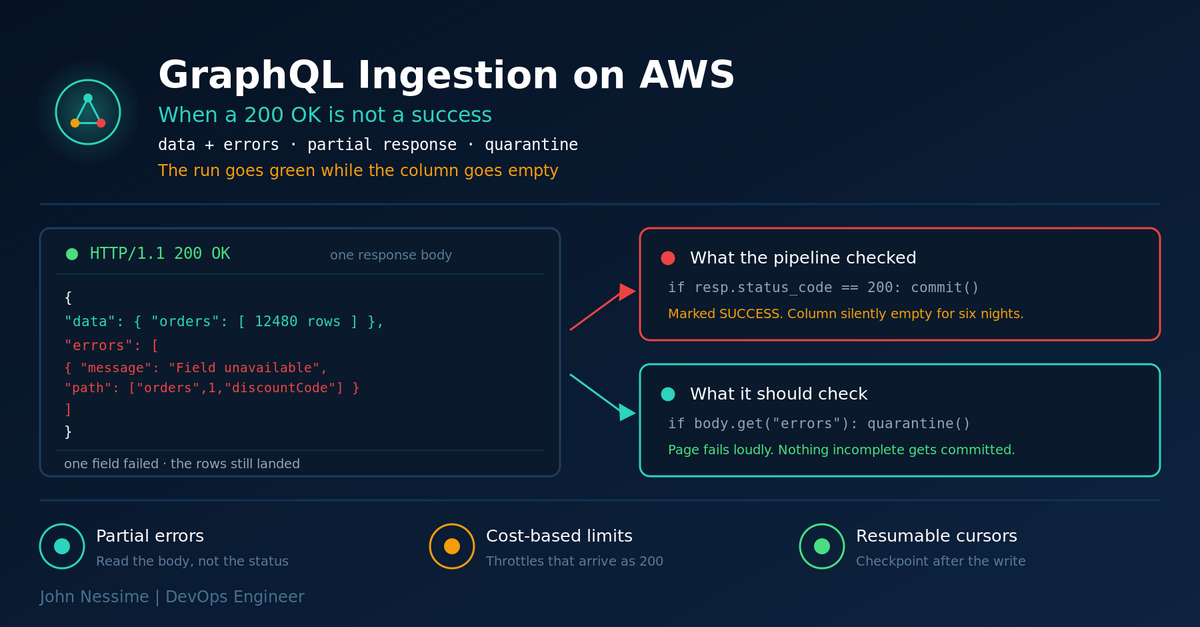
Building a GraphQL Data Ingestion Pipeline on AWS That Doesn’t Lie to You

A GraphQL source can hand you a 200 OK, a populated data block, and a quietly broken column in the same response. Here is how to build a GraphQL data ingestion pipeline on AWS that catches partial errors, respects cost-based rate limits, resumes cleanly from a cursor, and notices when the schema moves under you.

Continue ReadingBuilding a GraphQL Data Ingestion Pipeline on AWS That Doesn’t Lie to You

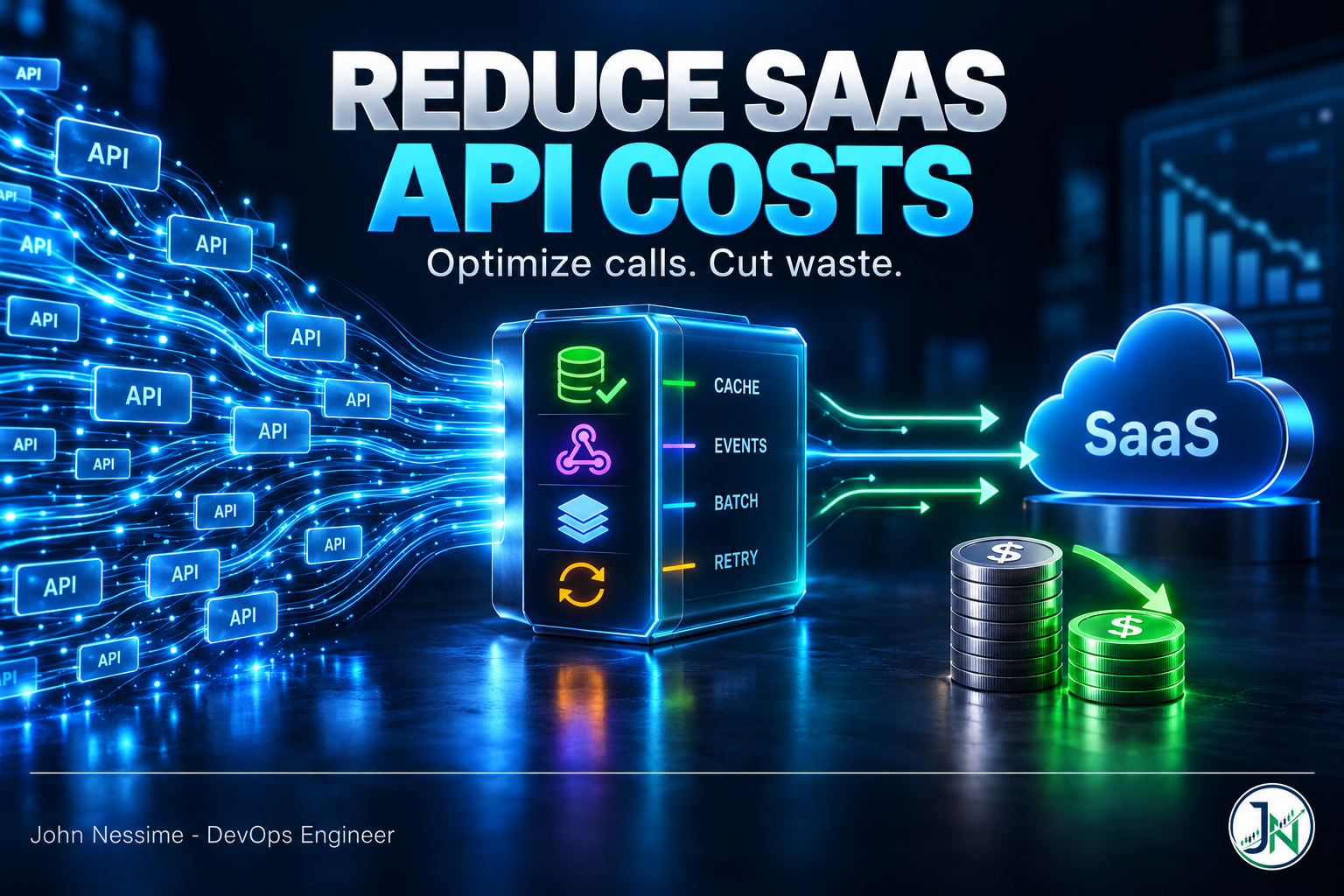
Optimizing API Calls to Reduce SaaS Costs: Six Levers That Actually Move the Bill

Third-party API spend is the one production signal with no error rate attached to it, which is why it creeps up quietly. This is a working engineer's guide to reducing SaaS API costs by changing the shape of your calls: reading the billing unit before you optimise anything, killing pointless polling with conditional requests and webhooks, collapsing N+1 patterns, caching with stampede protection and per-tenant keys, stopping your own retry amplification, and attributing spend so you can prove the work paid off.

Continue ReadingOptimizing API Calls to Reduce SaaS Costs: Six Levers That Actually Move the Bill

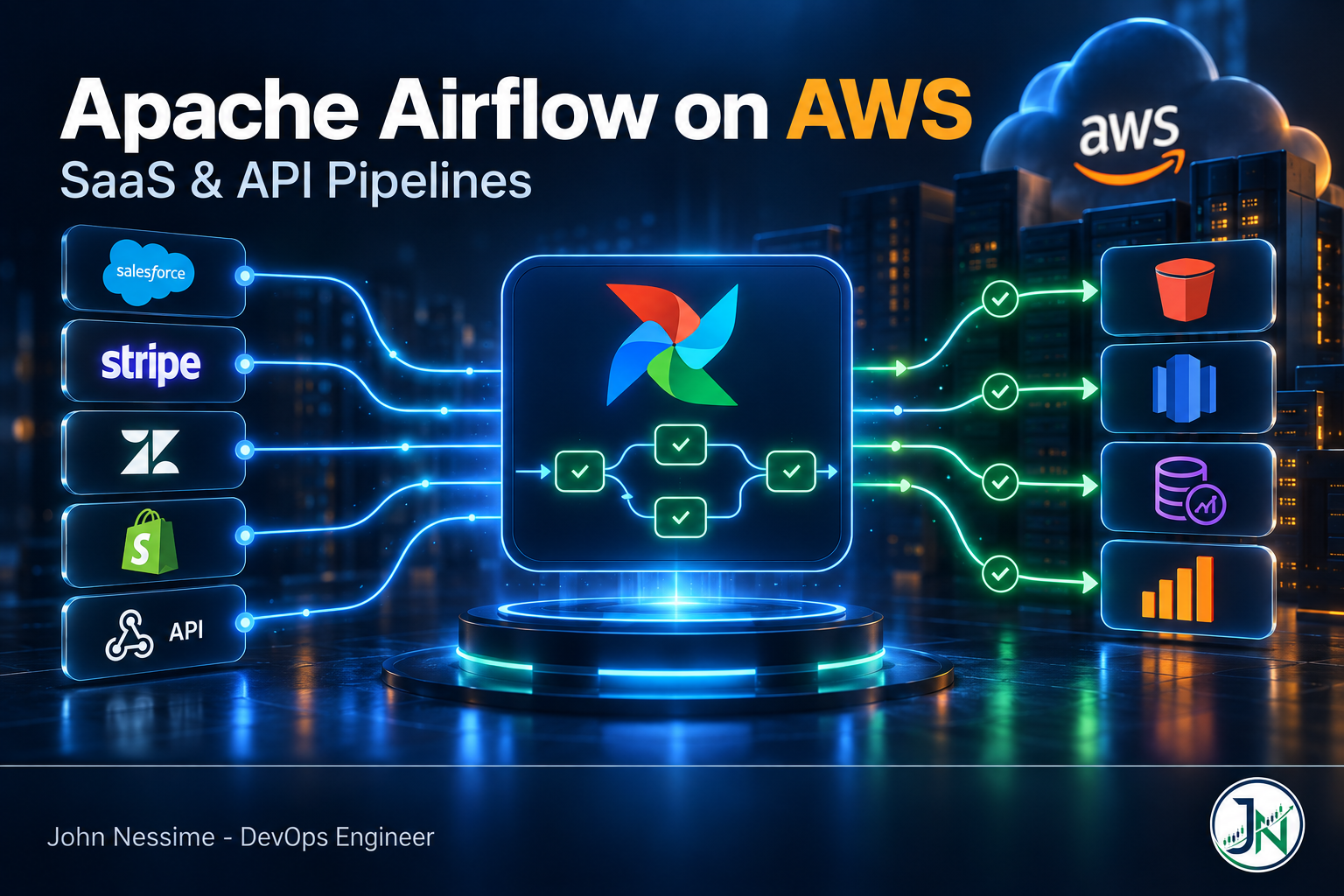
Apache Airflow on AWS: Building SaaS and API Pipelines That Don’t Lie to You

Most API pipeline failures are green DAGs producing incomplete data. A practical guide to running Apache Airflow on AWS for SaaS and API extraction: choosing between MWAA provisioned, MWAA Serverless and self-managed, the pool setting that silently stops throttling when you go deferrable, retry and pagination design, secrets handling, and the four cost lines that actually move.

Continue ReadingApache Airflow on AWS: Building SaaS and API Pipelines That Don’t Lie to You

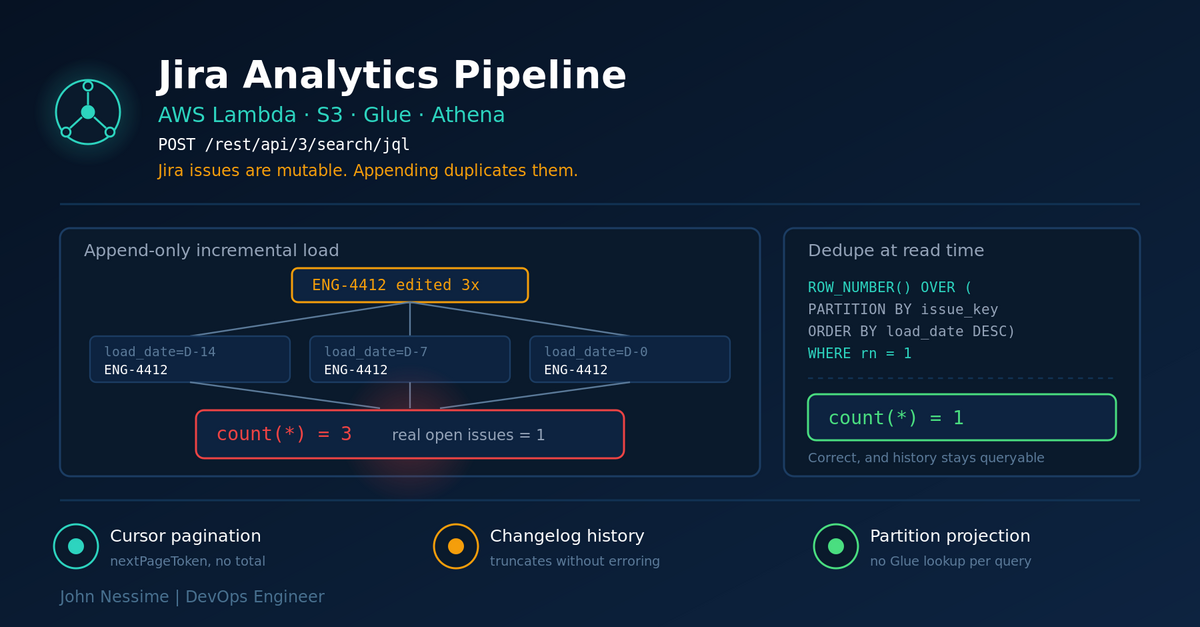
Building a Jira Analytics Pipeline with AWS Lambda and Athena (Without Double-Counting Everything)

Jira's built-in reports stop at the board boundary. This guide walks through a Jira analytics pipeline built on AWS Lambda, S3 and Athena, organised around the four failure families that actually bite: the removed search endpoint, silently truncated changelogs, incremental loads that duplicate rows, and an S3 layout that quietly inflates your query bill.

Continue ReadingBuilding a Jira Analytics Pipeline with AWS Lambda and Athena (Without Double-Counting Everything)