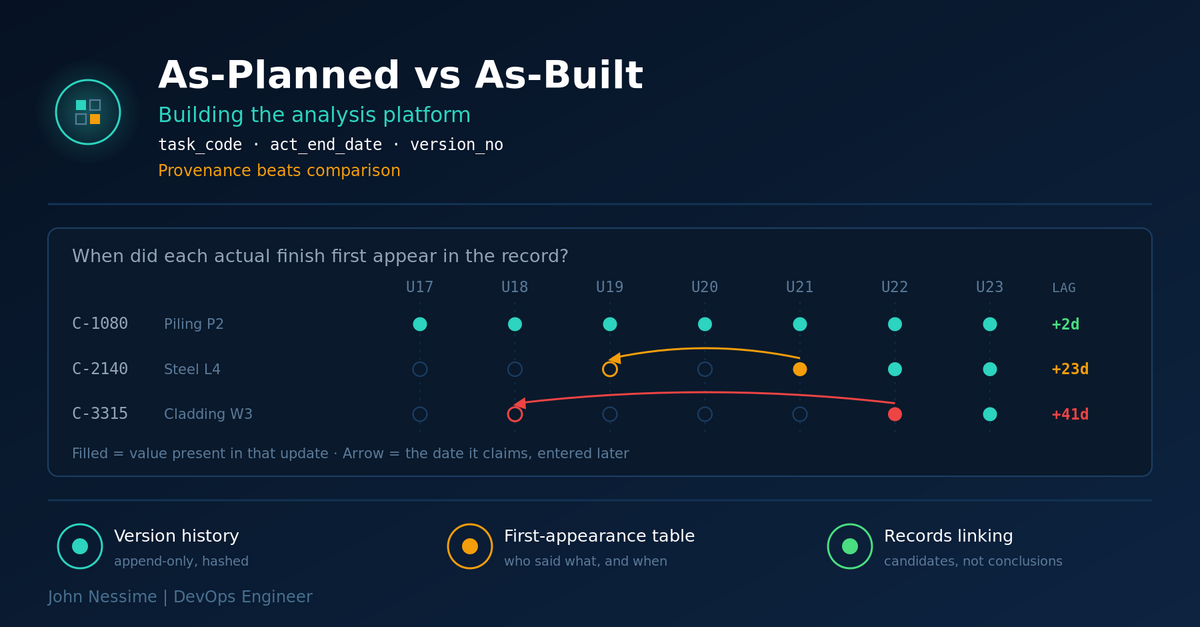
As-Planned vs As-Built Analysis: Building a Platform That Survives Cross-Examination

Most as-planned vs as-built analysis compares the baseline to the last P6 update and calls the result an as-built. It isn't one. This is how to build the data layer underneath a delay analysis: versioned XER ingestion, activity identity across renumbering, a first-appearance table that proves when every actual date entered the record, calendar-safe float, and record linking that proposes candidates instead of asserting cause.

Continue ReadingAs-Planned vs As-Built Analysis: Building a Platform That Survives Cross-Examination

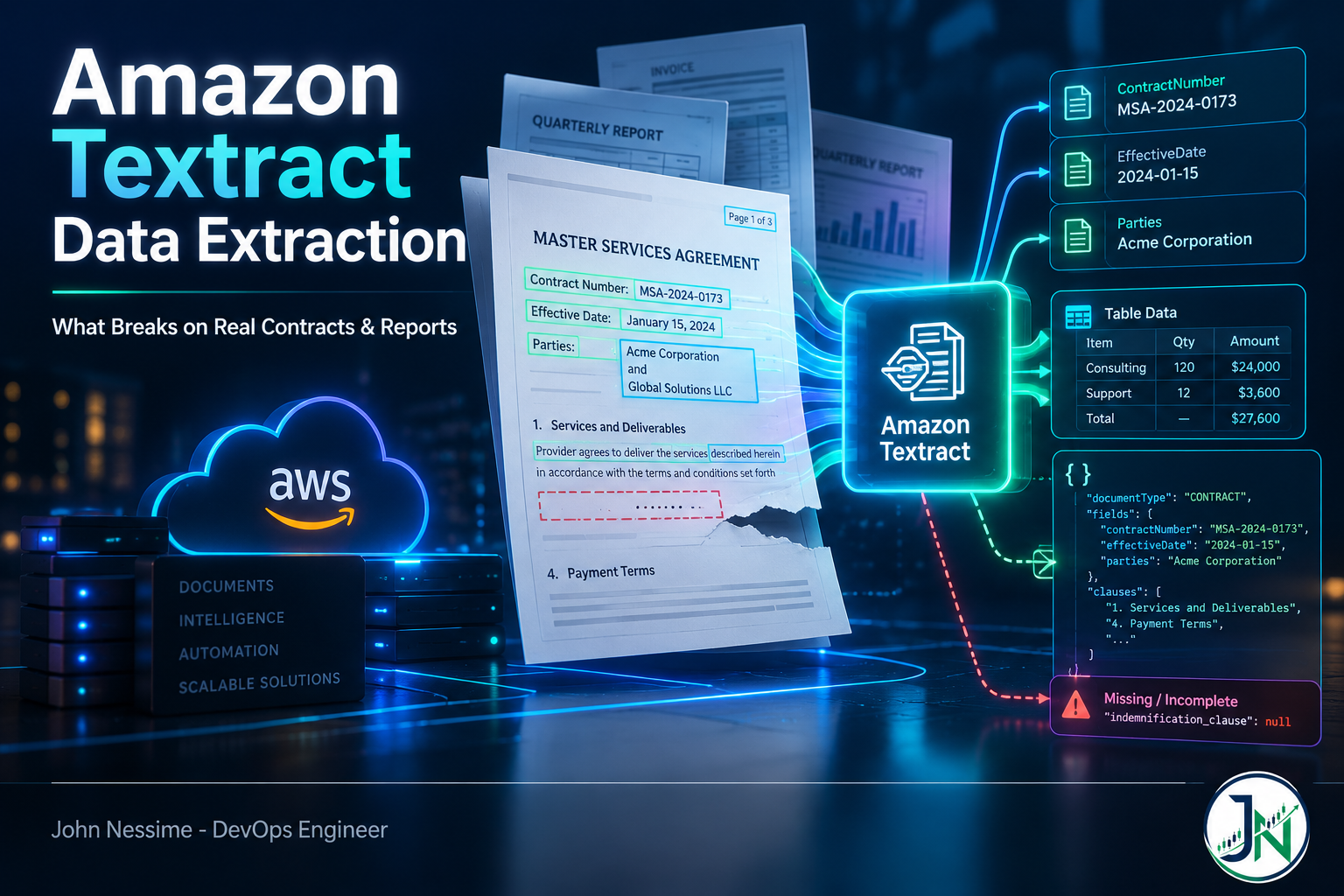
Amazon Textract Data Extraction: What Breaks on Real Contracts and Reports

Textract rarely fails loudly. It returns a plausible result that is quietly incomplete: a truncated result set, a tick box read as an empty string, a clause split across a page break. A practitioner's guide to the failure modes that actually bite when you point Amazon Textract at contracts, technical reports and correspondence, plus how to choose between sync and async, which feature types are worth paying for, and where Textract stops being the right tool.

Continue ReadingAmazon Textract Data Extraction: What Breaks on Real Contracts and Reports

Extracting Clauses, Parties, Dates and Obligations with Amazon Bedrock

Valid JSON is not correct data. A practical guide to extracting clauses, parties, dates and obligations from contracts with Amazon Bedrock: the two build paths, schema design, the three failure families that produce confident wrong answers, and the validation layer that catches them.

Continue ReadingExtracting Clauses, Parties, Dates and Obligations with Amazon Bedrock