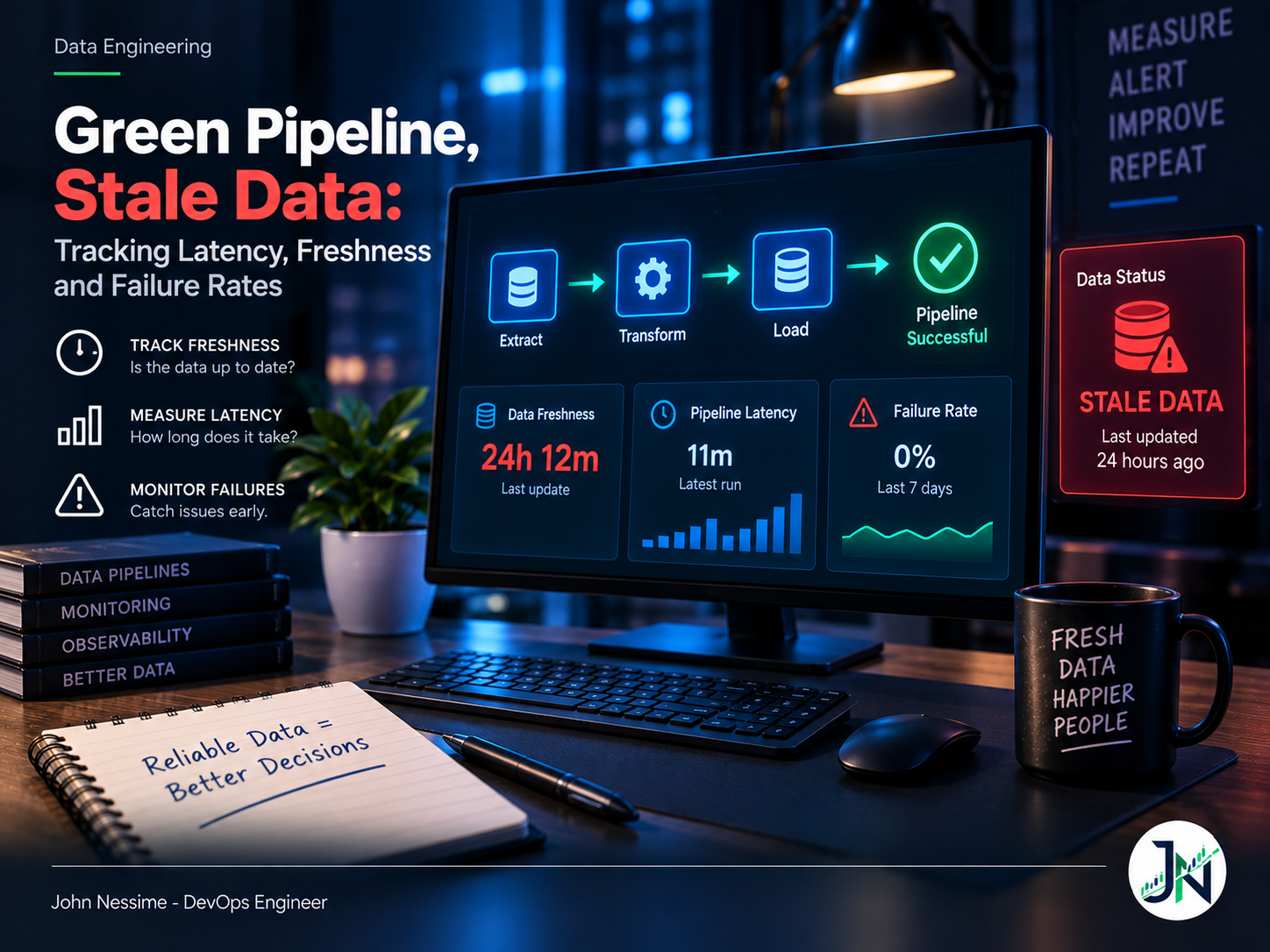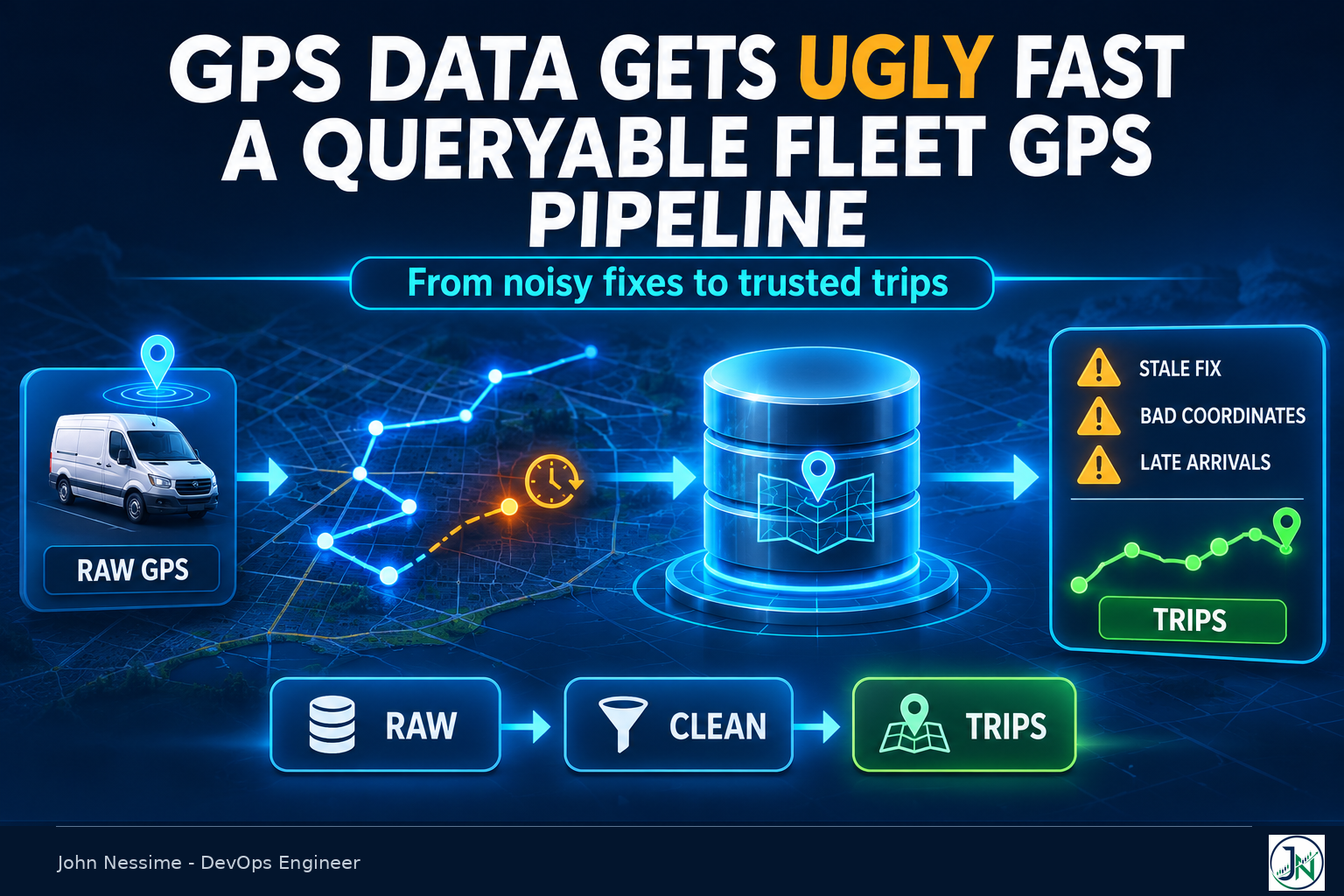
GPS Data Gets Ugly Fast: A Fleet GPS Data Pipeline That Stays Queryable

Telematics devices lie in specific, documented ways: stale fixes reported as new, zero coordinates after reboot, and buffered records replayed days late. Here is how to build a fleet GPS data pipeline on PostgreSQL, PostGIS and TimescaleDB that survives all three and still answers trip and geofence queries fast.

Continue ReadingGPS Data Gets Ugly Fast: A Fleet GPS Data Pipeline That Stays Queryable

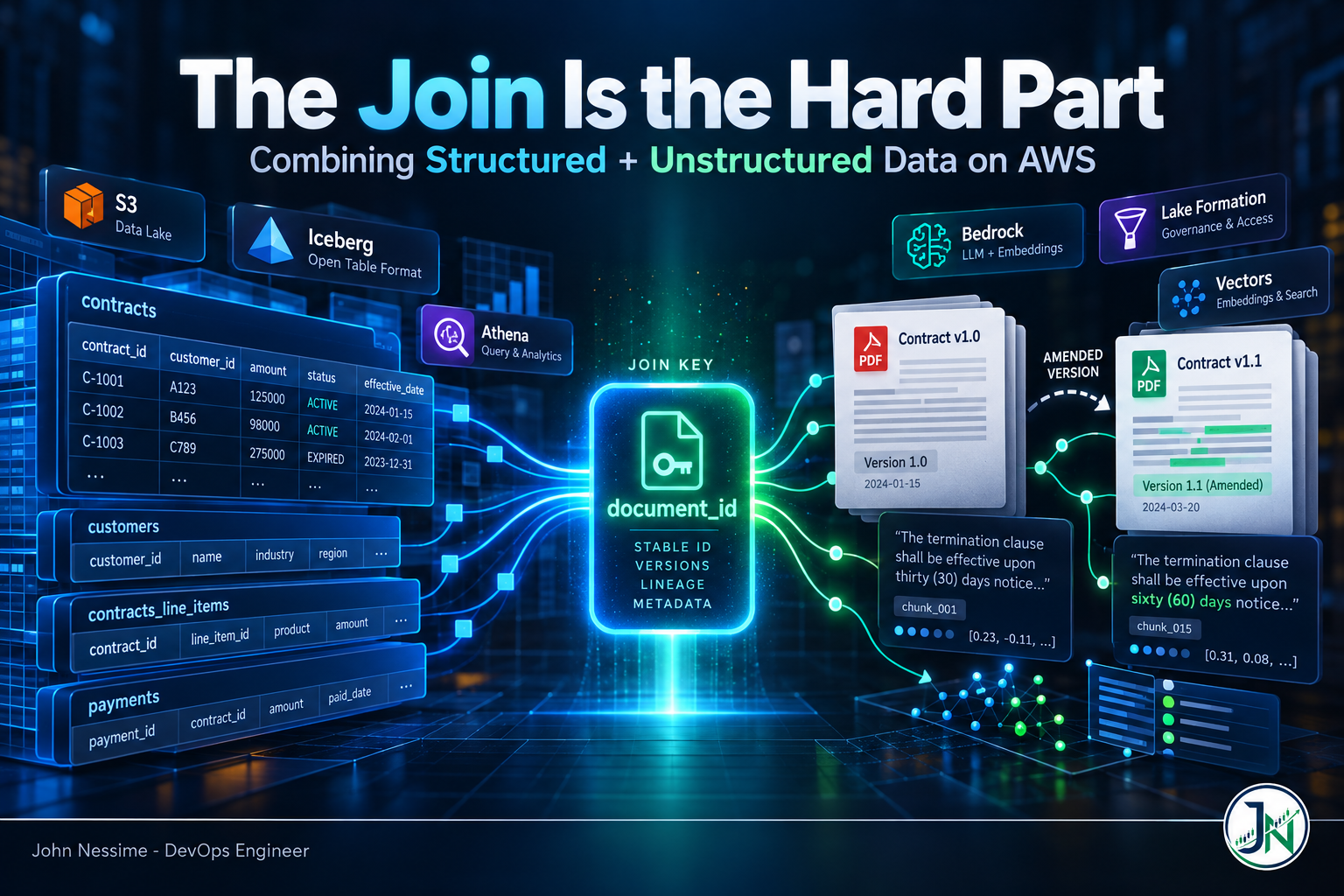
Building a Hotel Data Lake on AWS That Agrees With the Night Audit

Hotel source data is mutable in the past, so an append-only pipeline drifts away from the PMS without anyone noticing until month close. A practical guide to room-night grain, bitemporal modeling with Apache Iceberg, PMS ingestion, guest data scope, and file physics at hotel volumes.

Continue ReadingBuilding a Hotel Data Lake on AWS That Agrees With the Night Audit

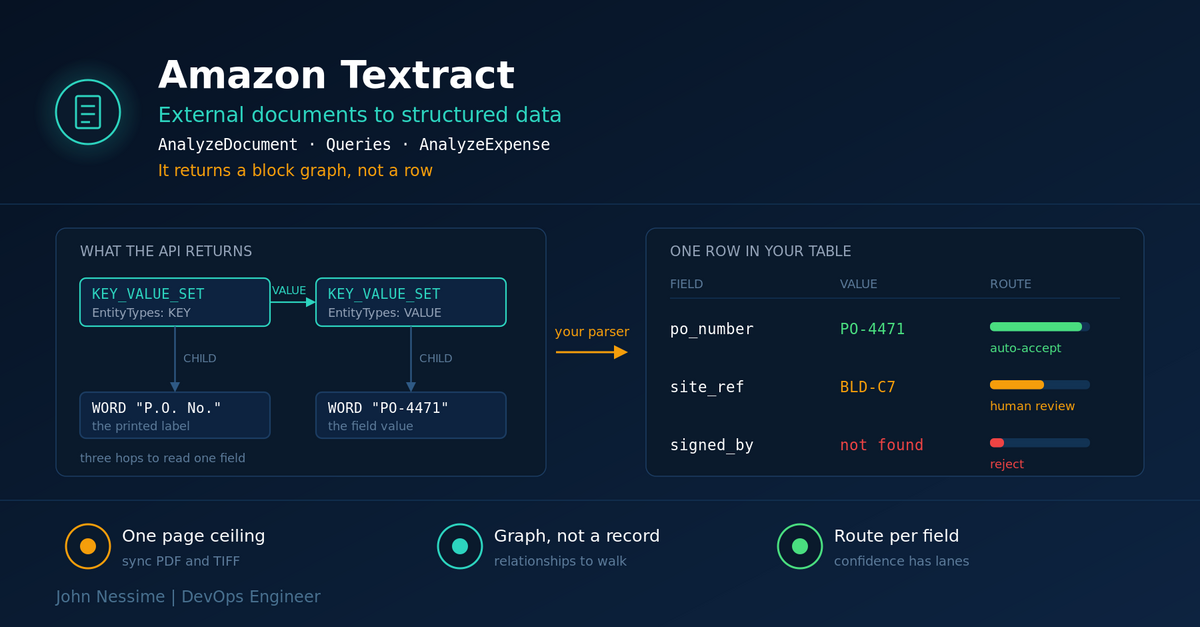
Turning External Documents Into Structured Data With Amazon Textract

Amazon Textract almost never fails loudly. A working guide to turning external PDFs and scans into structured data: picking the right operation per document family, parsing the block graph, routing on per-field confidence, and catching the limits that silently truncate your records.

Continue ReadingTurning External Documents Into Structured Data With Amazon Textract

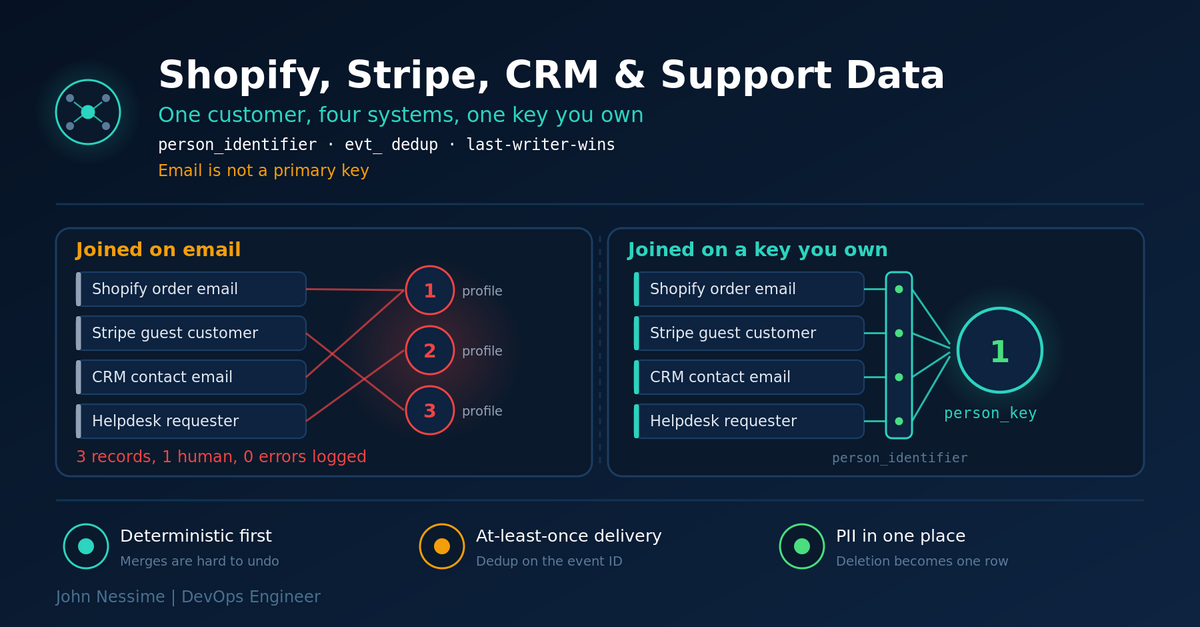
One Customer, Four Systems: Unifying Shopify, Stripe, CRM and Support Data

Three CRM records, one person, and nothing in the logs to explain it. A practical walkthrough of what actually breaks when you unify Shopify, Stripe, CRM and support data: guest-checkout identity, duplicate and out-of-order webhooks, revenue that never ties to payouts, deletion requests that miss half your copies, and reverse ETL write loops. Organized by failure family, with schema and handler patterns you can apply directly.

Continue ReadingOne Customer, Four Systems: Unifying Shopify, Stripe, CRM and Support Data

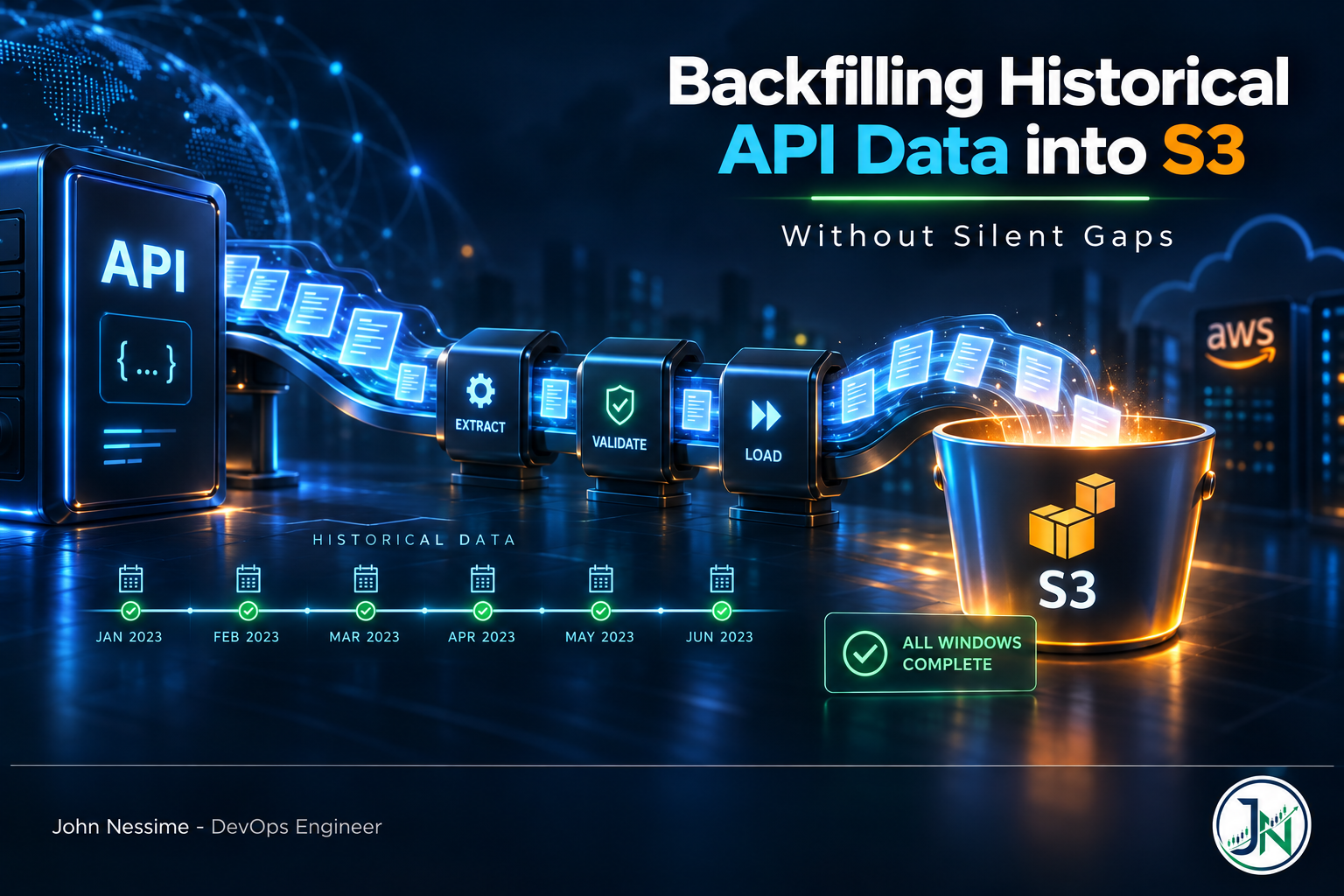
Backfilling Historical API Data into S3 Without Silent Gaps

A backfill that exits zero can still be missing a week of data, and nothing will tell you. This is a practical guide to the failure families behind silent gaps: pagination drift under a mutating source, retries that duplicate pages, prefix layouts designed for writes instead of reads, the seam where backfill meets live ingest, and the storage class rules that make mistakes expensive. Includes deterministic key derivation, S3 conditional writes, Athena partition projection, and a per-window manifest pattern that turns completeness into something you can query.

Continue ReadingBackfilling Historical API Data into S3 Without Silent Gaps

Customer Sentiment Analysis From CRM and Support Data: Building a Score You Can Actually Trust

Most customer sentiment analysis pipelines run perfectly and still produce a number nobody should act on. Here are the failure families that cause it, from labels stamped on the wrong message to averages taken over a scale that was never numeric, plus a pipeline shape and a legal boundary worth knowing before you ship.

Continue ReadingCustomer Sentiment Analysis From CRM and Support Data: Building a Score You Can Actually Trust

Amazon Textract Data Extraction: What Breaks on Real Contracts and Reports

Textract rarely fails loudly. It returns a plausible result that is quietly incomplete: a truncated result set, a tick box read as an empty string, a clause split across a page break. A practitioner's guide to the failure modes that actually bite when you point Amazon Textract at contracts, technical reports and correspondence, plus how to choose between sync and async, which feature types are worth paying for, and where Textract stops being the right tool.

Continue ReadingAmazon Textract Data Extraction: What Breaks on Real Contracts and Reports