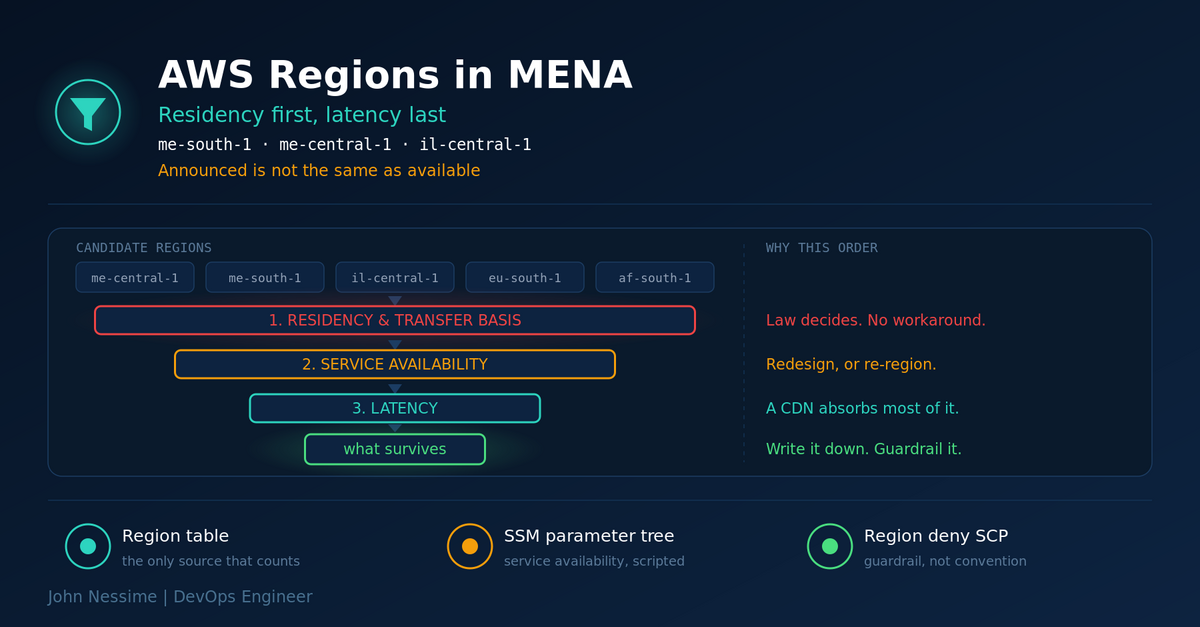
Choosing an AWS Region for a MENA Client: Latency Is the Last Question

Latency is the constraint everyone reaches for first when choosing an AWS region for MENA clients, and it is almost always the one that matters least. Residency law eliminates candidates, service availability eliminates more, and latency only picks between whatever survives. A practical walkthrough of that filter, with the commands to check service availability and region opt-in status programmatically, the guardrail that keeps the decision true, and the things that break in the first few weeks after you commit.


Continue ReadingChoosing an AWS Region for a MENA Client: Latency Is the Last Question

Monitoring n8n Workflow Failures in Grafana: Why Your Green Dashboard Is Lying

n8n's Prometheus endpoint tells you the process is alive and busy. It does not tell you a workflow stopped producing correct output. This post walks through the three failure families that slip past a default n8n dashboard, the PromQL that catches each one, and how to close the gap with a second source of truth from the executions API.

Continue ReadingMonitoring n8n Workflow Failures in Grafana: Why Your Green Dashboard Is Lying

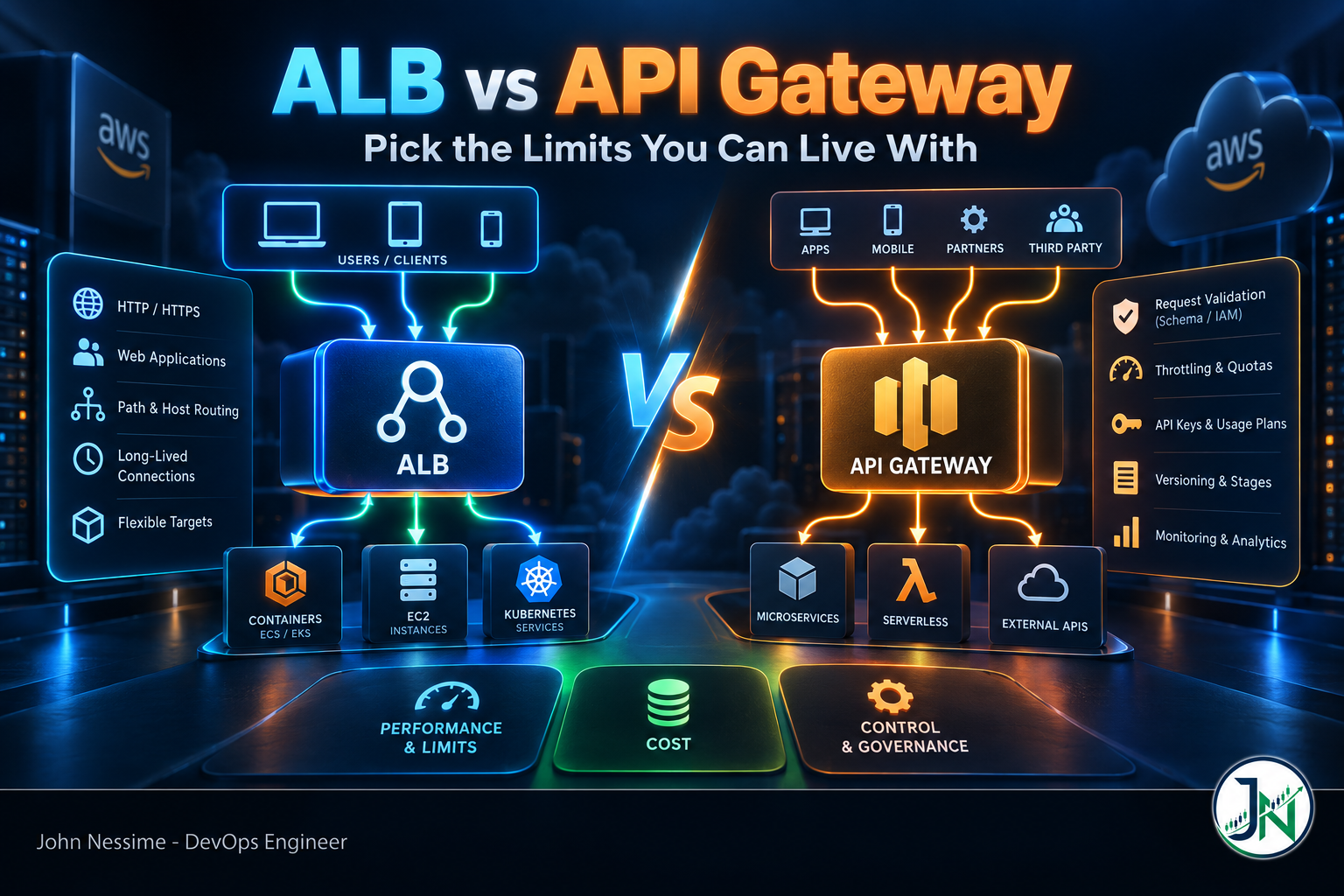
ALB vs API Gateway: Pick the Limits You Can Live With

Choosing between an Application Load Balancer and API Gateway is not a feature comparison. It is a choice of hard limits, a billing curve and an authentication story. Here is how each one bills you, which constraints surface months later, what ALB's native JWT validation changes, and a decision procedure you can run in ten minutes.

Continue ReadingALB vs API Gateway: Pick the Limits You Can Live With

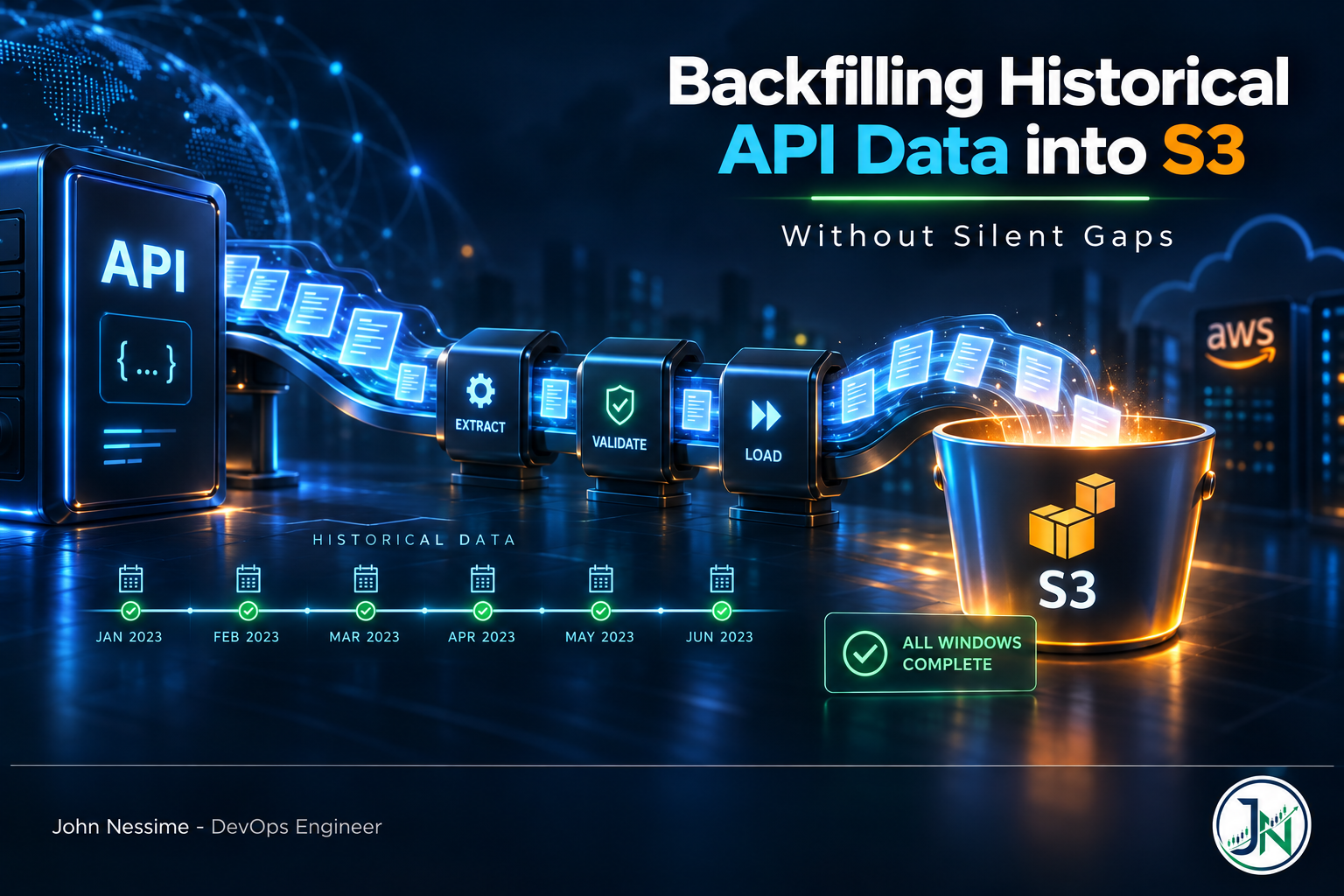
Backfilling Historical API Data into S3 Without Silent Gaps

A backfill that exits zero can still be missing a week of data, and nothing will tell you. This is a practical guide to the failure families behind silent gaps: pagination drift under a mutating source, retries that duplicate pages, prefix layouts designed for writes instead of reads, the seam where backfill meets live ingest, and the storage class rules that make mistakes expensive. Includes deterministic key derivation, S3 conditional writes, Athena partition projection, and a per-window manifest pattern that turns completeness into something you can query.

Continue ReadingBackfilling Historical API Data into S3 Without Silent Gaps

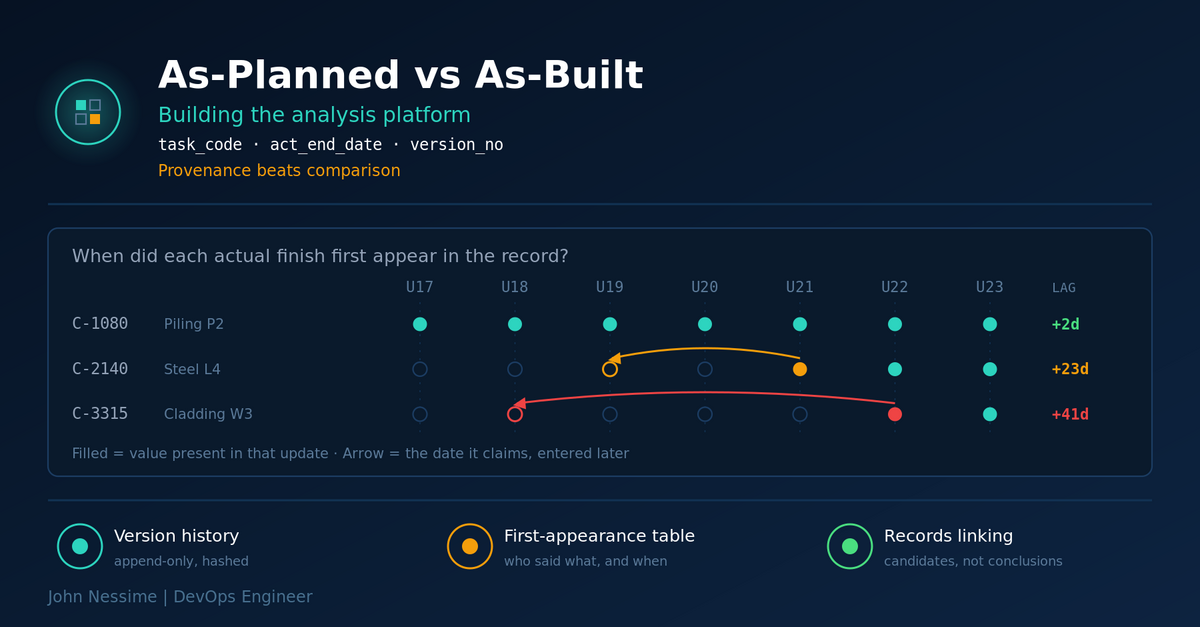
As-Planned vs As-Built Analysis: Building a Platform That Survives Cross-Examination

Most as-planned vs as-built analysis compares the baseline to the last P6 update and calls the result an as-built. It isn't one. This is how to build the data layer underneath a delay analysis: versioned XER ingestion, activity identity across renumbering, a first-appearance table that proves when every actual date entered the record, calendar-safe float, and record linking that proposes candidates instead of asserting cause.

Continue ReadingAs-Planned vs As-Built Analysis: Building a Platform That Survives Cross-Examination

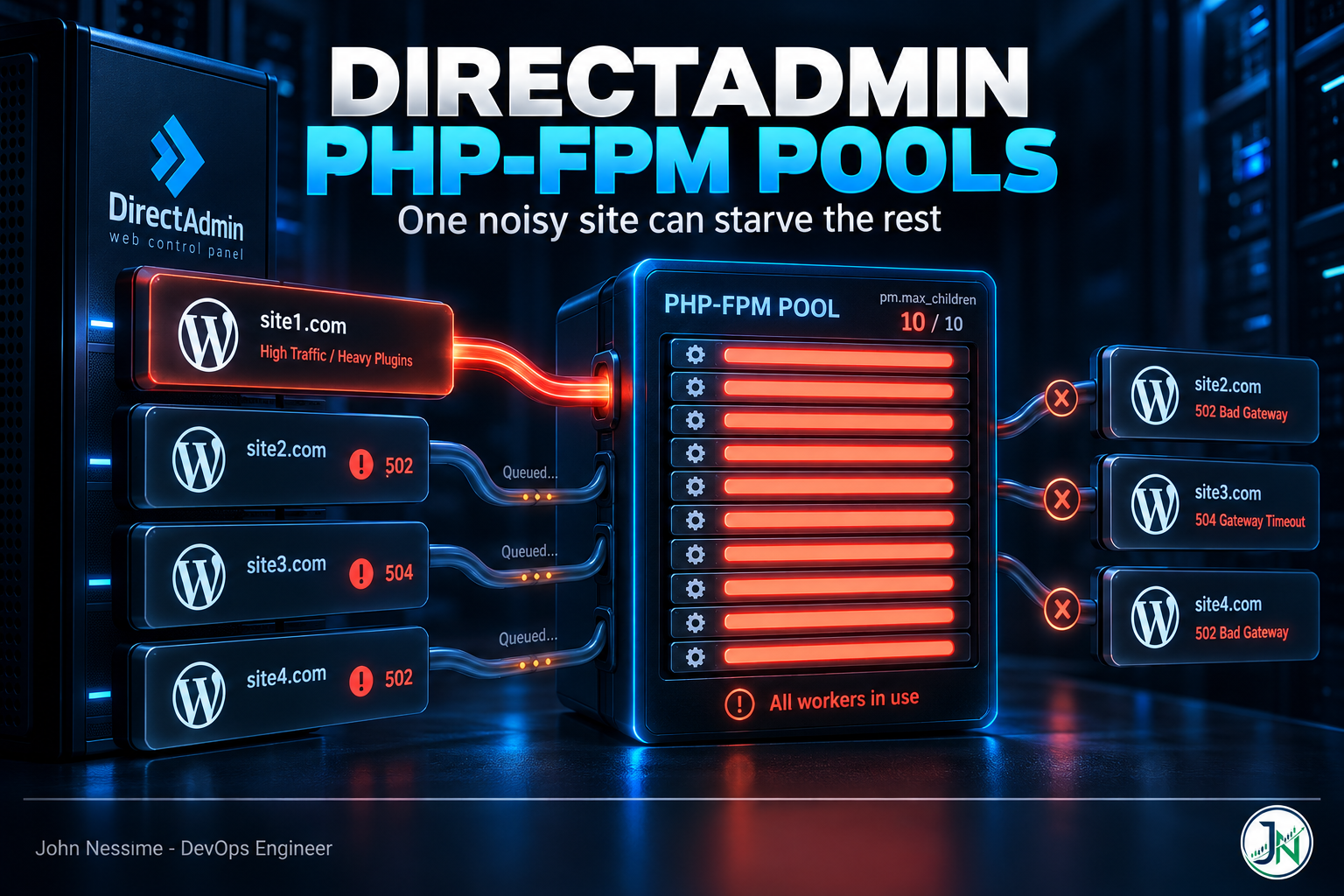
DirectAdmin PHP-FPM Pools: Why One WordPress Site Takes Down the Others

DirectAdmin gives each user one PHP-FPM pool, not each site. That single design fact explains most of the 502s on a busy shared box. Here is how to find the pool files, size pm.max_children from real memory numbers, set per-site limits that WordPress cannot override, and make the changes survive the next rewrite_confs.

Continue ReadingDirectAdmin PHP-FPM Pools: Why One WordPress Site Takes Down the Others

Business Email DNS Done Right: MX, SPF, DKIM and DMARC

Your domain has all four records. Every free checker shows green. It is still trivially spoofable, because publishing a record and enforcing a policy are different acts. A working guide to business email DNS: what MX, SPF, DKIM and DMARC each actually protect, the SPF lookup budget and the void-lookup limit nobody watches, why DKIM alignment decides whether you can ever reach p=reject, the domain architecture that stops the problem recurring, and a rollout order that gets you to enforcement without losing legitimate mail.

Continue ReadingBusiness Email DNS Done Right: MX, SPF, DKIM and DMARC