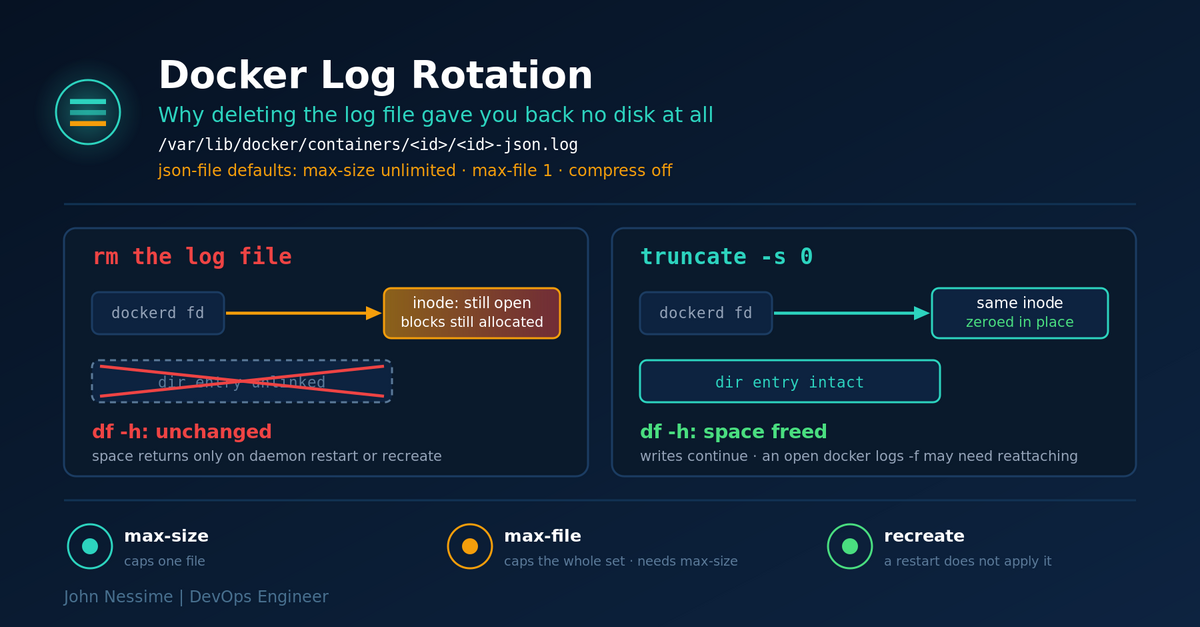
Docker Logs Ate My Disk: A Working Guide to Log Drivers and Rotation

Docker's default logging driver writes container output to a JSON file with no size limit and no rotation. This is a practical guide to Docker log rotation: what the defaults actually do, why your daemon.json change did nothing, why deleting the log file did not free any disk, and how to choose between json-file, local, journald and shipping logs off the box.
Continue ReadingDocker Logs Ate My Disk: A Working Guide to Log Drivers and Rotation

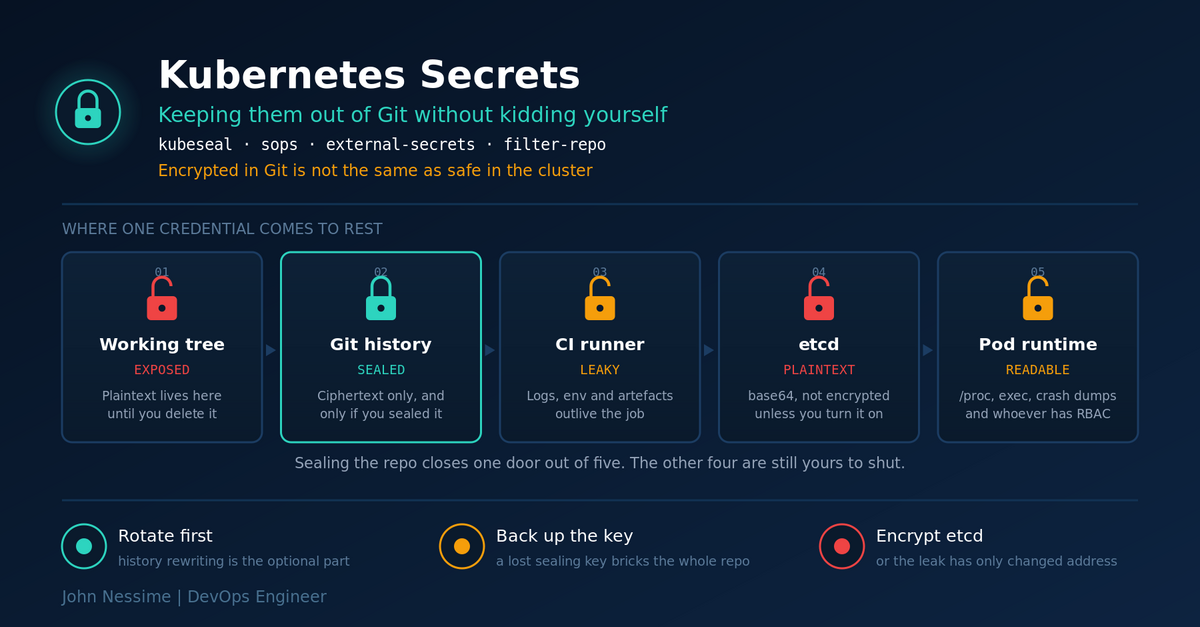
Keep Kubernetes Secrets Out of Git Without Kidding Yourself

Encrypting a Secret before you commit it only closes one of the five places that value comes to rest. Here is how to keep Kubernetes secrets out of Git properly: Sealed Secrets, SOPS and External Secrets compared honestly, the key-backup problem nobody plans for, and what to actually do when a credential is already in your history.

Continue ReadingKeep Kubernetes Secrets Out of Git Without Kidding Yourself

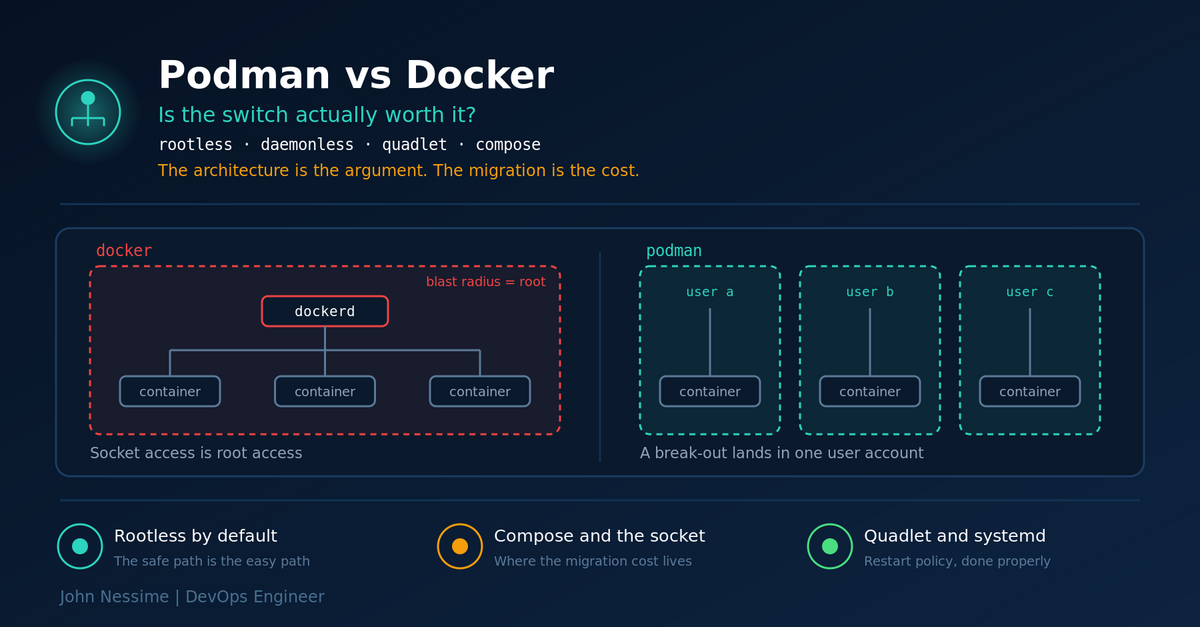
Podman vs Docker: Is the Switch Actually Worth It?

Podman is the better-designed container engine and Docker is the better-supported one. A working engineer's comparison: the architectural difference that drives everything, where each one wins and loses, the four things that genuinely break in a migration (compose, the Docker socket, privileged ports, restart on boot), and a decision procedure to run against your own setup.

Continue ReadingPodman vs Docker: Is the Switch Actually Worth It?

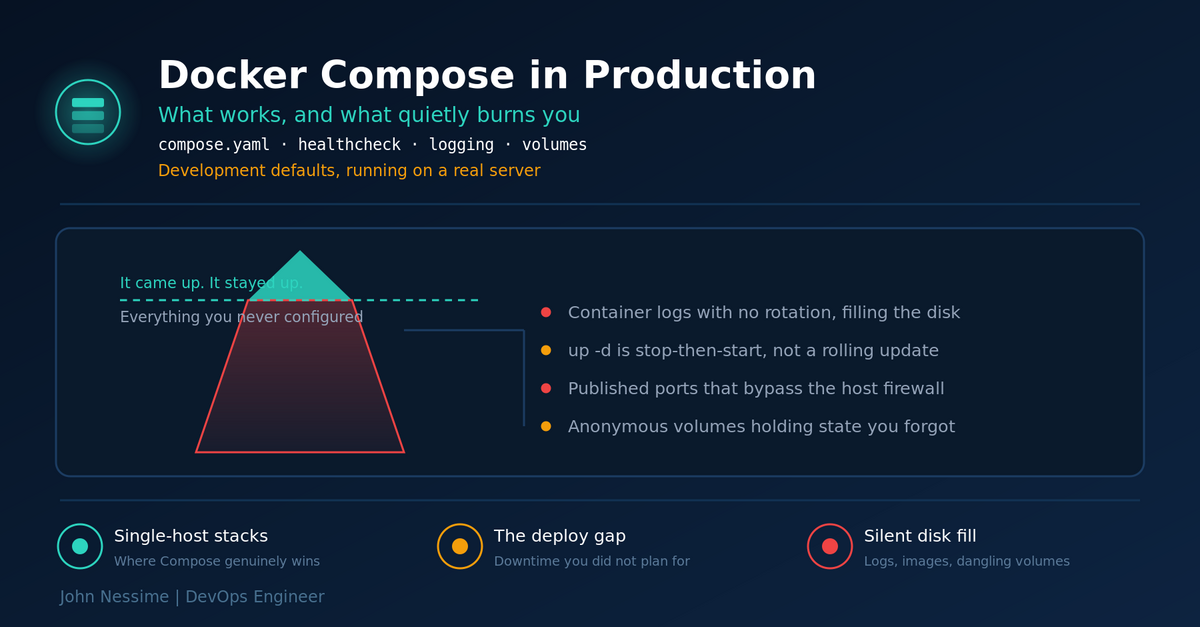
Docker Compose in Production: What Works and What Quietly Burns You

Running Docker Compose in production is a reasonable choice for a single host, but the defaults were chosen for a laptop. A walk through the failure families that actually bite: the deploy gap, unrotated logs filling the disk, anonymous volumes, published ports that bypass your firewall, secrets in environment variables, and health checks that report without acting.

Continue ReadingDocker Compose in Production: What Works and What Quietly Burns You

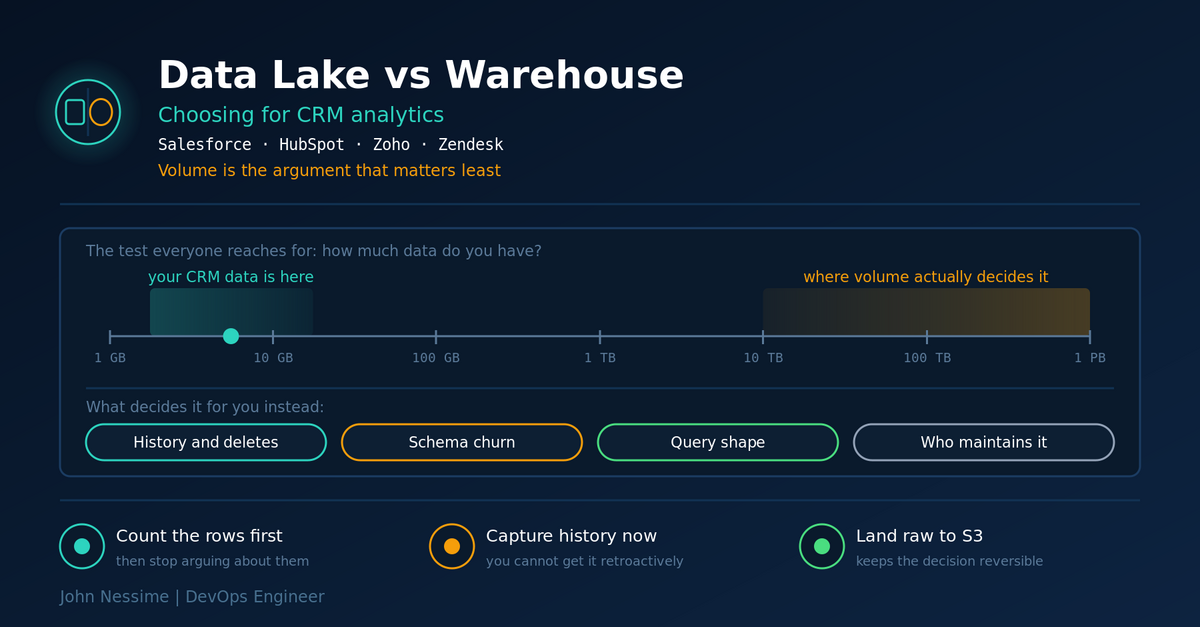
Data Lake vs Data Warehouse for CRM Analytics: Volume Is the Wrong Question

Everyone argues this one on data volume, and volume is the argument that matters least: CRM data is small enough that both architectures handle it comfortably. What actually decides data lake vs data warehouse for CRM analytics is how much point-in-time history you need, how fast the schema churns, what shape your queries are, and who is going to maintain the thing. Includes a decision procedure you can run in an afternoon.

Continue ReadingData Lake vs Data Warehouse for CRM Analytics: Volume Is the Wrong Question

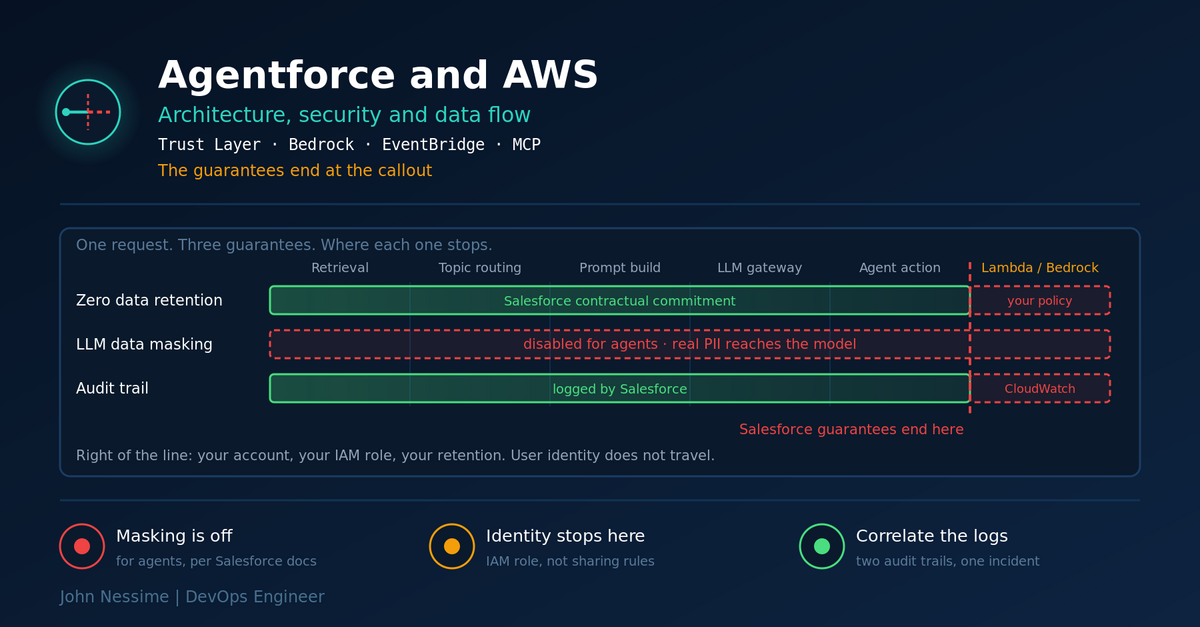
Agentforce and AWS: Where the Trust Layer Stops and Your Logs Begin

Agentforce and AWS wire together in four standard patterns, and every one of them has a point where Salesforce's guarantees stop and yours start. This traces a single request across each boundary it crosses, covers the Trust Layer default most write-ups get wrong (LLM data masking is disabled for agents), and sets out what changes the moment a callout lands in your own account: retention, audit trail, and user identity that does not travel.

Continue ReadingAgentforce and AWS: Where the Trust Layer Stops and Your Logs Begin

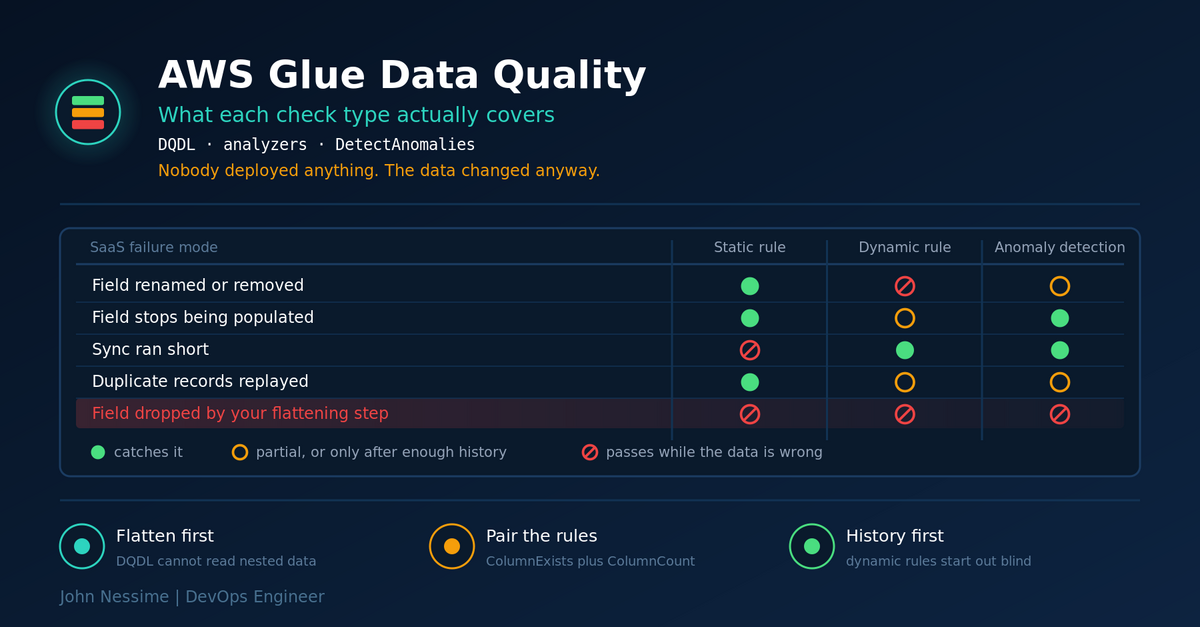
AWS Glue Data Quality for SaaS Data: Catching the Breakage Nobody Deployed

A SaaS admin changes a field and your pipeline stays green while the numbers drift. A practical guide to AWS Glue Data Quality for SaaS sources: where to run the checks, why nested payloads need flattening before DQDL can see them, which rule catches which failure, and the dynamic rules that pass silently because they have no history yet.

Continue ReadingAWS Glue Data Quality for SaaS Data: Catching the Breakage Nobody Deployed

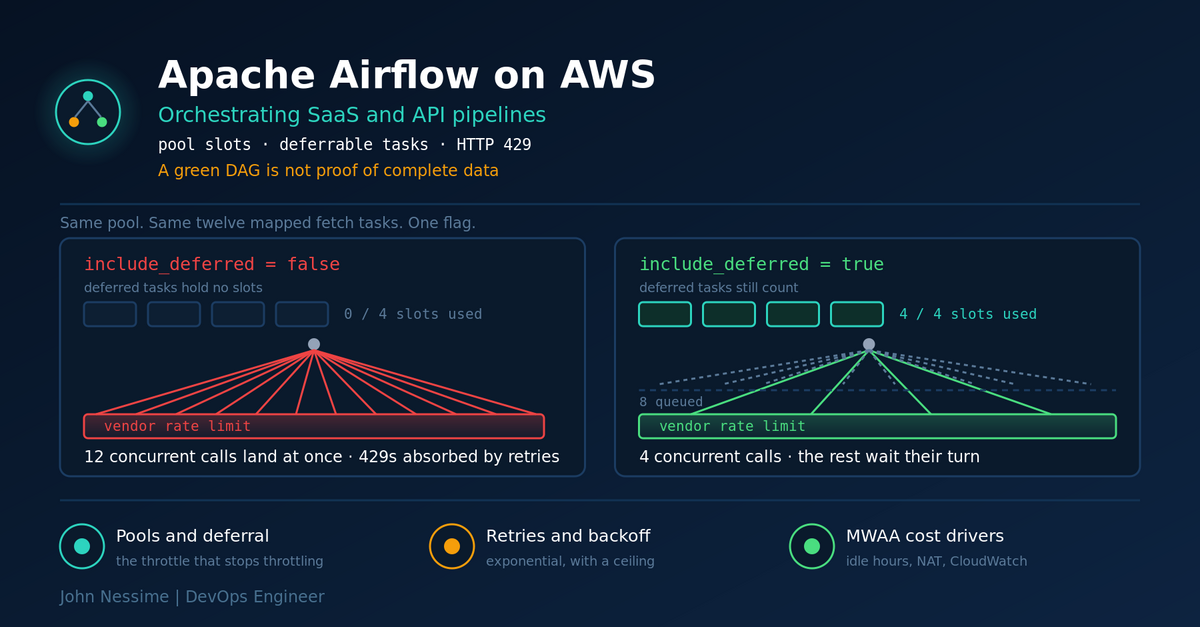
Apache Airflow on AWS: Building SaaS and API Pipelines That Don’t Lie to You

Most API pipeline failures are green DAGs producing incomplete data. A practical guide to running Apache Airflow on AWS for SaaS and API extraction: choosing between MWAA provisioned, MWAA Serverless and self-managed, the pool setting that silently stops throttling when you go deferrable, retry and pagination design, secrets handling, and the four cost lines that actually move.

Continue ReadingApache Airflow on AWS: Building SaaS and API Pipelines That Don’t Lie to You