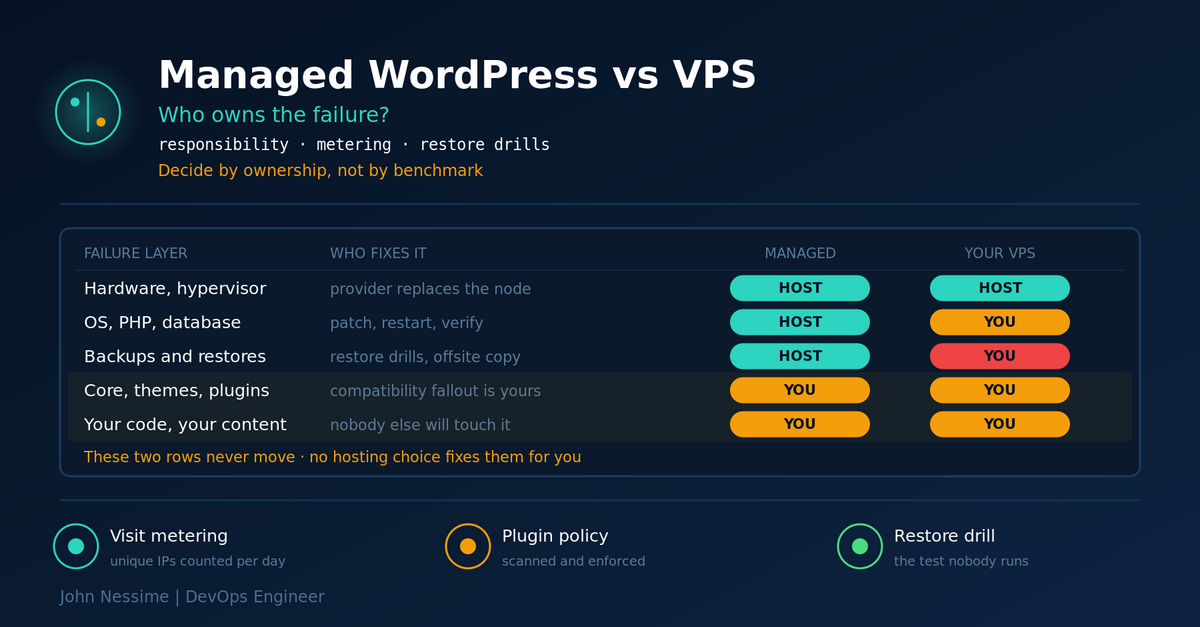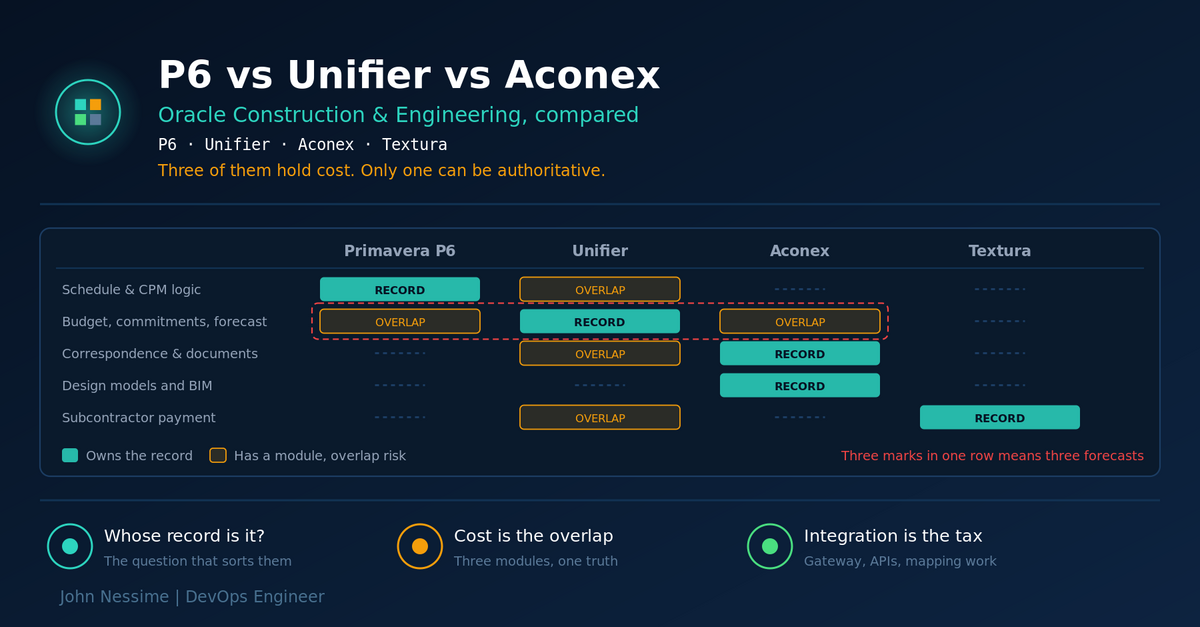
Primavera P6 vs Unifier vs Aconex vs Textura: Which Oracle Product Do You Actually Need?

All four Oracle Construction and Engineering products overlap on purpose, and three of them hold cost. The damage comes from owning two and never deciding which one is authoritative. A practical comparison by whose record each product holds, plus a decision procedure and the integration constraints nobody scopes.
Continue ReadingPrimavera P6 vs Unifier vs Aconex vs Textura: Which Oracle Product Do You Actually Need?

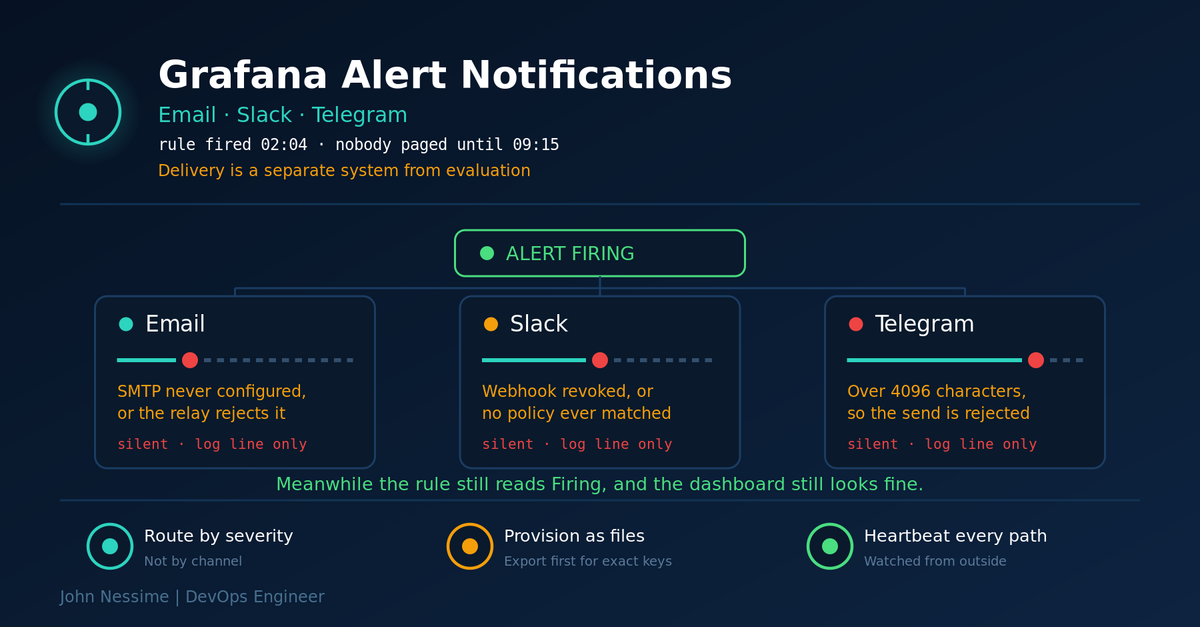
Grafana Alert Notifications That Actually Arrive: Email, Slack and Telegram

The rule went red at 02:04 and nobody found out until 09:15. Rule evaluation and notification delivery are two different systems, and only one of them is visible in the UI. A practical setup for Grafana alert notifications to email, Slack and Telegram, plus how to detect the day delivery quietly stops.

Continue ReadingGrafana Alert Notifications That Actually Arrive: Email, Slack and Telegram

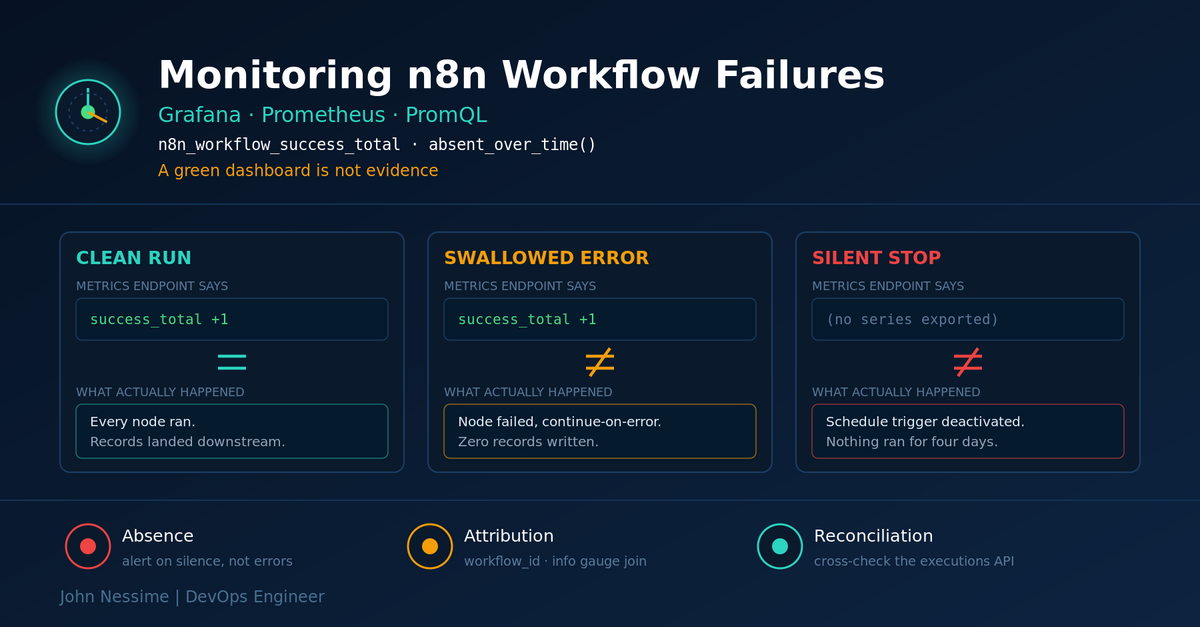
Monitoring n8n Workflow Failures in Grafana: Why Your Green Dashboard Is Lying

n8n's Prometheus endpoint tells you the process is alive and busy. It does not tell you a workflow stopped producing correct output. This post walks through the three failure families that slip past a default n8n dashboard, the PromQL that catches each one, and how to close the gap with a second source of truth from the executions API.

Continue ReadingMonitoring n8n Workflow Failures in Grafana: Why Your Green Dashboard Is Lying

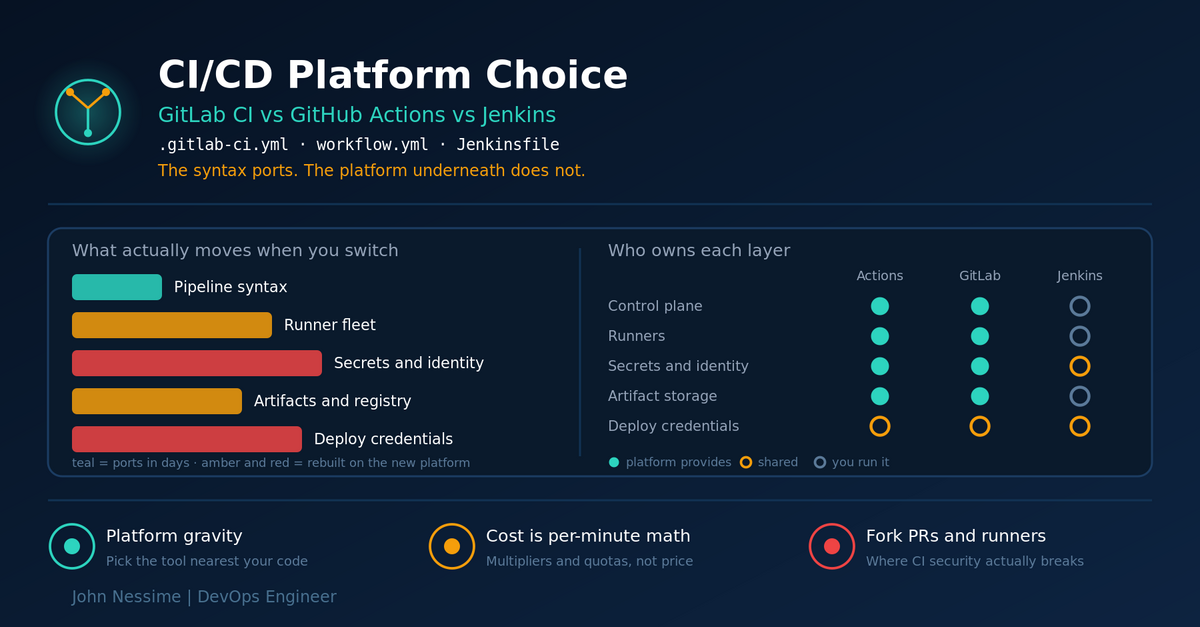
GitLab CI vs GitHub Actions vs Jenkins: Choosing Without Regretting It Later

A practical comparison of GitLab CI, GitHub Actions and Jenkins that skips the feature table. What actually decides the choice is where your code lives, whether the runner can reach the deploy target, and who owns the control plane at 2am. Includes the cost mechanics, the security failure modes, and a decision procedure you can run in an afternoon.

Continue ReadingGitLab CI vs GitHub Actions vs Jenkins: Choosing Without Regretting It Later

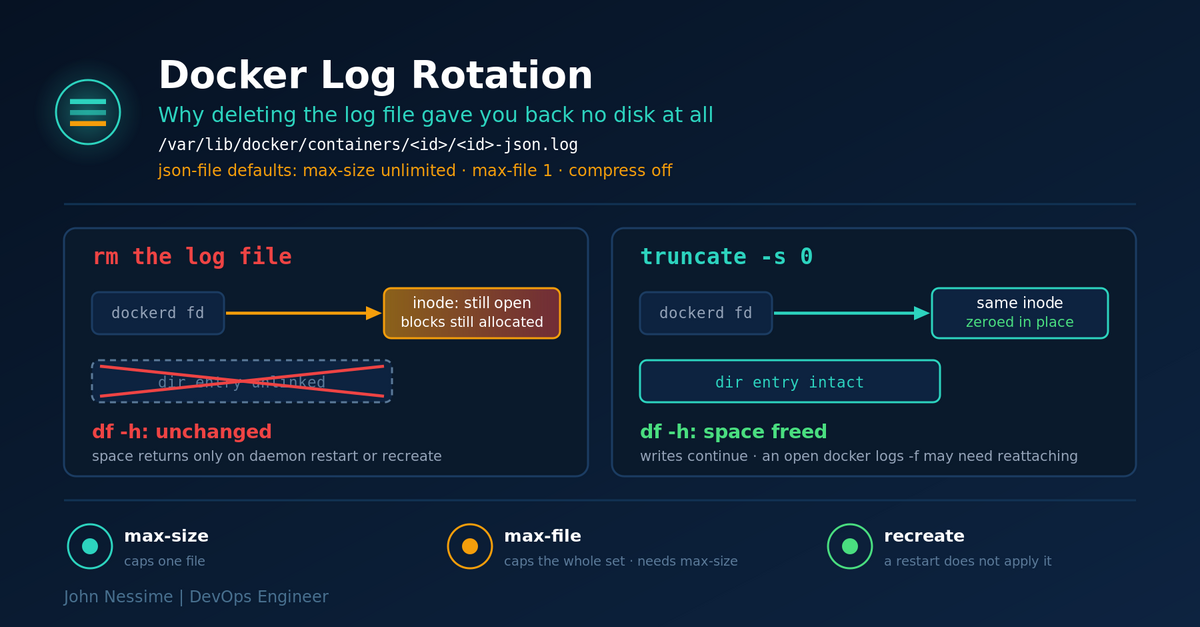
Docker Logs Ate My Disk: A Working Guide to Log Drivers and Rotation

Docker's default logging driver writes container output to a JSON file with no size limit and no rotation. This is a practical guide to Docker log rotation: what the defaults actually do, why your daemon.json change did nothing, why deleting the log file did not free any disk, and how to choose between json-file, local, journald and shipping logs off the box.

Continue ReadingDocker Logs Ate My Disk: A Working Guide to Log Drivers and Rotation

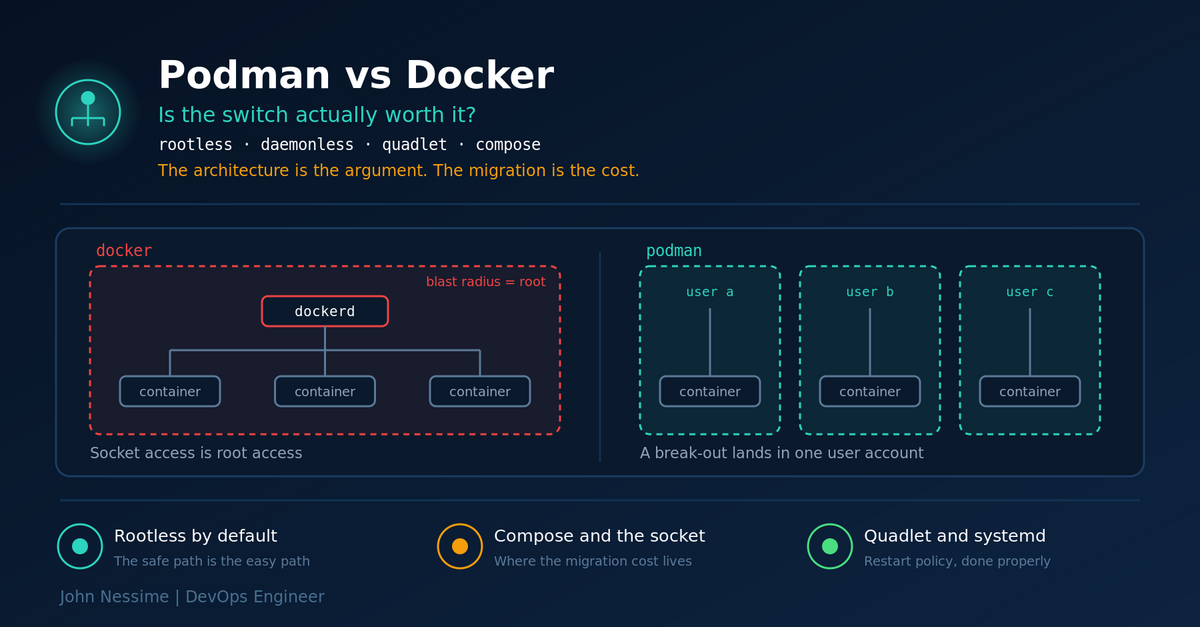
Podman vs Docker: Is the Switch Actually Worth It?

Podman is the better-designed container engine and Docker is the better-supported one. A working engineer's comparison: the architectural difference that drives everything, where each one wins and loses, the four things that genuinely break in a migration (compose, the Docker socket, privileged ports, restart on boot), and a decision procedure to run against your own setup.

Continue ReadingPodman vs Docker: Is the Switch Actually Worth It?

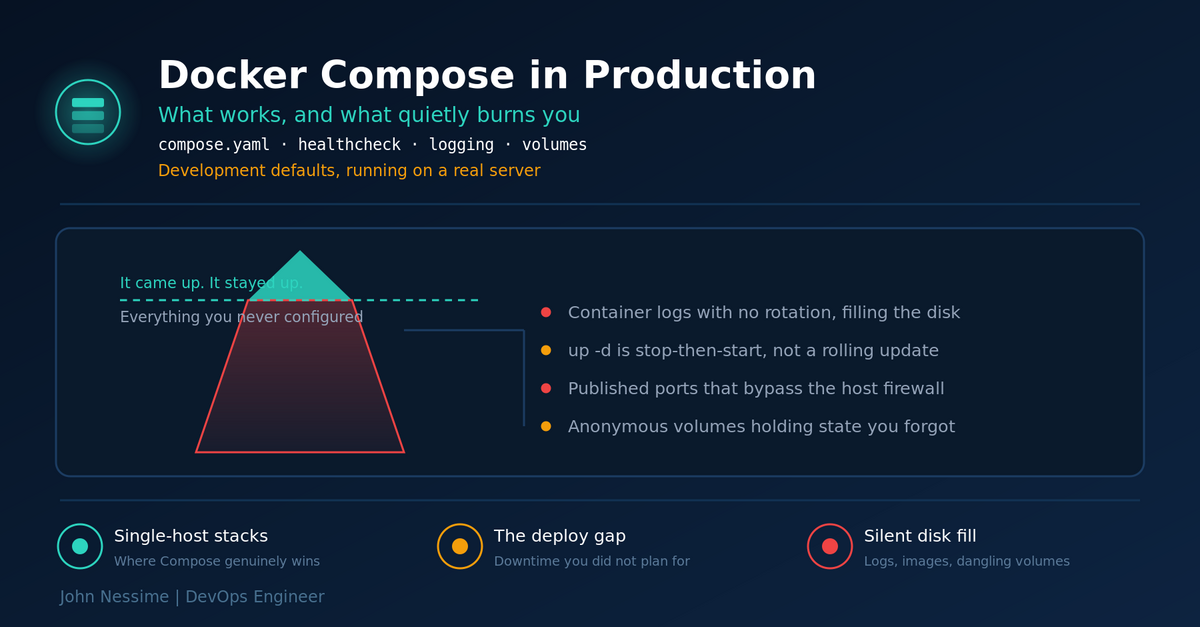
Docker Compose in Production: What Works and What Quietly Burns You

Running Docker Compose in production is a reasonable choice for a single host, but the defaults were chosen for a laptop. A walk through the failure families that actually bite: the deploy gap, unrotated logs filling the disk, anonymous volumes, published ports that bypass your firewall, secrets in environment variables, and health checks that report without acting.

Continue ReadingDocker Compose in Production: What Works and What Quietly Burns You