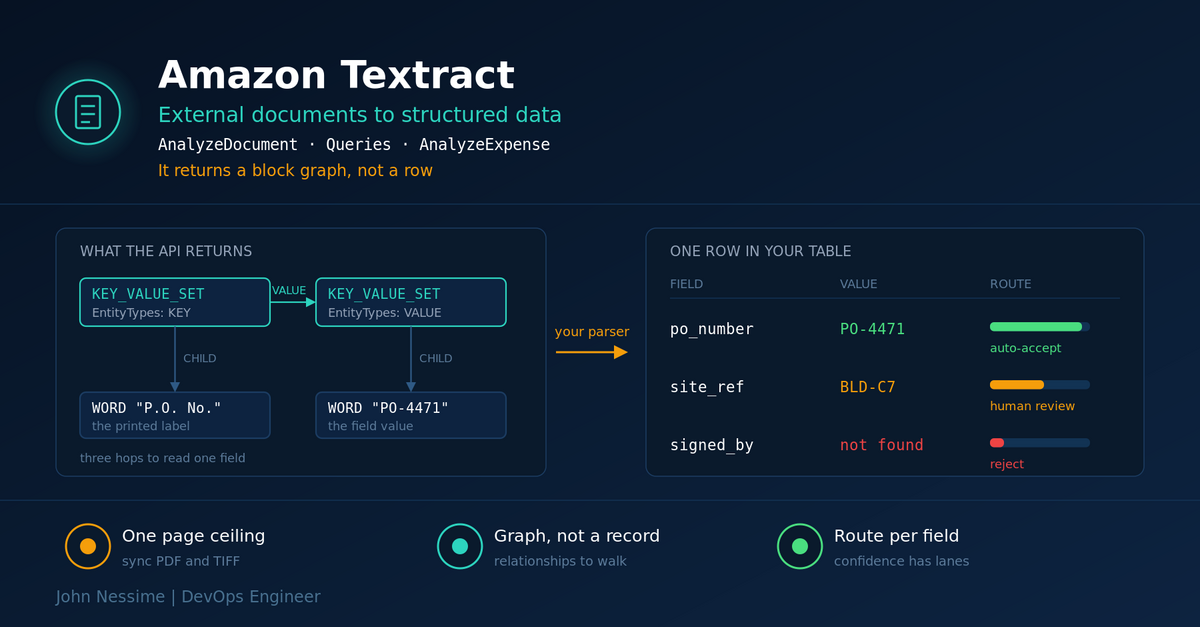
Turning External Documents Into Structured Data With Amazon Textract

Amazon Textract almost never fails loudly. A working guide to turning external PDFs and scans into structured data: picking the right operation per document family, parsing the block graph, routing on per-field confidence, and catching the limits that silently truncate your records.
Continue ReadingTurning External Documents Into Structured Data With Amazon Textract

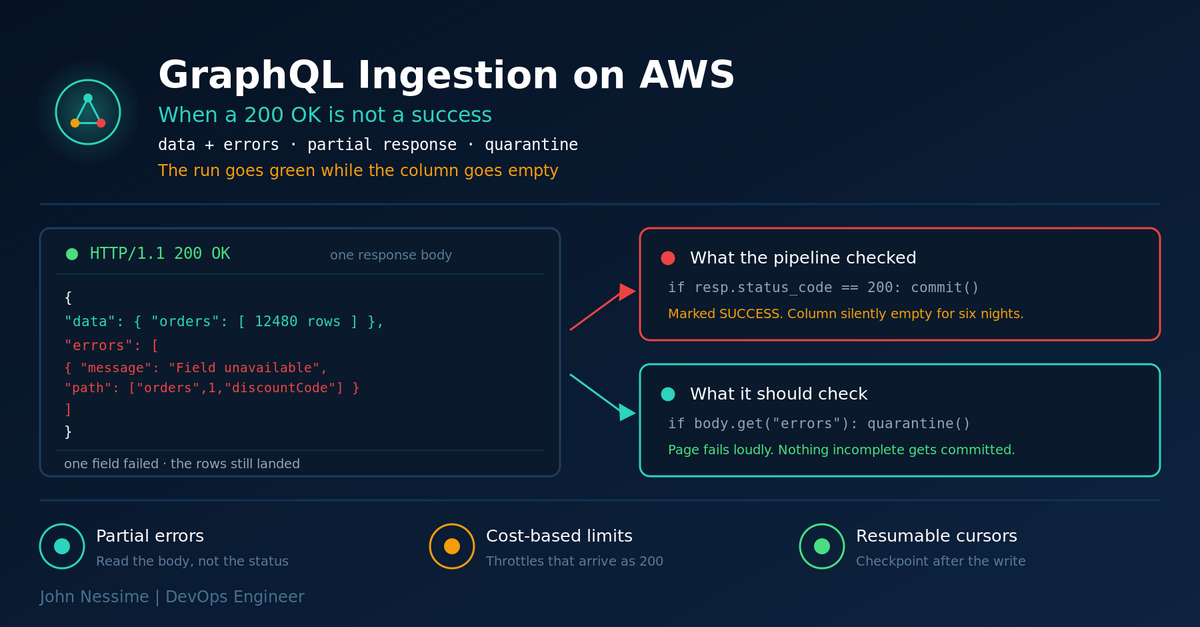
Building a GraphQL Data Ingestion Pipeline on AWS That Doesn’t Lie to You

A GraphQL source can hand you a 200 OK, a populated data block, and a quietly broken column in the same response. Here is how to build a GraphQL data ingestion pipeline on AWS that catches partial errors, respects cost-based rate limits, resumes cleanly from a cursor, and notices when the schema moves under you.

Continue ReadingBuilding a GraphQL Data Ingestion Pipeline on AWS That Doesn’t Lie to You

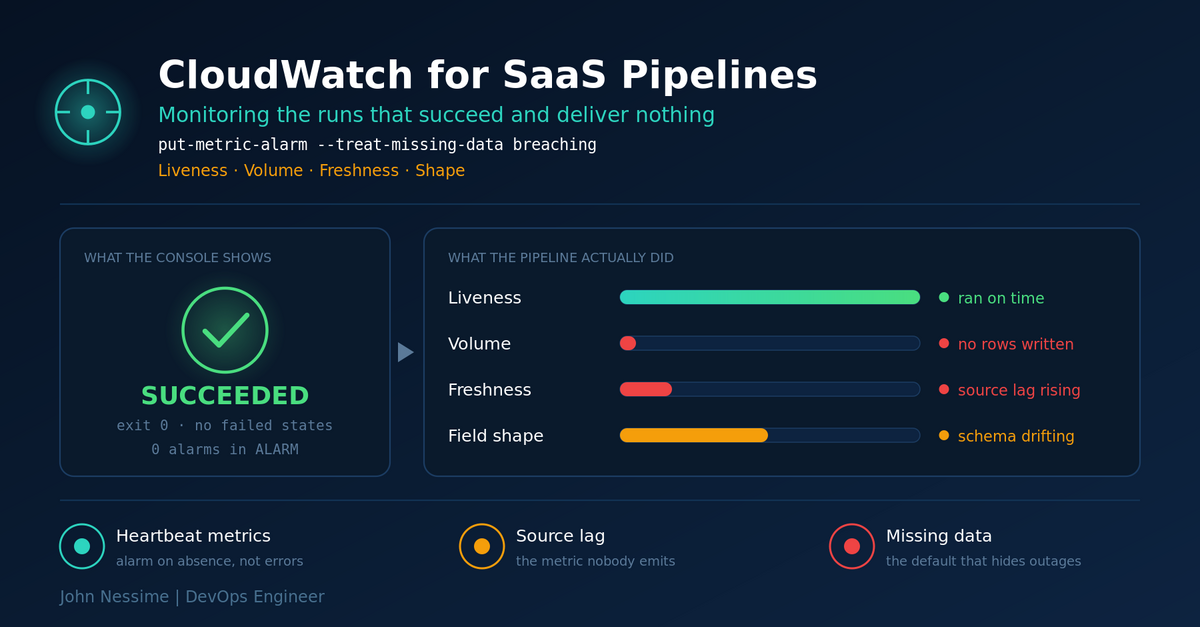
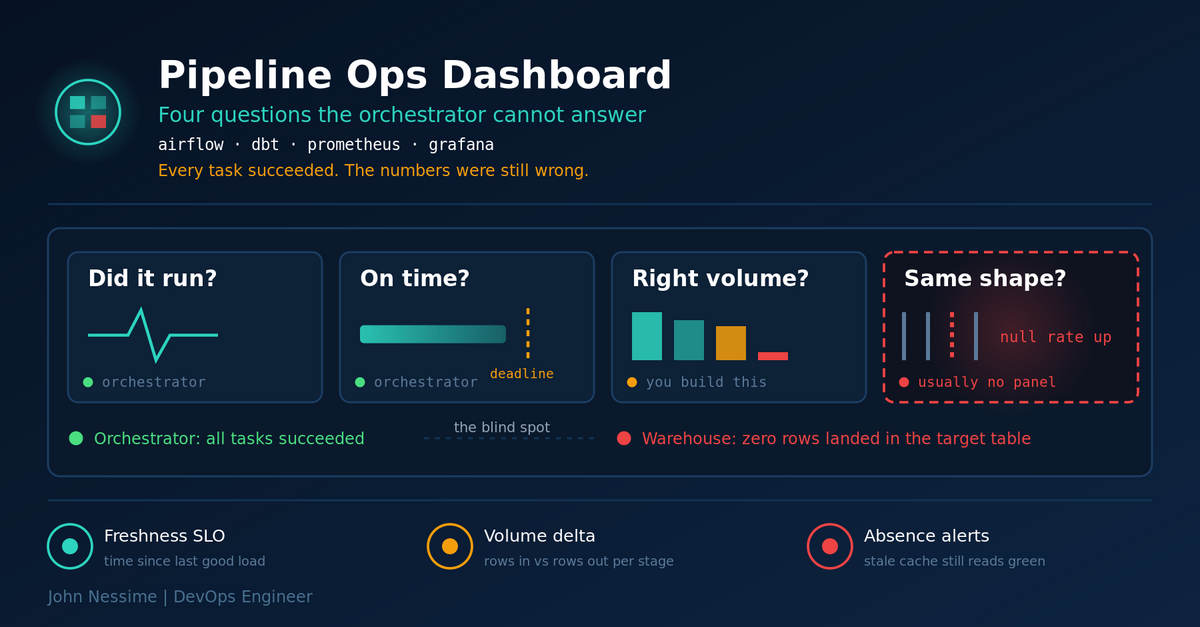
CloudWatch Data Pipeline Monitoring: Catching the Runs That Succeed and Deliver Nothing

Your SaaS pipeline will fail far more often by succeeding at nothing than by throwing an exception, and every CloudWatch default treats an absent metric as a non-event. Here are the four signals worth alarming on: liveness, volume, freshness and shape, plus the missing-data traps that leave alarms permanently green.

Continue ReadingCloudWatch Data Pipeline Monitoring: Catching the Runs That Succeed and Deliver Nothing

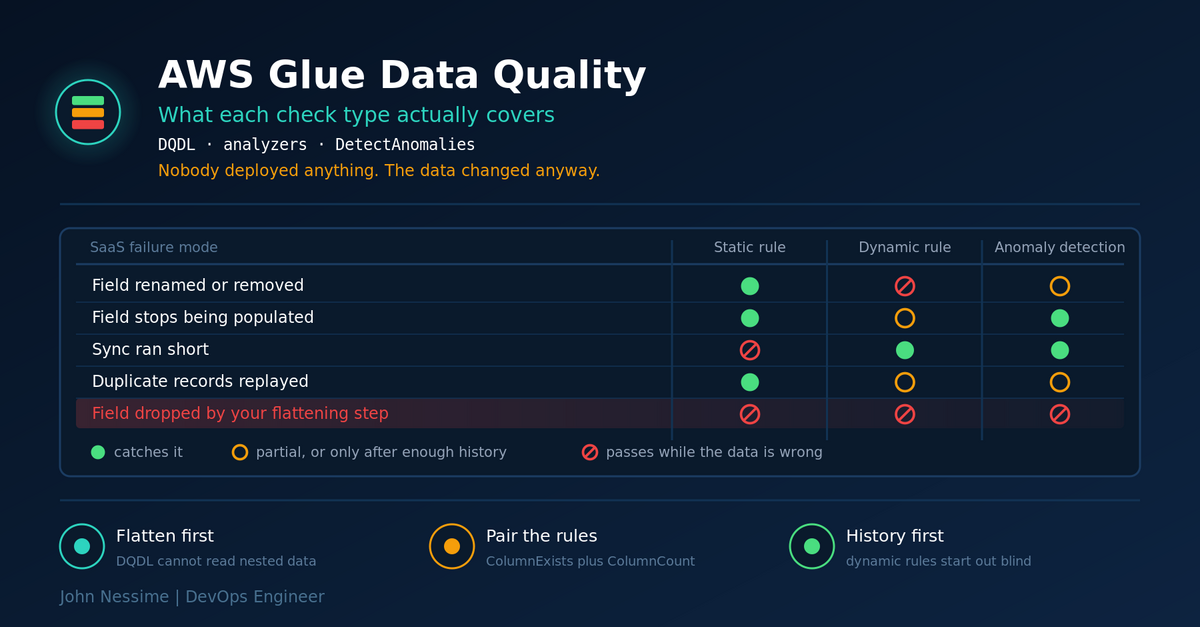
AWS Glue Data Quality for SaaS Data: Catching the Breakage Nobody Deployed

A SaaS admin changes a field and your pipeline stays green while the numbers drift. A practical guide to AWS Glue Data Quality for SaaS sources: where to run the checks, why nested payloads need flattening before DQDL can see them, which rule catches which failure, and the dynamic rules that pass silently because they have no history yet.

Continue ReadingAWS Glue Data Quality for SaaS Data: Catching the Breakage Nobody Deployed