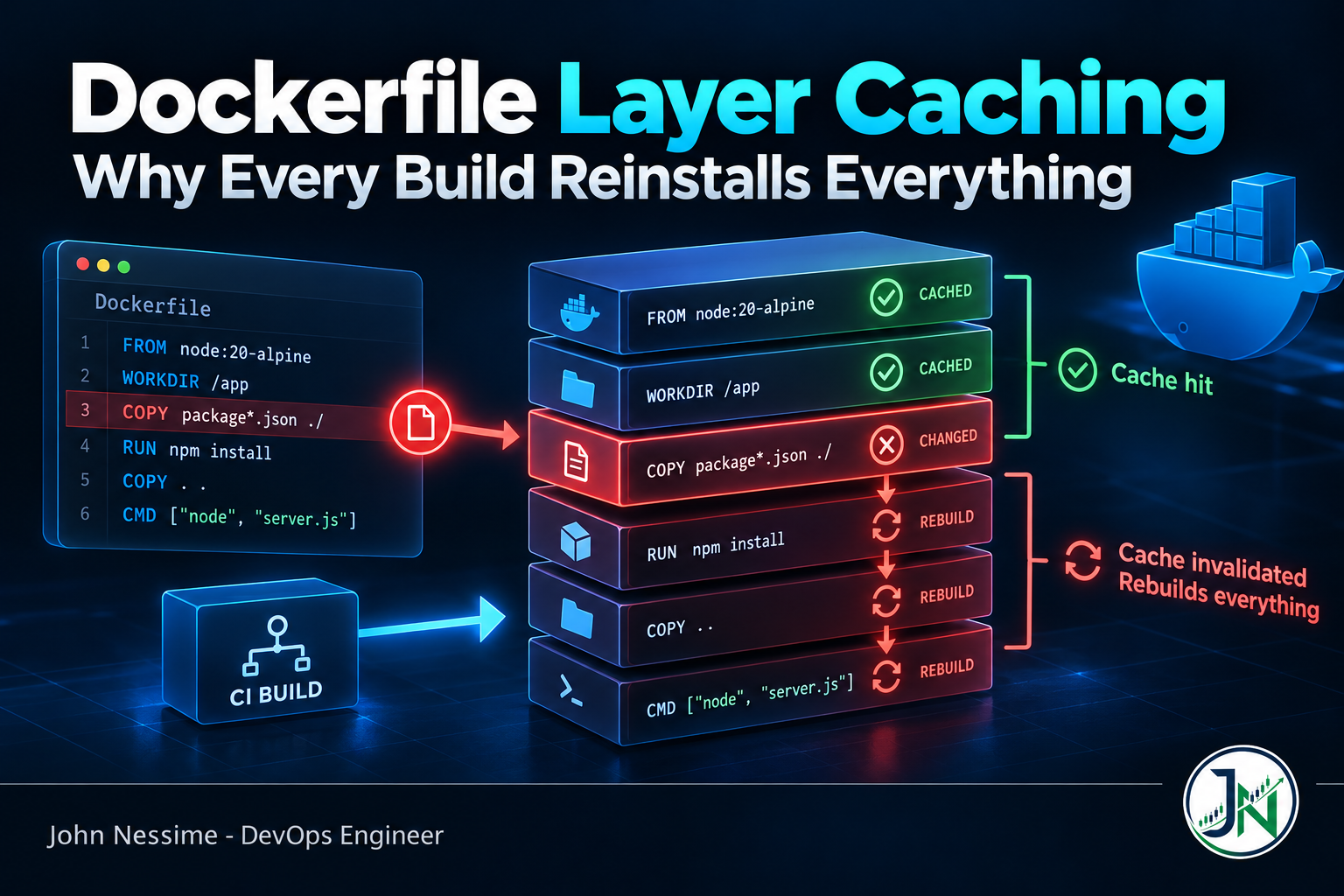
Dockerfile Layer Caching: Why Every Build Reinstalls Everything

Your Dockerfile copies the lockfile before the source, and CI still reinstalls every dependency on every commit. That gap between a correctly ordered Dockerfile and a build that behaves as if it isn't comes down to five distinct failure families: ordering traps, a build context that poisons checksums, a cache that never reaches CI, cache mounts that vanish with the runner, and multi-stage export modes. Here is how invalidation actually works and how to prove which one is costing you.
Continue ReadingDockerfile Layer Caching: Why Every Build Reinstalls Everything

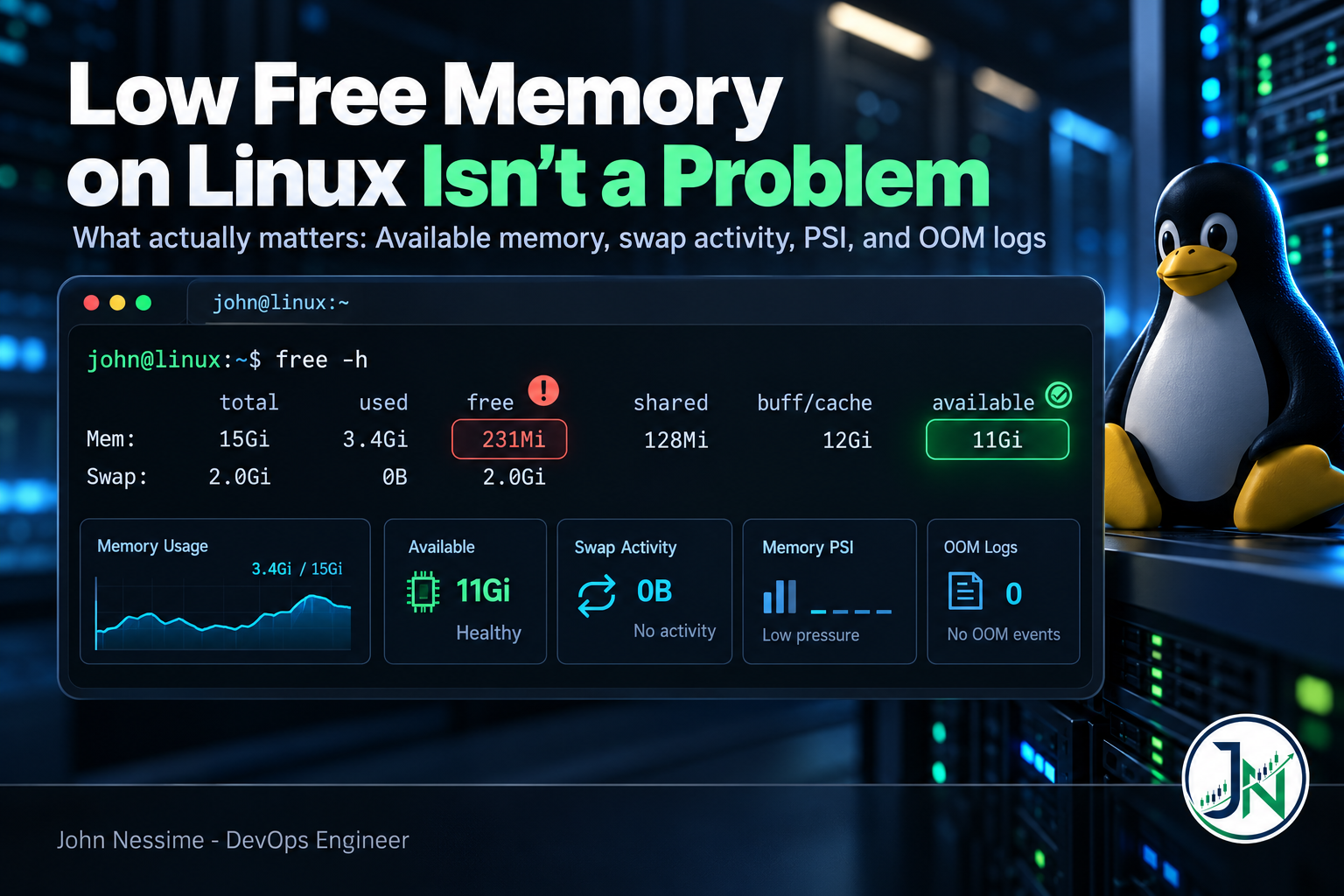
Low Free Memory on Linux Isn’t a Problem. Here’s What Actually Is.

A screenshot of free -h showing 200 MB free triggers more unnecessary change requests than almost any other output in server operations. Here is what the free command is really reporting, why the available column is the one that matters, and the four signals that actually tell you a machine is running out of memory: available, swap rate, pressure stall information and the OOM log.

Continue ReadingLow Free Memory on Linux Isn’t a Problem. Here’s What Actually Is.

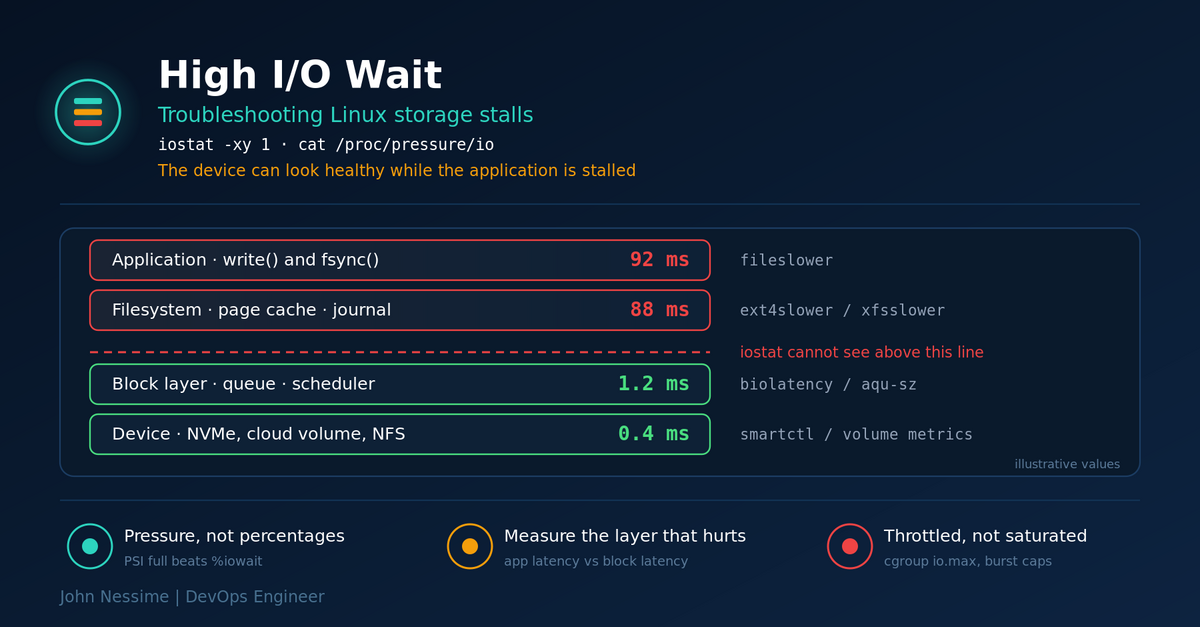
Troubleshooting High I/O Wait Without Blaming the Disk

High I/O wait is a symptom, not a diagnosis. It rises when nothing is wrong and stays flat when something is badly wrong, and it only sees one layer of the storage stack. This is how to read iowait and PSI correctly, then work through the five failure families that actually produce storage stalls: device saturation, memory pressure, synchronous writes, throttling, and latency that lives above the block layer entirely.

Continue ReadingTroubleshooting High I/O Wait Without Blaming the Disk