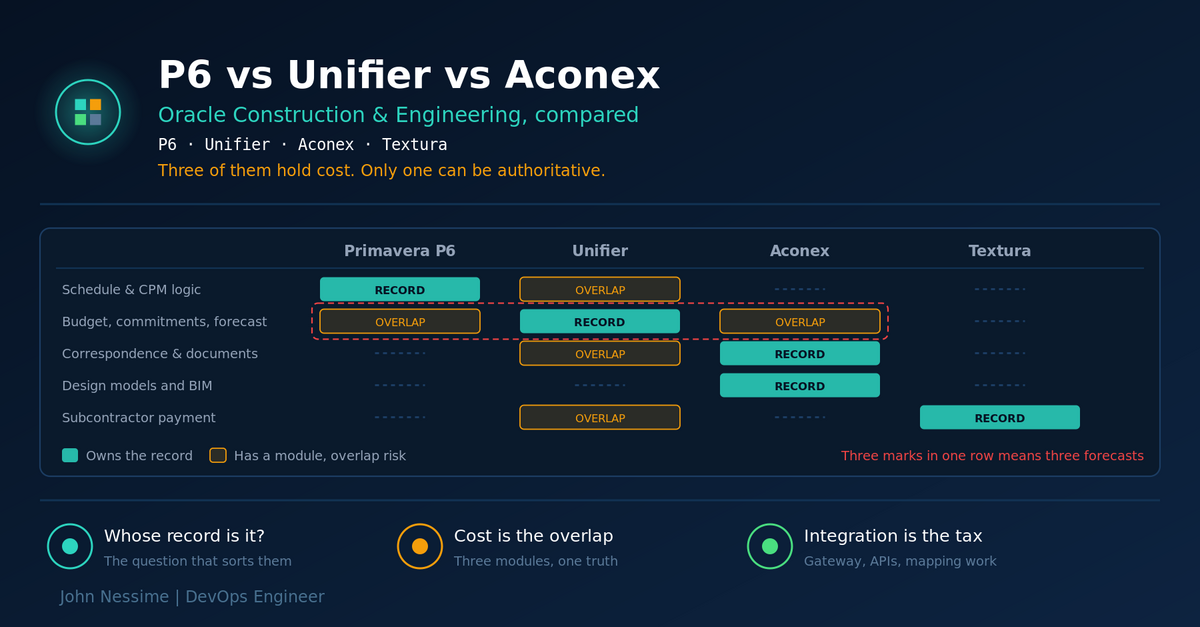
Primavera P6 vs Unifier vs Aconex vs Textura: Which Oracle Product Do You Actually Need?

All four Oracle Construction and Engineering products overlap on purpose, and three of them hold cost. The damage comes from owning two and never deciding which one is authoritative. A practical comparison by whose record each product holds, plus a decision procedure and the integration constraints nobody scopes.
Continue ReadingPrimavera P6 vs Unifier vs Aconex vs Textura: Which Oracle Product Do You Actually Need?

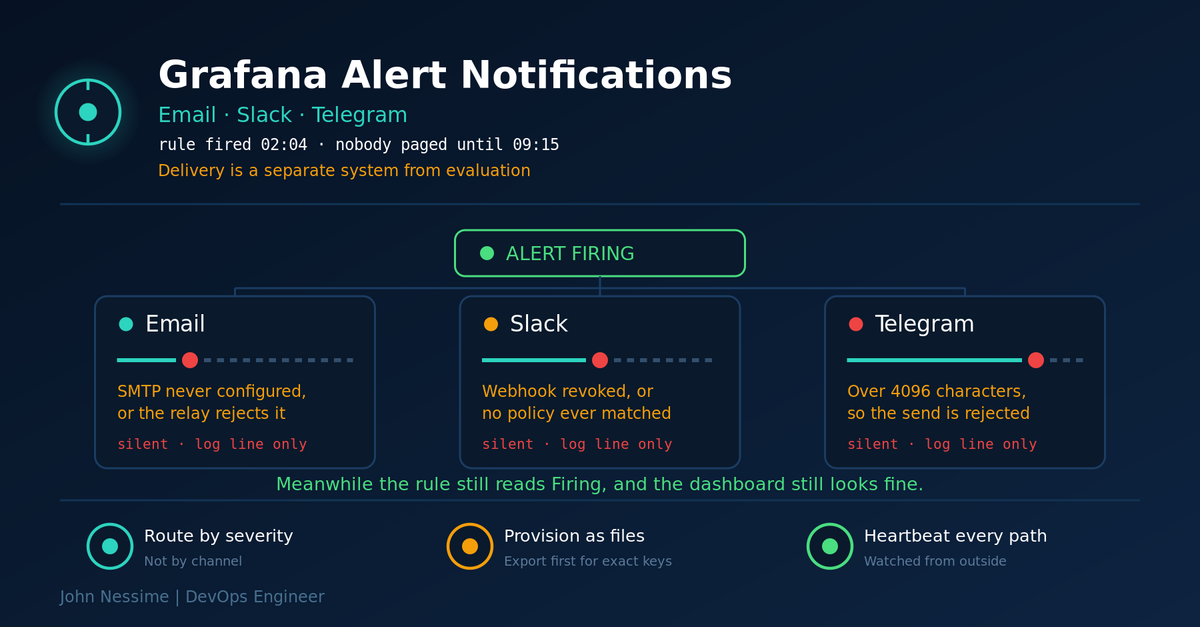
Grafana Alert Notifications That Actually Arrive: Email, Slack and Telegram

The rule went red at 02:04 and nobody found out until 09:15. Rule evaluation and notification delivery are two different systems, and only one of them is visible in the UI. A practical setup for Grafana alert notifications to email, Slack and Telegram, plus how to detect the day delivery quietly stops.

Continue ReadingGrafana Alert Notifications That Actually Arrive: Email, Slack and Telegram

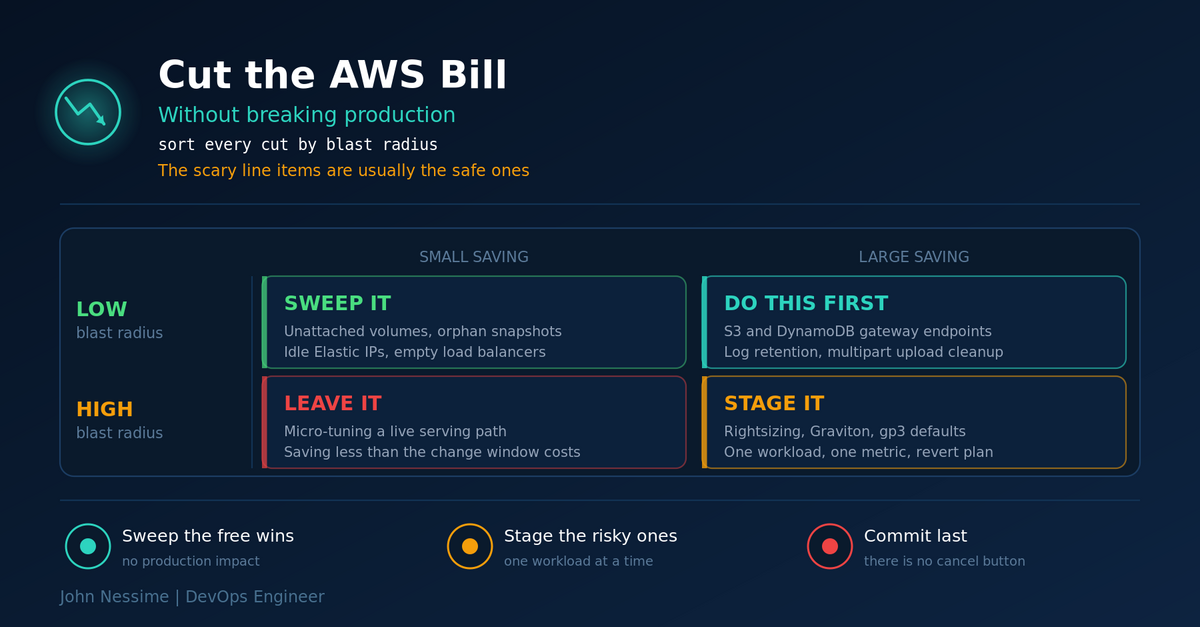
Cut AWS Costs Without Breaking Production: A Blast-Radius Playbook

Most AWS cost work goes wrong because it starts with the biggest line item, which is also the riskiest. Order the work by blast radius instead: free networking and storage fixes first, performance envelopes one workload at a time, and commitments last. Includes the commands to find the waste and the cuts that look harmless and are not.

Continue ReadingCut AWS Costs Without Breaking Production: A Blast-Radius Playbook

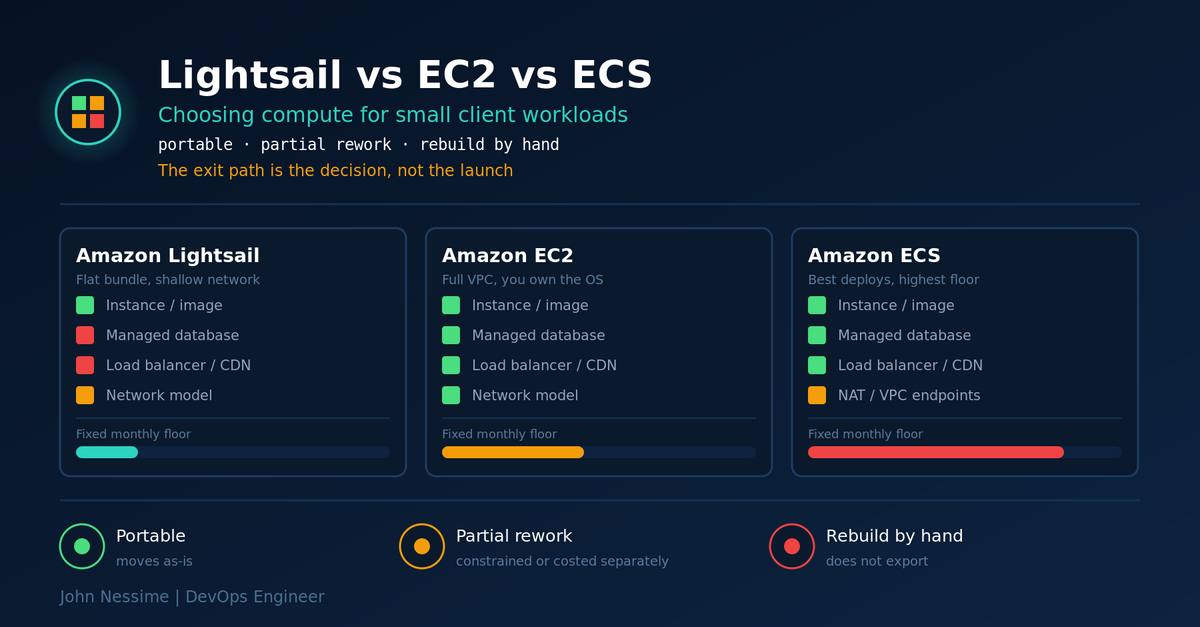
Lightsail vs EC2 vs ECS: What I Actually Pick for Small Client Workloads

Choosing between Lightsail, EC2 and ECS for a small client workload is not a performance question. It is a question about which constraints you are accepting and how expensive they are to reverse. Profiles of all three with where each wins and loses, the cost levers that actually move the bill, a six-step decision procedure, and the arguments that fall apart on contact with a real project.

Continue ReadingLightsail vs EC2 vs ECS: What I Actually Pick for Small Client Workloads

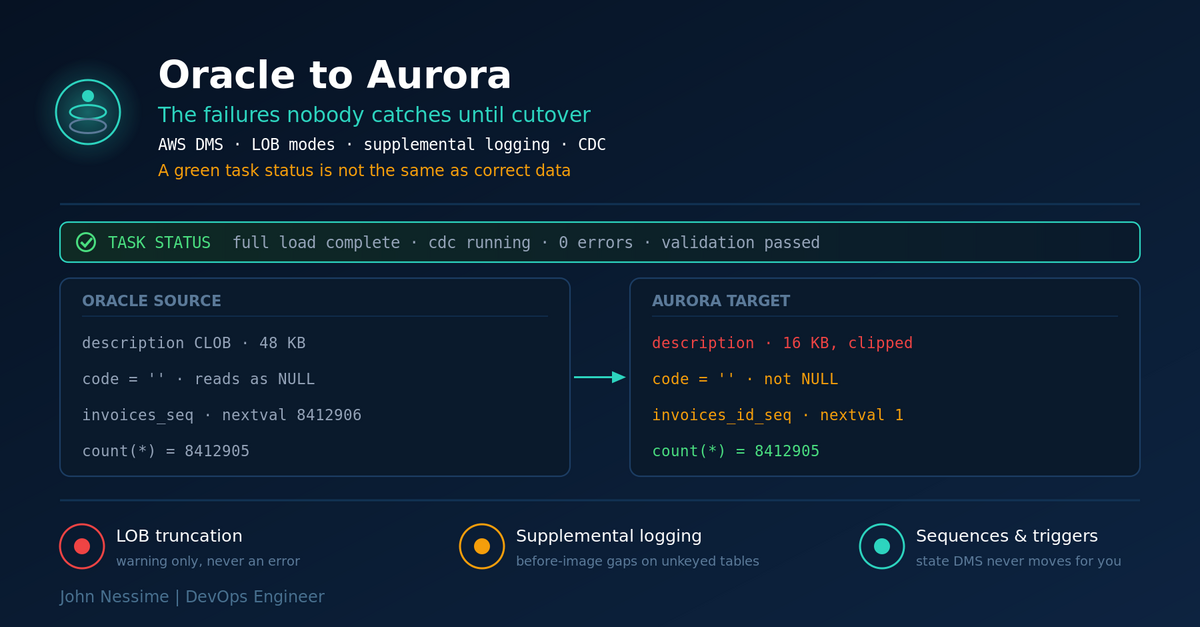
Oracle to Aurora Migration: The Failures Nobody Catches Until Cutover

Most Oracle to Aurora migrations don't fail loudly. They finish green, pass validation, and quietly hand you truncated LOBs, sequences stuck at 1, and empty strings that used to be NULL. Here are the four failure families to check before you cut over, with the SQL and task settings that catch them.

Continue ReadingOracle to Aurora Migration: The Failures Nobody Catches Until Cutover

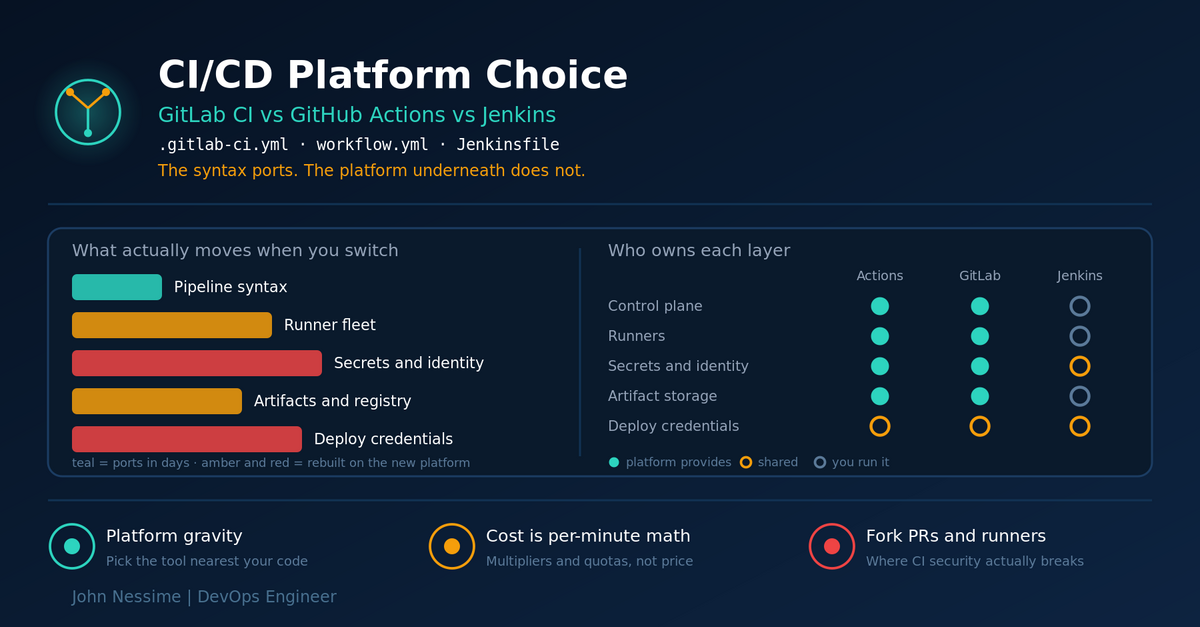
GitLab CI vs GitHub Actions vs Jenkins: Choosing Without Regretting It Later

A practical comparison of GitLab CI, GitHub Actions and Jenkins that skips the feature table. What actually decides the choice is where your code lives, whether the runner can reach the deploy target, and who owns the control plane at 2am. Includes the cost mechanics, the security failure modes, and a decision procedure you can run in an afternoon.

Continue ReadingGitLab CI vs GitHub Actions vs Jenkins: Choosing Without Regretting It Later

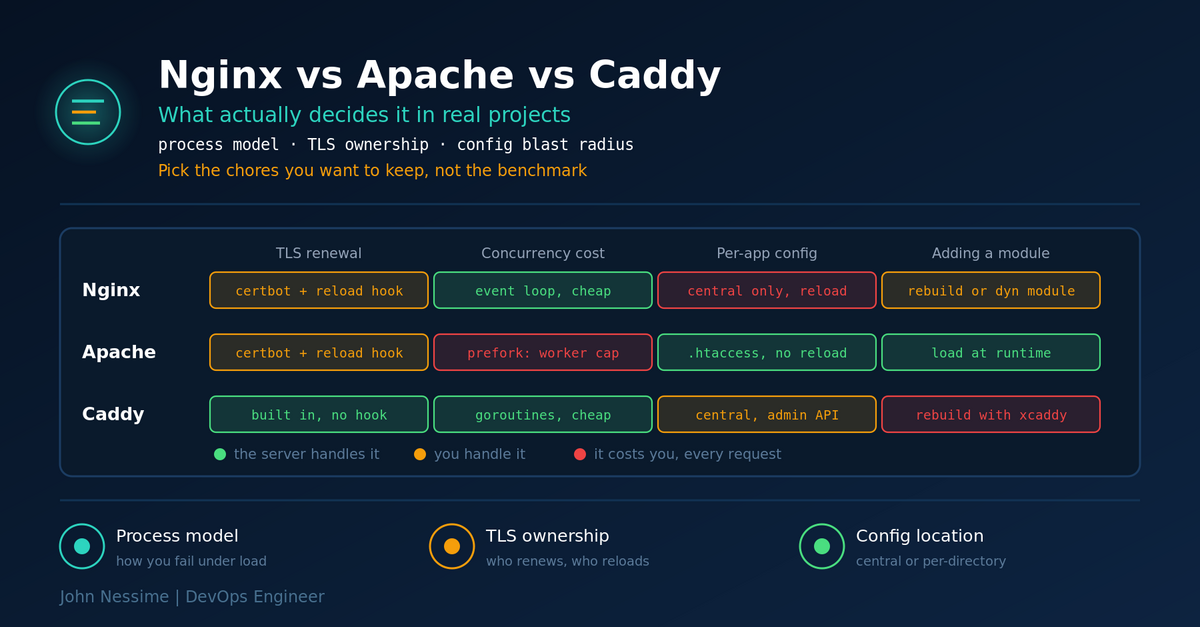
Nginx vs Apache vs Caddy: What Actually Decides It in Real Projects

Benchmarks pick the wrong winner. Here is how Nginx, Apache and Caddy actually differ in production: how each one fails under load, who owns certificate renewal, and where configuration lives when a developer needs to change it. Includes a decision procedure and the mistakes I see most.

Continue ReadingNginx vs Apache vs Caddy: What Actually Decides It in Real Projects

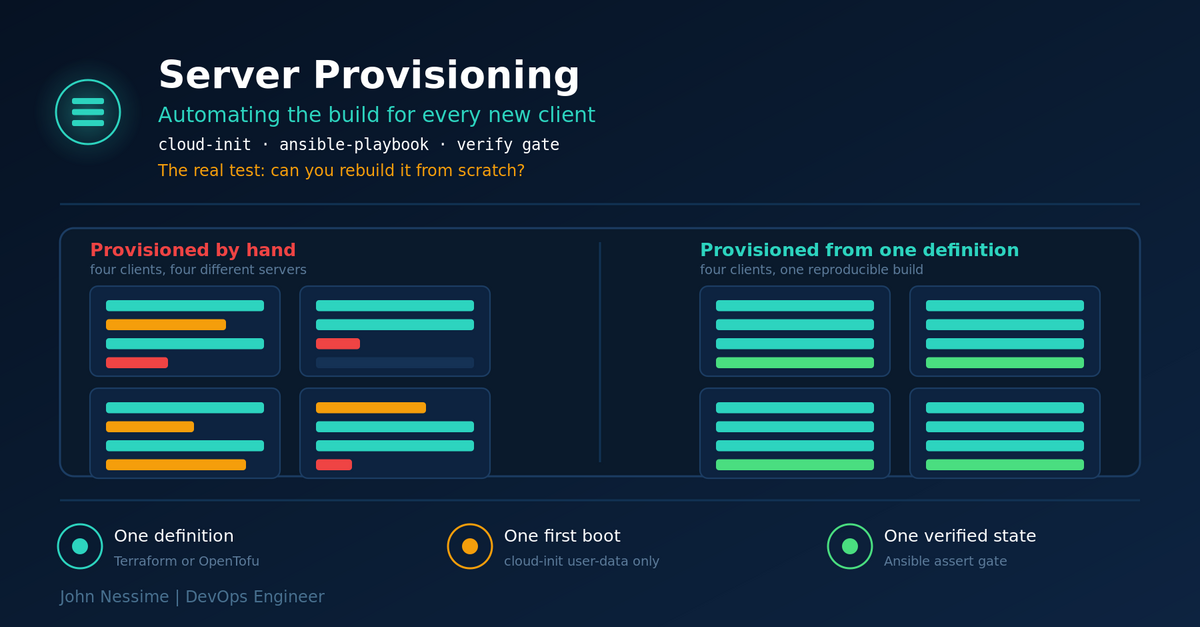
Automating Server Provisioning for New Clients Without Building a Snowflake Farm

Hand-built client servers fail quietly: you only find out they were never reproducible on the day you need to rebuild one. Here is how to automate server provisioning for new clients using cloud-init for first boot, Ansible for convergence, per-client secrets and a verification gate that refuses to hand over a half-built box.

Continue ReadingAutomating Server Provisioning for New Clients Without Building a Snowflake Farm

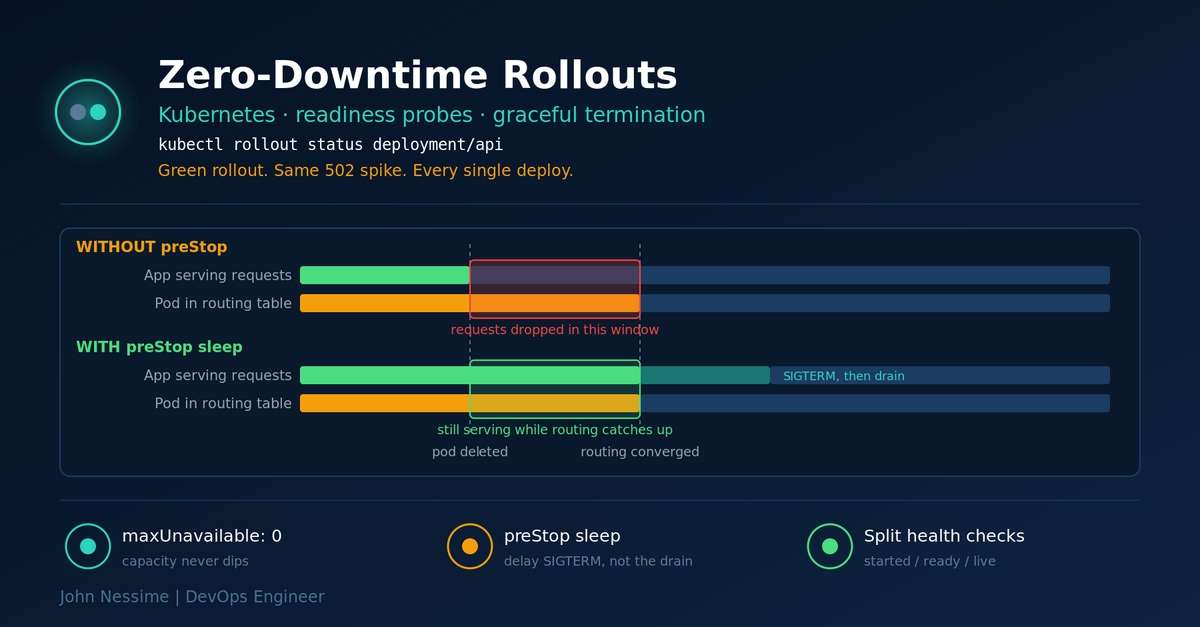
Kubernetes Zero-Downtime Rollouts: Why Your Readiness Probe Isn’t Saving You

Readiness probes are necessary for Kubernetes zero-downtime rollouts, but they only close one of four gaps. Here is what actually drops requests during a deploy: the race between SIGTERM and endpoint propagation, probes that lie, surge settings that quietly delete capacity, and load balancers that never watched EndpointSlices in the first place.

Continue ReadingKubernetes Zero-Downtime Rollouts: Why Your Readiness Probe Isn’t Saving You