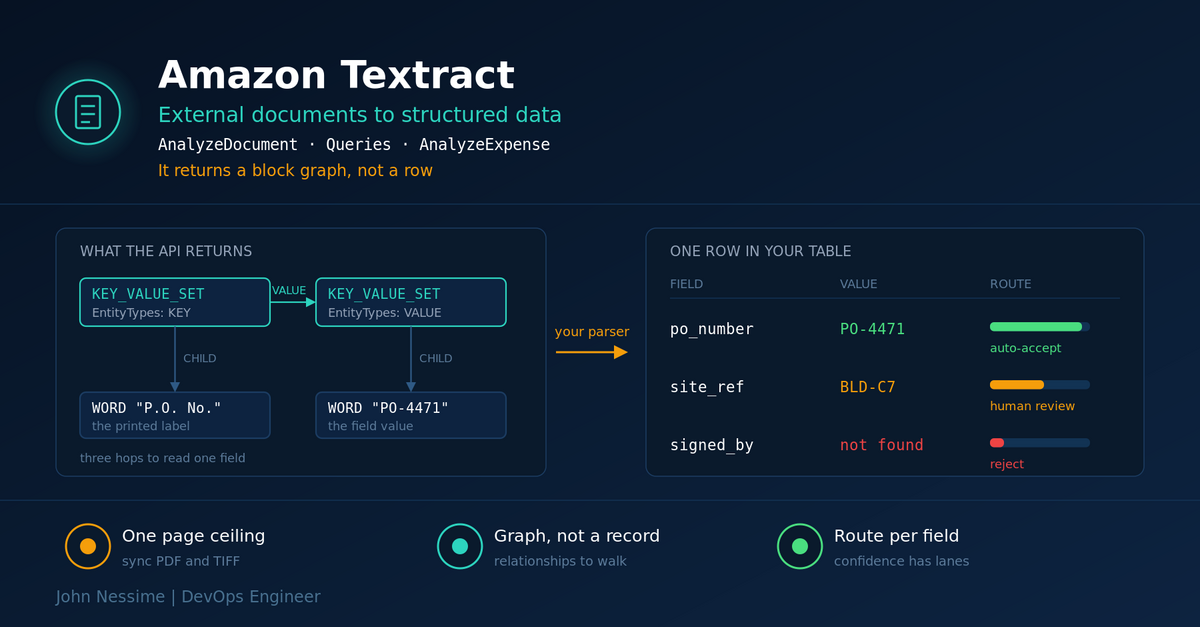
Turning External Documents Into Structured Data With Amazon Textract

Amazon Textract almost never fails loudly. A working guide to turning external PDFs and scans into structured data: picking the right operation per document family, parsing the block graph, routing on per-field confidence, and catching the limits that silently truncate your records.

Continue ReadingTurning External Documents Into Structured Data With Amazon Textract

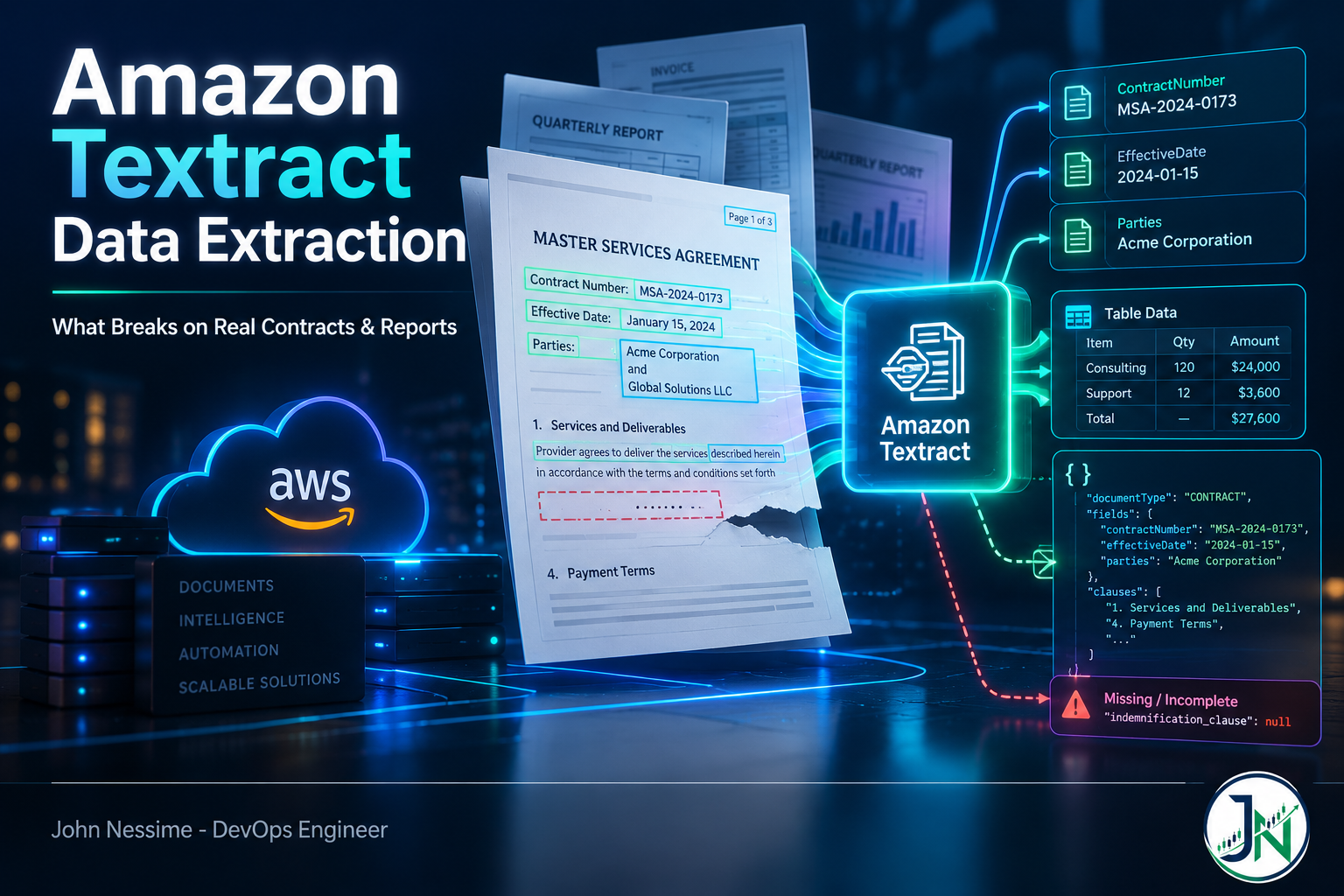
Amazon Textract Data Extraction: What Breaks on Real Contracts and Reports

Textract rarely fails loudly. It returns a plausible result that is quietly incomplete: a truncated result set, a tick box read as an empty string, a clause split across a page break. A practitioner's guide to the failure modes that actually bite when you point Amazon Textract at contracts, technical reports and correspondence, plus how to choose between sync and async, which feature types are worth paying for, and where Textract stops being the right tool.

Continue ReadingAmazon Textract Data Extraction: What Breaks on Real Contracts and Reports

Building an Insurance Claims Processing Pipeline on AWS That Fails Loudly

Claims pipelines rarely crash. They succeed, emit clean JSON, and hand a wrong number to a payment system. Six failure families in an insurance claims processing pipeline on AWS, with the Textract, Bedrock Data Automation and Step Functions details that decide whether a bad extraction is visible or silent.

Continue ReadingBuilding an Insurance Claims Processing Pipeline on AWS That Fails Loudly

Extracting Clauses, Parties, Dates and Obligations with Amazon Bedrock

Valid JSON is not correct data. A practical guide to extracting clauses, parties, dates and obligations from contracts with Amazon Bedrock: the two build paths, schema design, the three failure families that produce confident wrong answers, and the validation layer that catches them.

Continue ReadingExtracting Clauses, Parties, Dates and Obligations with Amazon Bedrock