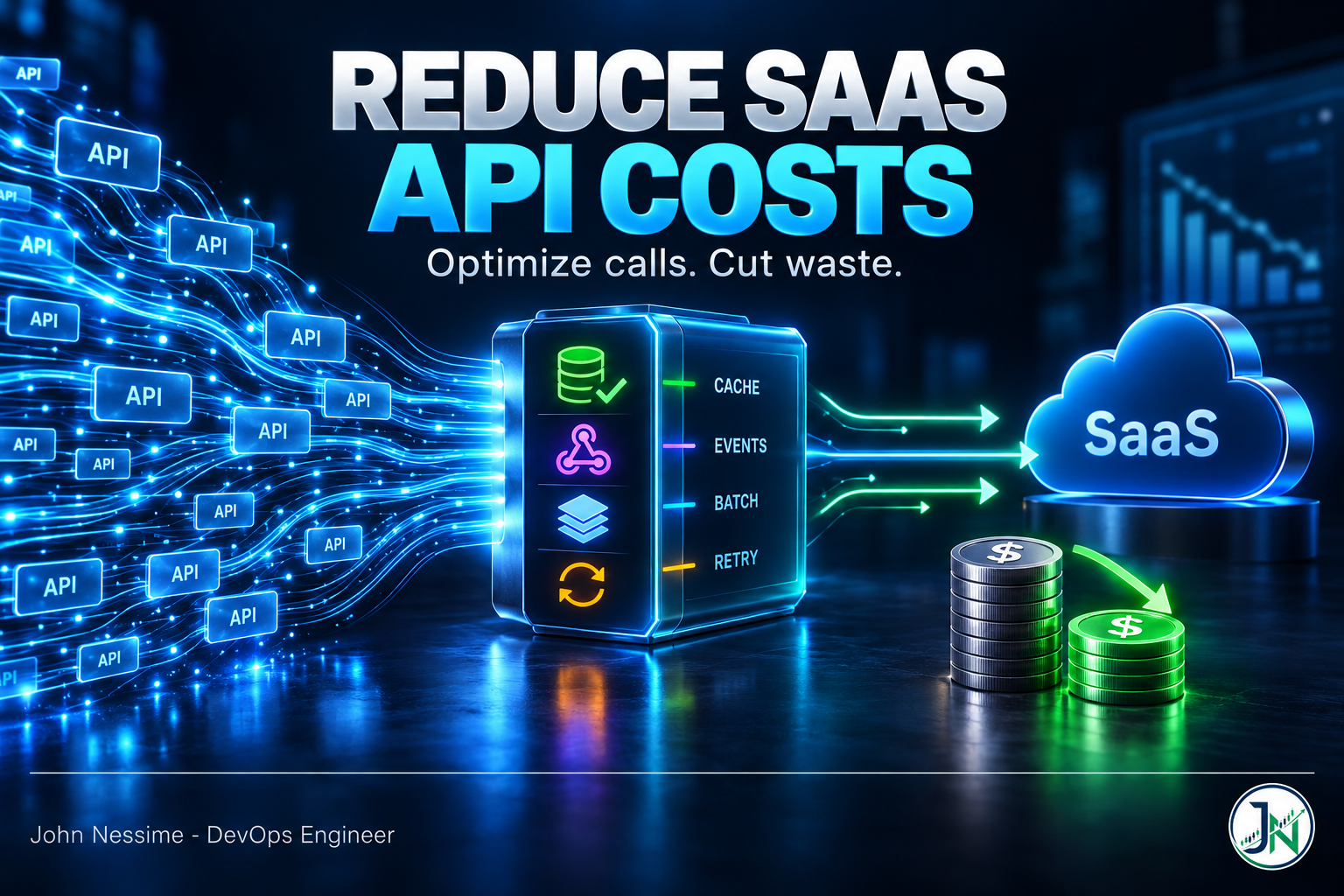
Optimizing API Calls to Reduce SaaS Costs: Six Levers That Actually Move the Bill

Third-party API spend is the one production signal with no error rate attached to it, which is why it creeps up quietly. This is a working engineer's guide to reducing SaaS API costs by changing the shape of your calls: reading the billing unit before you optimise anything, killing pointless polling with conditional requests and webhooks, collapsing N+1 patterns, caching with stampede protection and per-tenant keys, stopping your own retry amplification, and attributing spend so you can prove the work paid off.
Continue ReadingOptimizing API Calls to Reduce SaaS Costs: Six Levers That Actually Move the Bill

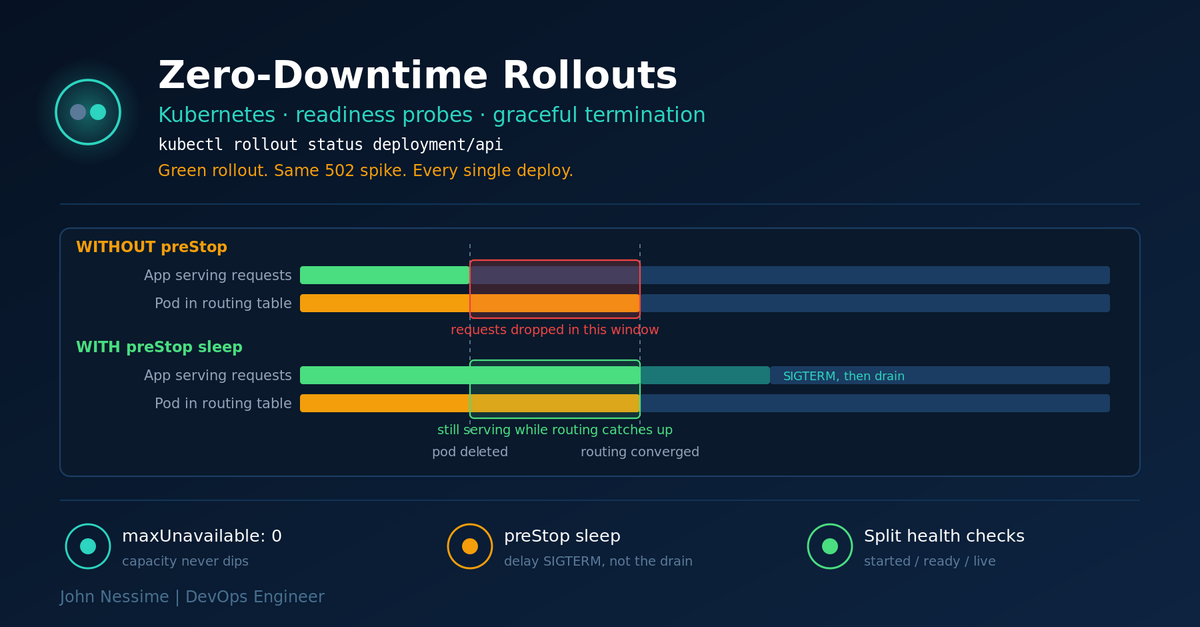
Kubernetes Zero-Downtime Rollouts: Why Your Readiness Probe Isn’t Saving You

Readiness probes are necessary for Kubernetes zero-downtime rollouts, but they only close one of four gaps. Here is what actually drops requests during a deploy: the race between SIGTERM and endpoint propagation, probes that lie, surge settings that quietly delete capacity, and load balancers that never watched EndpointSlices in the first place.

Continue ReadingKubernetes Zero-Downtime Rollouts: Why Your Readiness Probe Isn’t Saving You

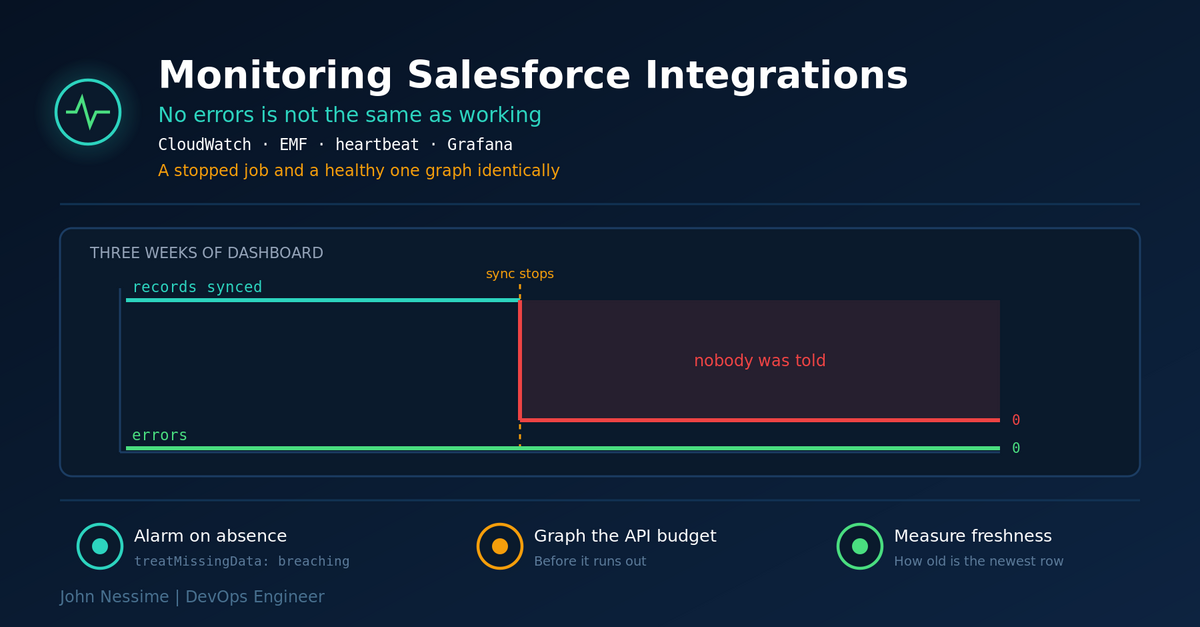
Zero Errors, Zero Records: Monitoring Salesforce Integrations with CloudWatch and Grafana

The error count was zero every day for three weeks. So was the invocation count. A stopped integration and a healthy one produce identical graphs, and every CloudWatch default is tuned to stay quiet when data stops arriving. Four signals worth emitting, and the alarm config that actually fires.

Continue ReadingZero Errors, Zero Records: Monitoring Salesforce Integrations with CloudWatch and Grafana